
Whenever a major AI breakthrough is announced, the conversation tends to follow a predictable pattern.
People discuss the capabilities of the model.
They compare performance benchmarks.
They debate which company is leading the race.
They speculate about future applications.
All of these discussions are important, but they often overlook something fundamental.
Every AI breakthrough is built upon the contributions of countless people.
Behind every impressive model exists an enormous foundation of human-generated information. Articles, images, conversations, reviews, feedback, research papers, tutorials, and countless other forms of knowledge contribute to the systems we interact with today.
The reality is simple.
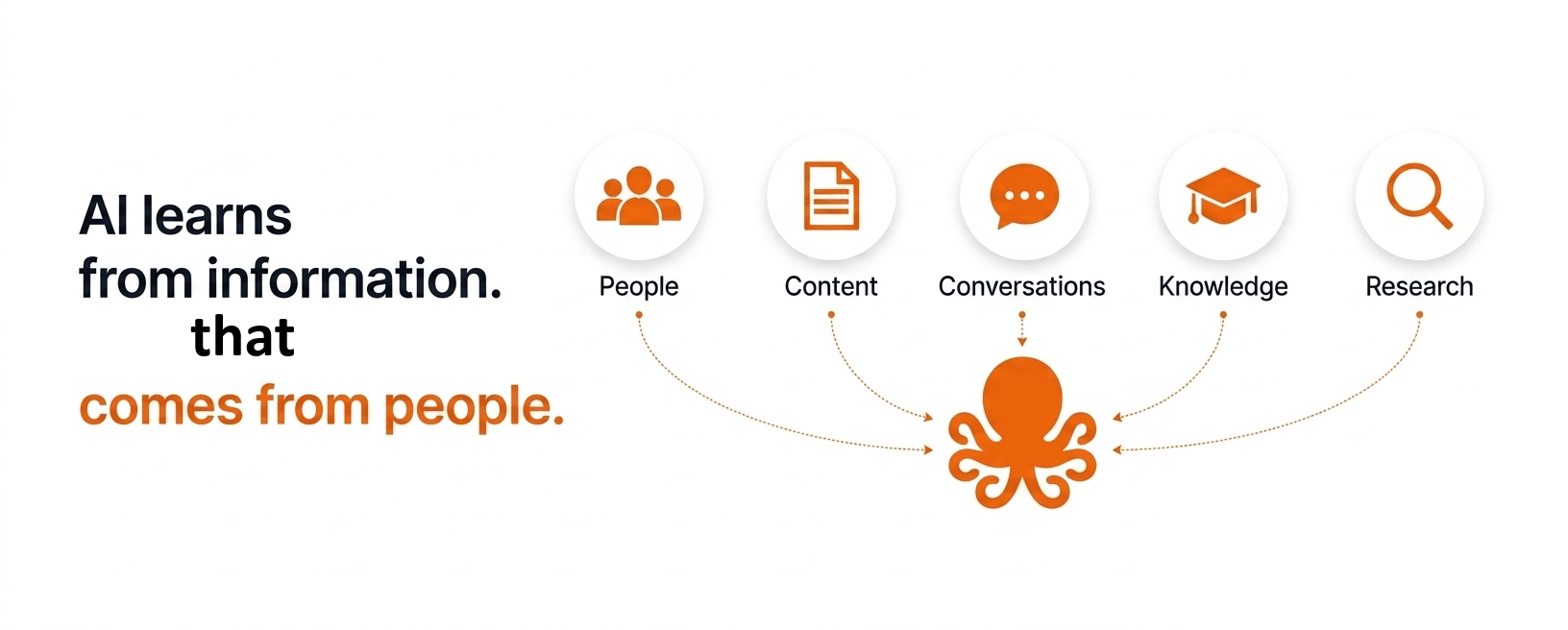
AI learns from information.
Information comes from people.
Without contributors, there is no training data.
Without training data, there are no models.
Without models, there is no AI revolution.
Yet despite their importance, contributors are often the least visible participants in the ecosystem.
This creates one of the most interesting challenges facing the future of artificial intelligence.
How should value be distributed in an AI-powered economy?
Historically, digital platforms have operated through centralized structures. Users generate content and information while platforms aggregate, organize, and monetize those contributions.
This model has produced tremendous innovation.
It has also produced significant concentration of value.
As AI becomes more sophisticated, the importance of this issue increases.
Modern AI systems are capable of generating extraordinary outputs. They can write, analyze, create images, assist with coding, and perform tasks that once required significant human effort.
But every one of these capabilities depends on underlying knowledge.
That knowledge originates from human activity.

As a result, the conversation around AI is gradually shifting from intelligence alone toward economics, ownership, and participation.
This is where projects like OpenLedger become particularly interesting.
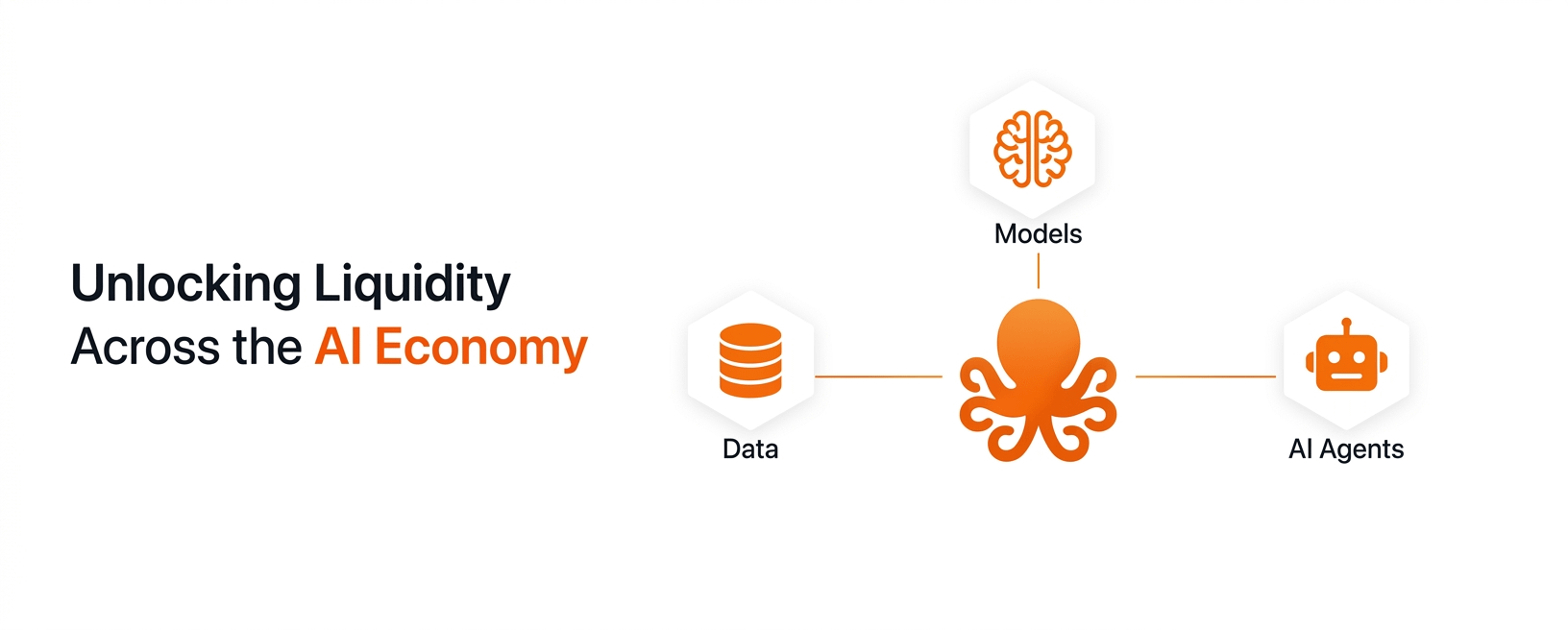
OpenLedger is building infrastructure designed to unlock liquidity across data, models, and AI agents.
At first glance, this may sound like a technical objective.
In reality, it addresses a much broader economic question.
How can contributors participate more directly in the value generated by AI ecosystems?
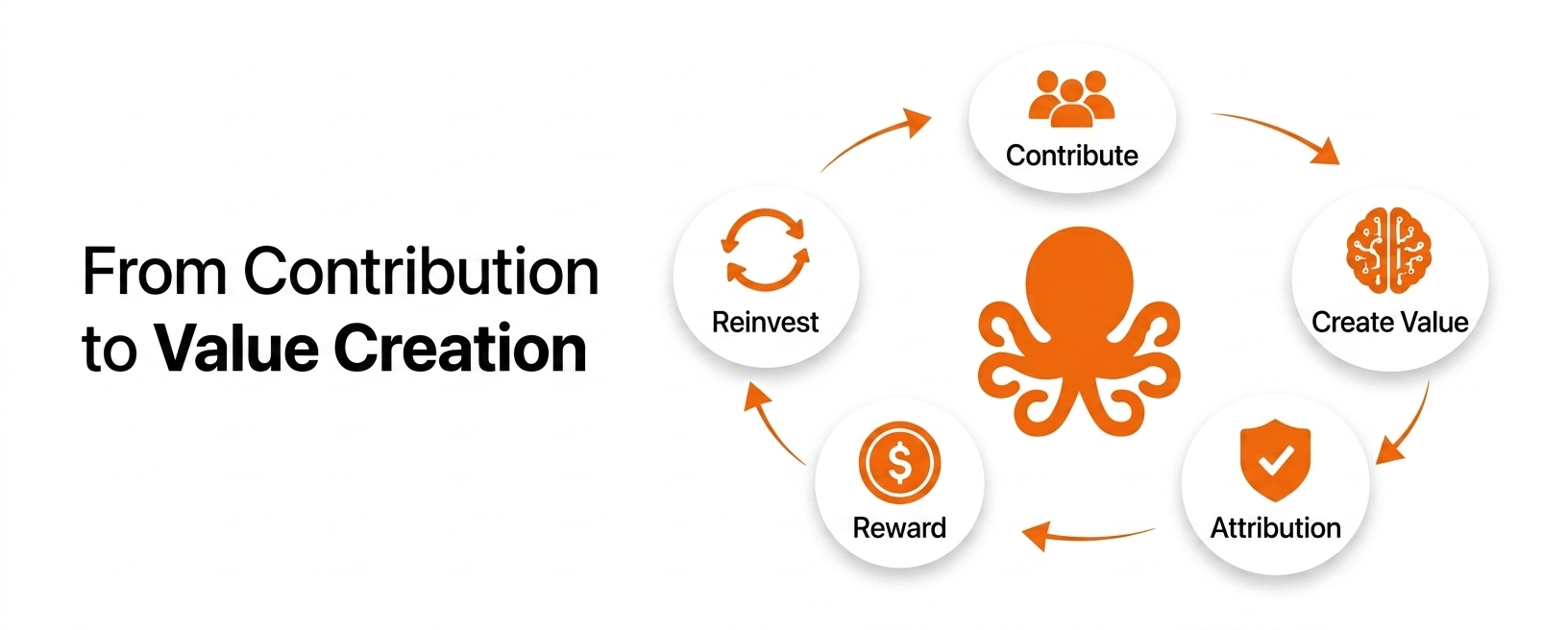
To understand why this matters, it helps to examine the concept of attribution.
In traditional systems, attribution can be difficult to track.
Contributions become aggregated.
Data becomes centralized.
Value creation becomes opaque.
Participants often have limited visibility into how their contributions influence outcomes.
Blockchain technology offers a different approach.
By creating transparent and verifiable records, blockchain can help establish clearer relationships between participation and value creation.
This does not automatically solve every challenge.
However, it creates the foundation for more accountable systems.
OpenLedger appears to be exploring how these principles can be applied to AI-driven economies.
The implications are significant.
Imagine an ecosystem where contributors have greater visibility into how value flows.
Imagine a system where participation can be measured more effectively.
Imagine an environment where data, models, and intelligent agents can interact within transparent economic frameworks.
These possibilities become increasingly relevant as AI adoption accelerates across industries.
Another important aspect of the OpenLedger vision involves liquidity.
Liquidity is often associated with financial markets, but the concept extends much further.
Liquidity enables assets to move.
It allows resources to participate within broader economic systems.
Historically, many forms of digital value have remained locked within isolated environments.
Datasets sit inside organizations.
Models operate within proprietary ecosystems.
Contributors remain disconnected from downstream value creation.
Unlocking liquidity changes those dynamics.
When assets become more accessible and transferable, new forms of collaboration become possible.
New markets emerge.
New incentives develop.
New opportunities appear.
This concept becomes even more important when considering the future role of AI agents.
Today, most discussions about AI focus on tools that assist humans.
Tomorrow, AI agents may become active economic participants.
They may negotiate transactions.
They may coordinate services.
They may interact with one another across digital environments.
As these capabilities evolve, infrastructure will become increasingly important.
Economic systems require trust.
Trust requires transparency.
Transparency requires verifiable records.
Blockchain technology provides mechanisms that can help support those requirements.
This intersection between AI and blockchain represents one of the most compelling areas of innovation today.
AI introduces intelligence.
Blockchain introduces accountability.
Together, they create opportunities for entirely new forms of economic coordination.
OpenLedger is positioning itself within that emerging landscape.
Of course, building infrastructure is never easy.
Success depends on execution.
It depends on adoption.
It depends on attracting builders, contributors, and communities.
Every ambitious project faces uncertainty.
Yet uncertainty does not diminish the importance of the problems being addressed.
The question of contributor participation will only become more significant as AI continues to expand.
The question of ownership will become more important.
The question of value distribution will become more important.
The question of transparency will become more important.
These are not secondary considerations.
They are foundational considerations.
The future of AI will not be determined solely by who builds the most powerful models.
It will also be shaped by the systems that govern participation, attribution, and economic opportunity.
The silent builders behind today's AI revolution deserve a place in that conversation.
Projects like OpenLedger are helping bring that conversation to the forefront.
Whether the ecosystem ultimately evolves exactly as envisioned remains uncertain.
What is certain is that the relationship between contributors and value creation is becoming one of the defining questions of the AI era.
The projects that help answer that question may play a significant role in shaping the next generation of digital economies.