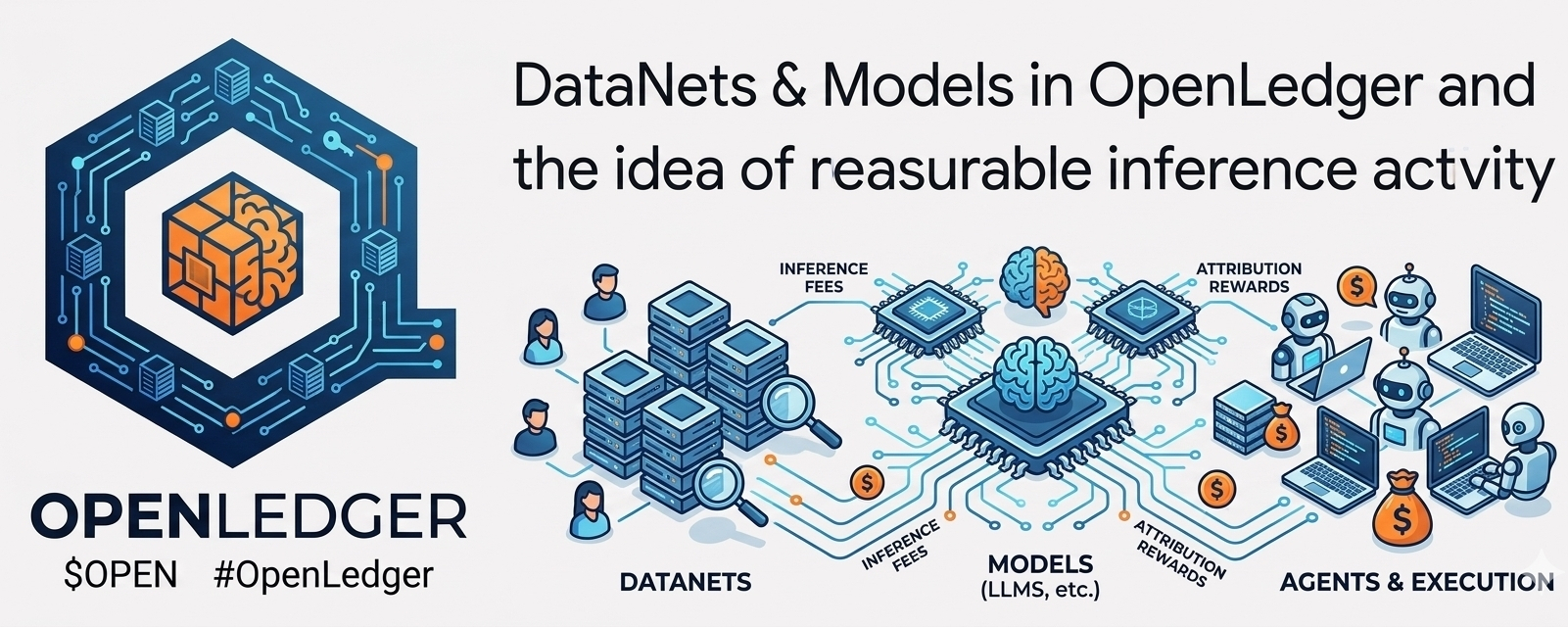

I can't get this thought out of my head about @OpenLedger .
I actually wrote it down a while ago, ignored it, came back to it, ignored it again and somehow I'm still thinking about it.
Maybe that's a sign it's worth exploring. Or maybe I've just spent too much time staring at AI and crypto charts lately.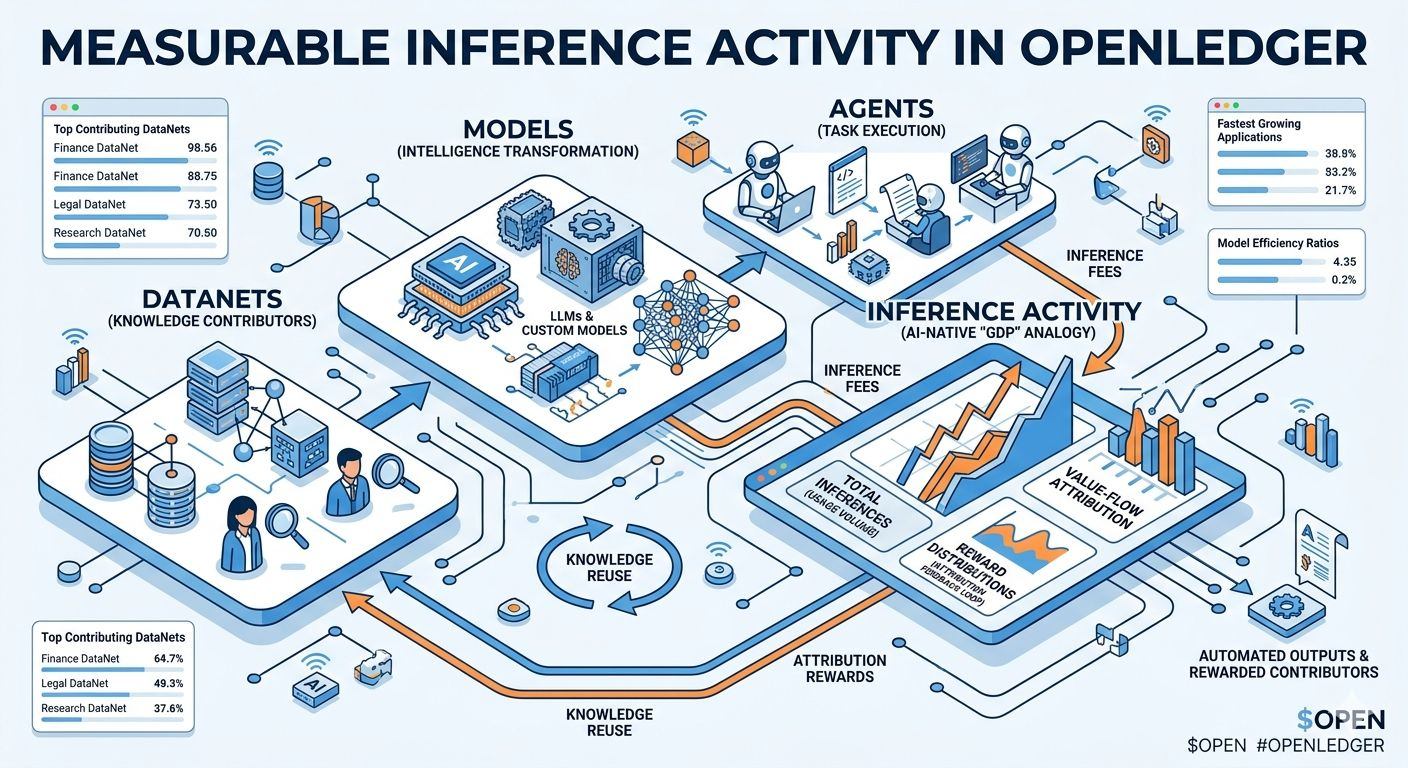
Anyway, here's the question:
What if inference activity eventually becomes measurable in a way that's somewhat similar to how economists measure economic activity?
Not the same thing.
Not a one-to-one comparison.
Just similar enough that the comparison becomes useful.
At first I thought that sounded ridiculous.
The more I sat with it though, the harder it became to completely dismiss.
GDP is basically an attempt to measure productive activity.
It's a way of asking: where is value being created, how is it moving and what kind of output is being generated over time?
Factories produce goods.
Companies provide services.
People spend money.
Capital moves around.
Economies generate activity and economists try to measure it.
Simple idea.
Then I started looking at OpenLedger from that angle.
DataNets contribute knowledge.
Models transform that knowledge into intelligence.
Agents use that intelligence to perform tasks.
Inference fees move through the network.
Attribution rewards flow back to contributors.
Applications create demand.
The obvious response is that none of this is a real economy.
Fair enough.
But it's still activity.
And what caught my attention is that so much of it appears measurable.
Every inference leaves some kind of footprint.
Every attribution event records a contribution.
Every DataNet enters a registry.
Every reward distribution creates a visible movement of value.
I kept asking myself why that felt important.
I think it's because most AI systems don't really expose that layer.
You get an output.
You get a response.
Maybe it's useful, maybe it isn't.
But the process behind it is mostly hidden.
Who contributed?
What data mattered?
Which model generated the result?
How was value distributed afterward?
Most of the time we don't know.
Or at least we can't easily see it.
OpenLedger seems to be experimenting with making that process visible.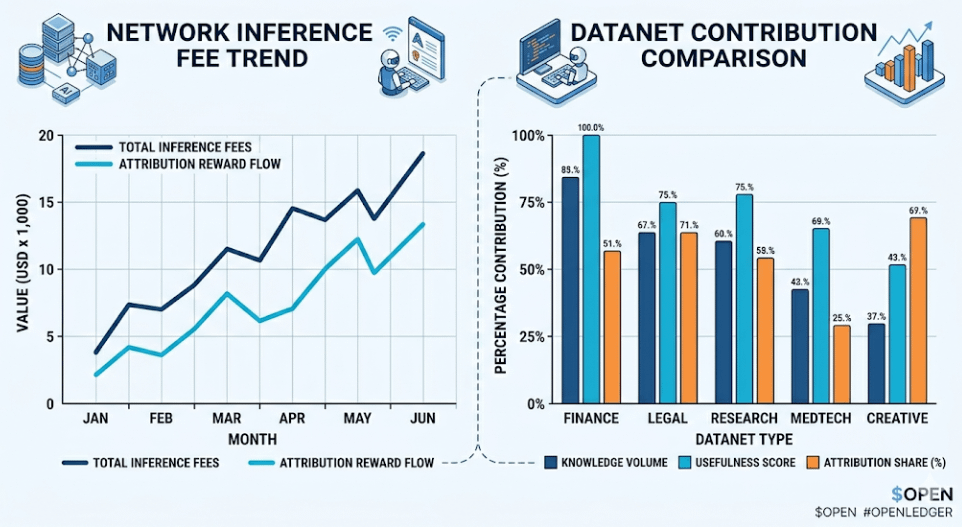
And once people can measure something, they immediately start comparing it.
Which DataNets are creating the most useful intelligence?
Which agents generate the most activity?
Which models drive the most value?
Which parts of the ecosystem are growing the fastest?
Halfway through thinking about this, I realized those questions sound a lot like the questions economists ask every day.
That's the moment the comparison stopped feeling completely crazy to me.
Then again, maybe AI economies won't behave anything like human economies.
That's where the whole idea gets weird.
Agents can operate 24/7.
Demand can scale globally almost instantly.
Knowledge can be reused over and over without being depleted.
The same DataNet can influence thousands of outputs at the same time.
That doesn't look much like the economic systems we're used to studying.
Maybe concepts like productivity, growth, and output start meaning something different in environments like that.
I honestly don't know.
And if I'm being honest, I've gone back and forth on this more times than I'd like to admit.
Some days I think OpenLedger could become one of the first systems that allows us to measure something resembling AI-native economic activity.
Other days I think intelligence is simply too strange too reusable and too interconnected for something like "AI GDP" to ever capture what's really happening underneath.
Maybe both views are wrong.
What keeps pulling me back to the idea is that OpenLedger isn't just generating intelligence.
It might be generating measurable signals about how intelligence itself is created used and rewarded.
And whether that eventually looks like an economy, a network or something entirely new, I genuinely have no idea.
But it feels like one of those questions that becomes more interesting the longer you think about it.