

A few days ago I was reading about data poisoning attacks and honestly, it sent me down a completely different train of thought.
People usually talk about AI as if the biggest challenge is making models smarter. Every week the conversation seems to revolve around larger context windows, faster inference, better benchmarks, or more compute. Those things matter, obviously. But the more I looked into OpenLedger, the more I felt the industry might be underestimating a different problem entirely.
What happens when the information feeding AI systems becomes unreliable?
Because intelligence and trust aren't the same thing.
A model can be incredibly sophisticated and still produce poor outcomes if the data flowing into it is inaccurate, manipulated, outdated, or simply low quality. In some cases, more intelligence can even make the problem worse because bad information gets processed more efficiently instead of being questioned.
That's where OpenLedger started standing out to me.
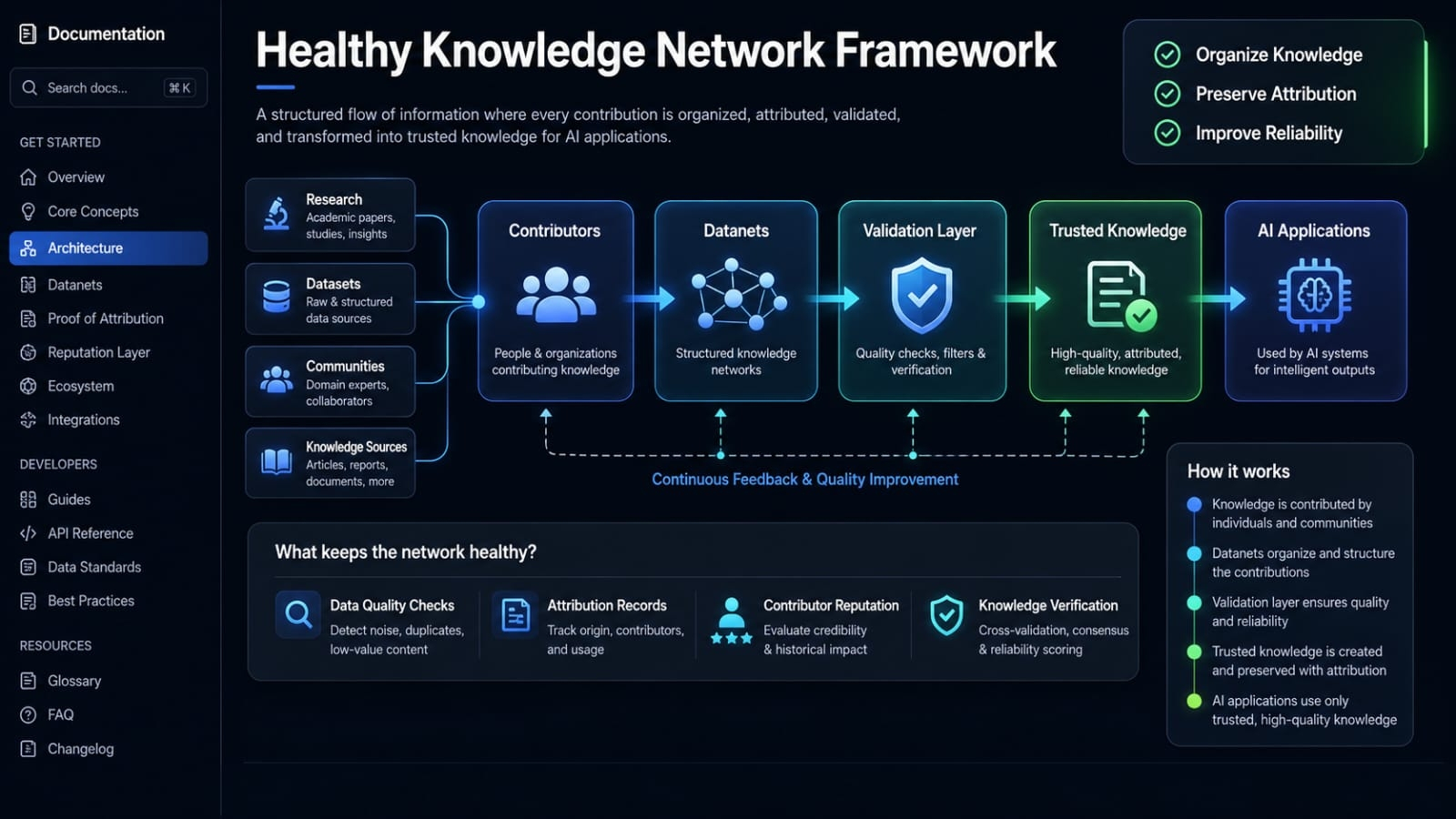
The ecosystem's focus on Datanets feels less like a race to gather as much data as possible and more like an attempt to create structured knowledge networks where information remains attributable, accountable, and useful over time. The internet already has an endless supply of information. The real challenge isn't quantity anymore. It's quality.
And honestly, quality becomes harder to maintain as systems grow.
A healthy AI ecosystem doesn't just need more inputs. It needs mechanisms that help identify where information came from, how it entered the network, and whether it can be trusted. Otherwise bad signals can spread through the system without anyone noticing until the damage is already done.
That's why Proof of Attribution caught my attention.
The more I read about it, the more it felt like part of an immune system for AI economies. Not because it can magically eliminate every bad input, but because it creates visibility. It helps track contributors, preserve provenance, and maintain a clearer understanding of how information influences future outcomes.
The personal reality check I keep coming back to is this:
AI doesn't just need intelligence.
It needs ways to stay healthy.
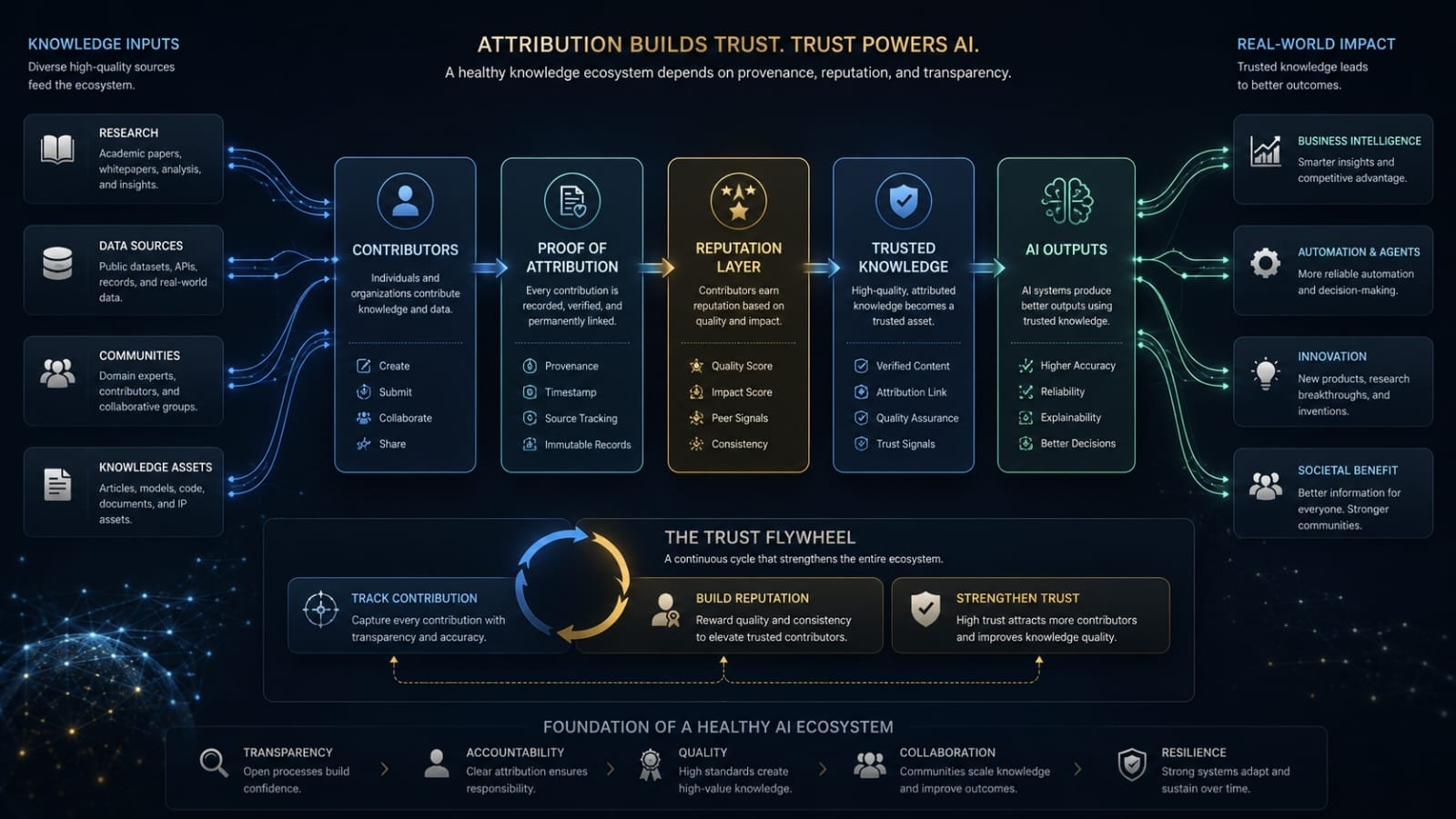
Healthy systems are usually built on reputation, accountability, transparency, and traceability. Remove those things and trust becomes fragile very quickly. Keep them in place and ecosystems become much more resilient.
That's also why $OPEN stands out in my research.
The token isn't simply attached to AI activity. It's connected to an ecosystem attempting to build infrastructure around trusted data, attribution, contributor accountability, and knowledge coordination.
What makes that interesting is that OpenLedger's thesis isn't centered on producing one perfect model. It's centered on creating conditions where knowledge networks can remain trustworthy as they scale.
If OpenLedger succeeds, the long-term value of the network may not come from producing the smartest outputs. It may come from helping AI ecosystems maintain confidence in the information those outputs are built on.
My opinion is pretty simple.
The next AI race won't be won by whoever collects the most data.
It'll be won by whoever can maintain the healthiest knowledge network.
And that's what makes OpenLedger interesting to me.
Not because it's trying to build bigger intelligence.
Because it's trying to build stronger trust.
Source: OpenLedger Docs - Datanets & Proof of Attribution sections Not financial advice. DYOR. @OpenLedger #OpenLedger