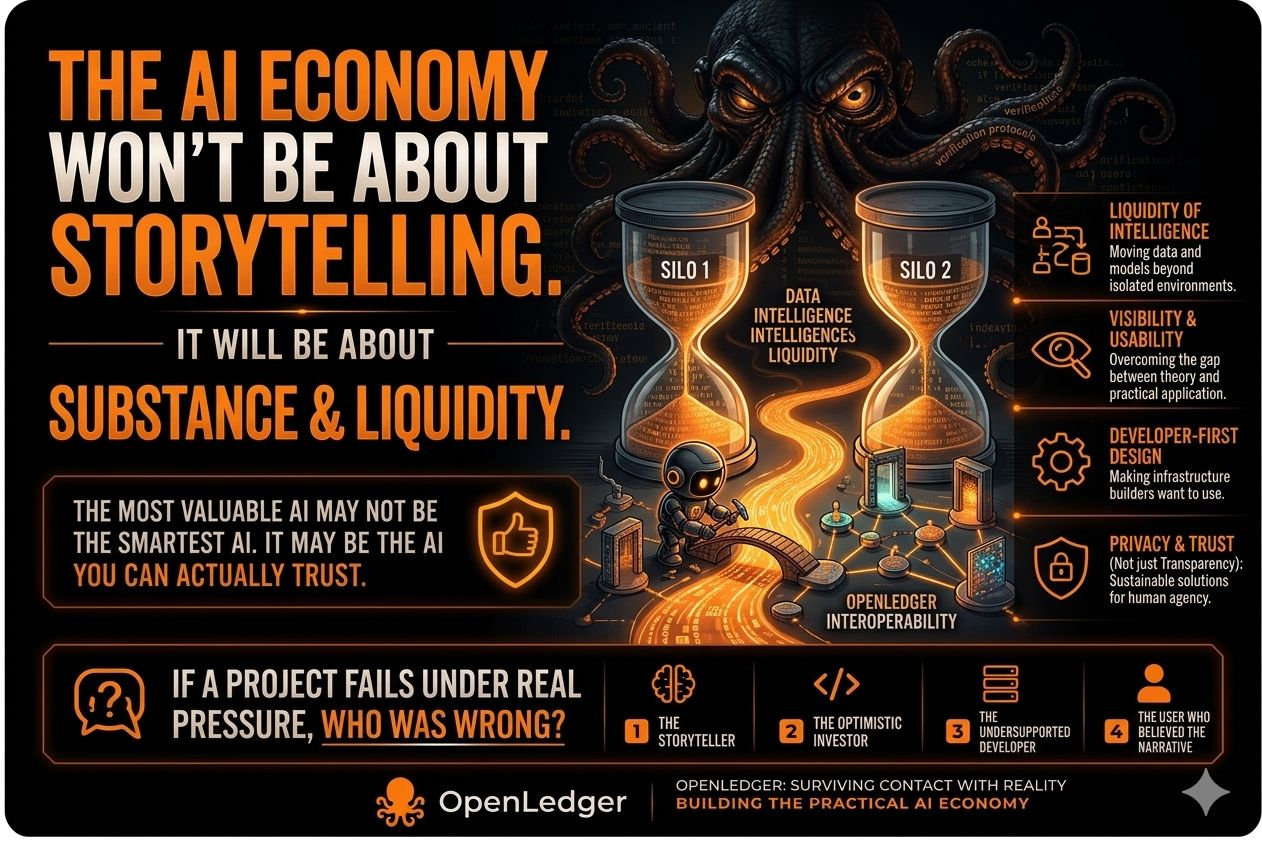
For a long time, I’ve felt like I’m watching the same conversations repeat themselves in circles. Every cycle introduces a new narrative, a new promise, a new way of describing the future, but eventually the language becomes so recycled that it starts losing meaning. That’s probably why OpenLedger caught my attention in the first place. Not because I’m convinced by the narrative, but because it made me think about a problem I keep running into from a different angle. After years of watching markets reward storytelling over substance, I find myself paying less attention to what people claim and more attention to what actually moves.
When I think about OpenLedger, I don’t really think about liquidity in the traditional sense. Most people hear that word and immediately think about capital, markets, and assets moving efficiently between systems. What I keep wondering about is whether intelligence has its own liquidity problem. So much value is created through data, models, and automated systems, yet most of it remains trapped where it was originally produced. OpenLedger seems to raise a larger question about what happens when intelligence itself can move, interact, and create value beyond isolated environments.
What makes me cautious is that I’ve learned how often ambitious ideas hide weak execution. OpenLedger is operating in an environment where the gap between vision and reality is already crowded with projects that sounded transformative but struggled to prove themselves under real pressure. Infrastructure always sounds impressive in theory. The challenge begins when people actually try to use it. That’s where most narratives start falling apart. Adoption rarely fails because the idea was impossible. More often, it fails because the experience never became practical enough for real people.
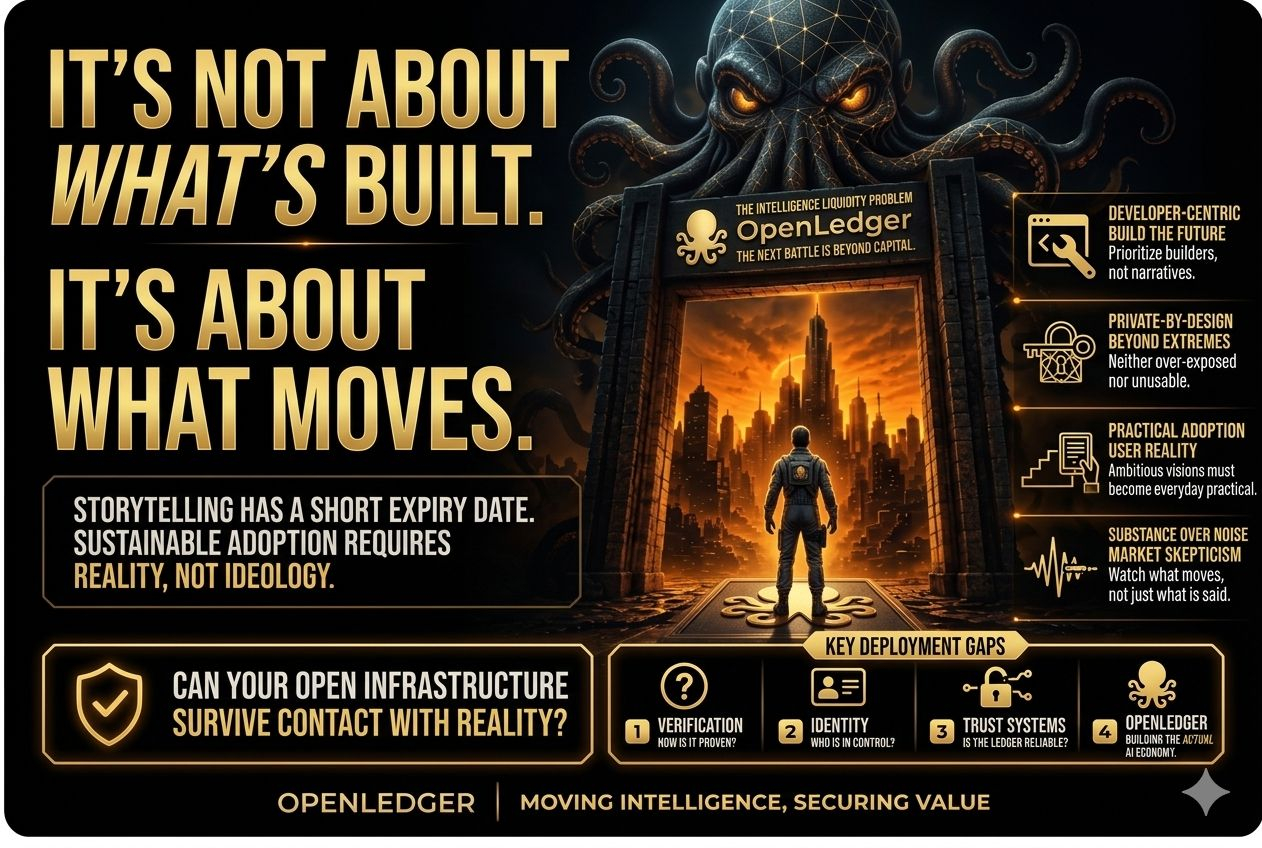
The same frustration appears whenever privacy enters the conversation. I’m tired of systems that force a choice between transparency and privacy, as if those are the only two options available. OpenLedger exists in a broader landscape where too much exposure has somehow become normalized, yet many privacy-focused approaches swing so far in the opposite direction that usability and trust suffer. I keep finding myself skeptical of both extremes because neither seems to solve the underlying problem in a sustainable way.
Another thing I can’t ignore is how frequently developer experience gets treated as an afterthought. OpenLedger, like any infrastructure-focused effort, ultimately depends on whether people actually want to build on top of it. I’ve seen countless projects invest enormous energy into narratives while overlooking the people responsible for turning ideas into functioning ecosystems. When builders struggle, adoption slows. When adoption slows, even the strongest vision starts feeling disconnected from reality.
That’s why I’m still watching OpenLedger with curiosity rather than conviction. Verification remains messy. Identity remains unresolved. Trust systems still feel fragile. The market continues rewarding noise faster than substance, which makes polished narratives increasingly difficult for me to believe. What interests me now isn’t whether a project sounds important. It’s whether it can survive contact with reality. OpenLedger may or may not become significant long term, but the questions it raises feel more important than the answers anyone currently claims to have.