


I used to believe that sheer intelligence was the only real bottleneck in technology. I assumed that once an algorithm could accurately predict market movements or manage a digital portfolio, the entire financial system would flawlessly run itself. Observing the market over the last year taught me a humbling lesson. The actual problem is not intelligence at all.
The real chellenge is trust. Handing over our digital assets to closed, centralized systems is exactly like giving a stranger your wallet and hoping they bring back the correct change. You get the final result, but you have absolutely no idea what risks were taken along the way. "Intelligence without transparency is just a black box waiting to break." That specific realization completely changed how I look at decentralized infrastructure.

Watching the daily traffic gridlock between Rajkot and Jetpur, the structural flaw in on chain artificial intelligence becomes blindingly obvious. You cannot route a massive fleet of heavy transport trucks through a narrow residential lane without causing immediate congestion. Blockchain architecture faces the exact same physical reality. The Ethereum Virtual Machine was specifically designed to process small, secure financial transactions. Forcing complex neural networks and high throughput data analysis through that specific infrastructure will instantly freeze the network. We desperately need a setup where the underlying reasoning is perfectly visible, but the heavy computational lifting happens somewhere else entirely.
The @OpenLedger whitepaper outlines this concept beautifully through the direct connection between smart contracts and authentic websites. In that framework, you can verify the code directly and see the logic with your own eyes. We must apply that exact same rigorous standard to machine learning models. Every single decision made by an autonomous digital agent needs a clear, verifiable audit trail. If an agent executes a major financial trade while you are asleep, you deserve a complete receipt of its reasoning.
Explainable AI makes this possible by permanently logging the specific market indicators, the data feeds, and the exact probability weights used for that specific decision. It transforms a highly complex algorithmic guess into a highly transparent mathematical proof.
However, placing this level of detail on a public network creates a massive vulnerability. When anyone can freely join a system, bad actors will inevitably flood the network with fake nodes to manipulate data feeds and intentionally skew the consensus. Bot resistance becomes the absolute most critical layer of the entire architecture. You have to guarantee that the network is thoroughly protected against Sybil attacks without sacrificing open access for honest participants. "A decentralized network without Sybil protection is just a playground for malicious scripts."
This scalability versus transparency dilemma is exactly where specialized infrastructure becomes necessary. Projects like OctoClaw create a focused framework where multiple analytical models can operate securely in localized, off chain environments. They handle the intense data processing completely away from the main chain.
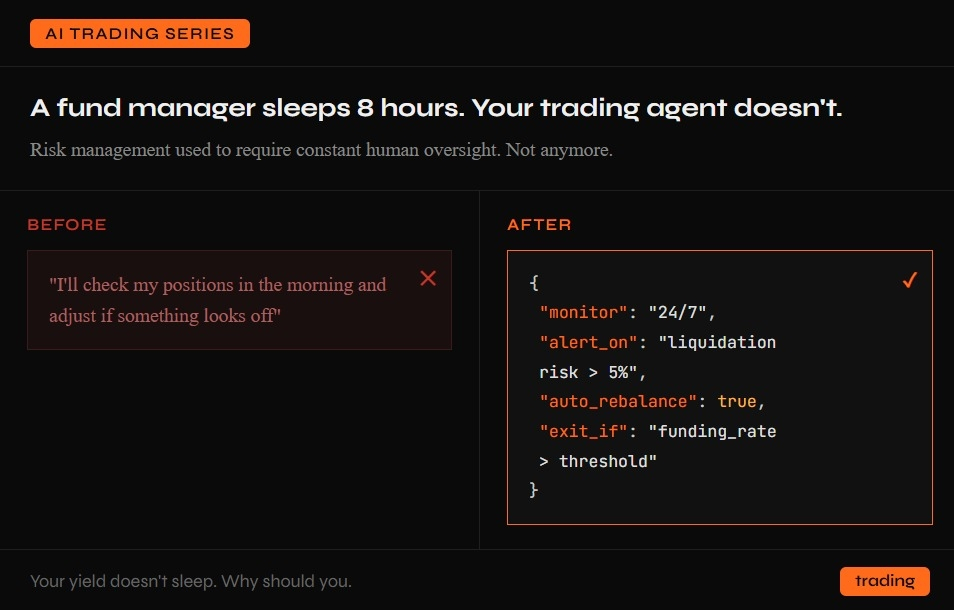
The EVM is only ever utilized for the final, definitive execution. Markets run all day and all night without stopping. Your personal risk management systems can do the exact same thing. There is no logical reason to rely on manual human oversight when secure, autonomous agents can execute your specific trading strategies continuously without congesting the base layer.

The engine powering this entire autonomous ecosystem is the $OPEN token, and its demand flywheel is engineered purely around verifiable utility. Developers must spend OPEN to access the computational power and premium data feeds required for their agents to function smoothly. As more autonomous agents are deployed to handle constant market execution, the baseline demand for these computing resources increases naturally. Simultaneously, the validator nodes providing network security and necessary Sybil resistance must stake their OPEN tokens to actively participate. This creates an elegant economic loop. High network usage locks up tokens and aggressively reduces the active circulating supply right as demand from new developers accelerates.
Despite this brilliant architectural design, we must remain thoroughly grounded in reality. The current market cycle is completely obsessed with the futuristic narrative of autonomous execution. Developer attention is exceptionally high and social media hype is incredibly loud. The gap between that loud internet noise and sticky everyday user adoption remains incredibly wide. Handing over financial control is Trusting a machine with your money takes more than just trusting the code behind it.

The financial risks of a smart contract vulnerability an unforeseen edge case, or a misread data feed during a violent market flash crash are still far too high for most retail participants to accept. "Real adoption happens when revolutionary technology becomes completely boring." We will know this infrastructure has actually succeeded when ordinary users let these verified systems manage their daily risk, completely forgetting the complex engineering running silently in the background.
The future of autonomous execution doesn’t need more hype it needs a verifiable foundation. Frameworks like #OpenLedger might just be the quiet infrastructure that finally turns that vision into a reality.