I think Crypto has spent years solved who gets to own things.
We spend far less time asking who gets to build them.
Anyone can trade a token, provide liquidity, move capital between protocols, or participate in a network. Creating something new, however, has always been a very different experience. There has been an invisible barrier between having an idea and turning that idea into something real.
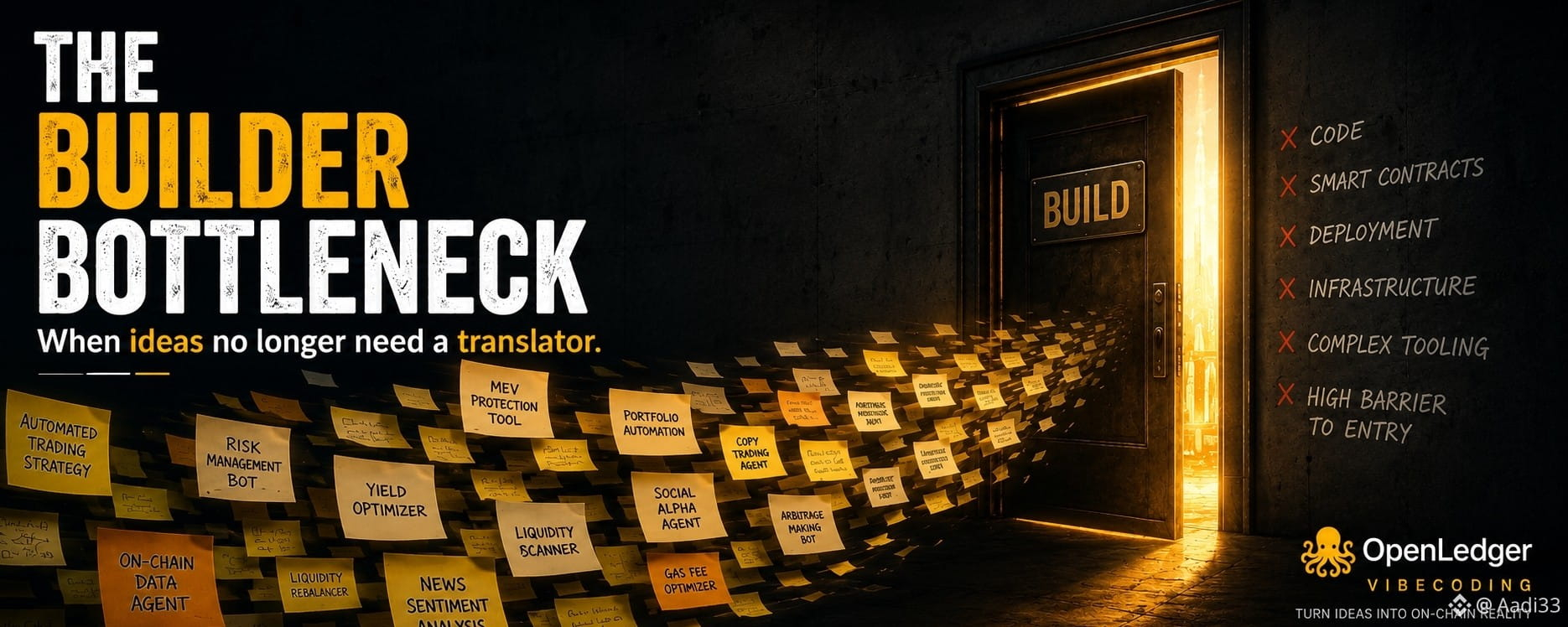
Over the years, I have noticed that many of the people closest to problems are often the furthest away from building solutions. Traders spend thousands of hours watching markets and identifying inefficiencies. Researchers discover patterns and workflows that could be improved. Community members repeatedly encounter the same frustrations while using products. The ideas exist, the demand exists, and the problems are obvious. Yet most of those observations never become products because they have to pass through a technical bottleneck before they can become reality.
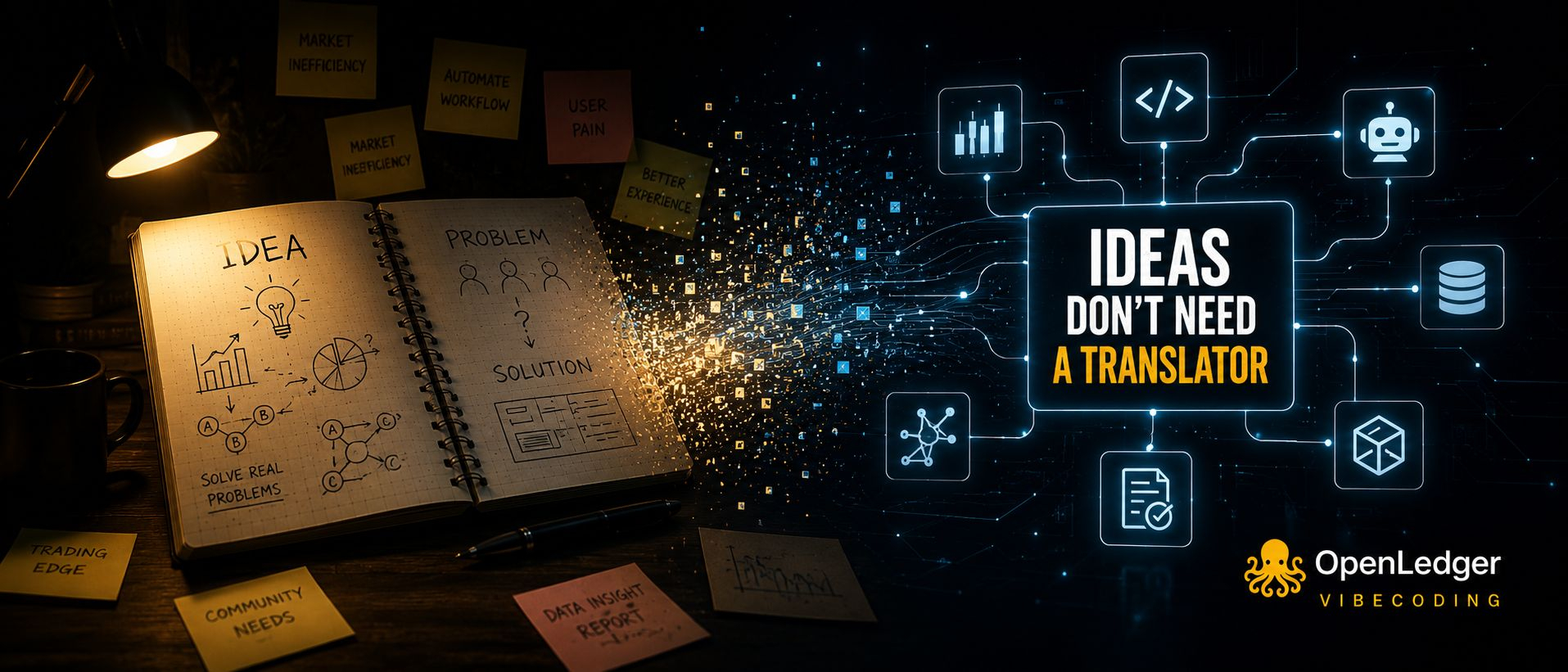
That was one of the first thoughts that came to mind when I started looking into Vibecoding on #OpenLedger . Most discussions focus on the AI aspect, but I think the more interesting question is what happens when ideas no longer need a translator. Historically, crypto has depended on developers to convert observations into applications. That model produced incredible innovation, but it also meant that countless useful ideas remained trapped in notebooks, conversations, and private thoughts because the people who identified the problems lacked the technical skills required to build the solutions.
@OpenLedger 's approach with Vibecoding appears to challenge that dynamic. Instead of requiring users to learn development frameworks, deployment processes, and smart contract architecture, the goal is much simpler. Users describe what they want to create, and the system handles the technical translation underneath. Whether that vision can scale successfully remains an open question, but the direction itself feels significant because it changes who can participate in creation.
What stands out to me is that Vibecoding feels less like a feature and more like a shift in access. If the barrier between ideas and execution becomes smaller, the next generation of builders may not come primarily from developer communities. They may come from traders who understand market behavior, analysts who understand information flow, researchers who understand incentives, and everyday users who understand problems because they experience them directly.
That possibility is what makes $OPEN interesting to me. Not because AI can generate code, but because the platform is exploring what happens when more people gain the ability to turn their observations into reality. For years, crypto has been exceptionally good at creating opportunities for participation. Vibecoding raises a different question entirely what happens when participation in building becomes just as accessible as participation in using?