
Omniston v1beta8: Expanding Beyond Swaps into Cross-Chain Liquidity Infrastructure
A New Step in DeFi Infrastructure
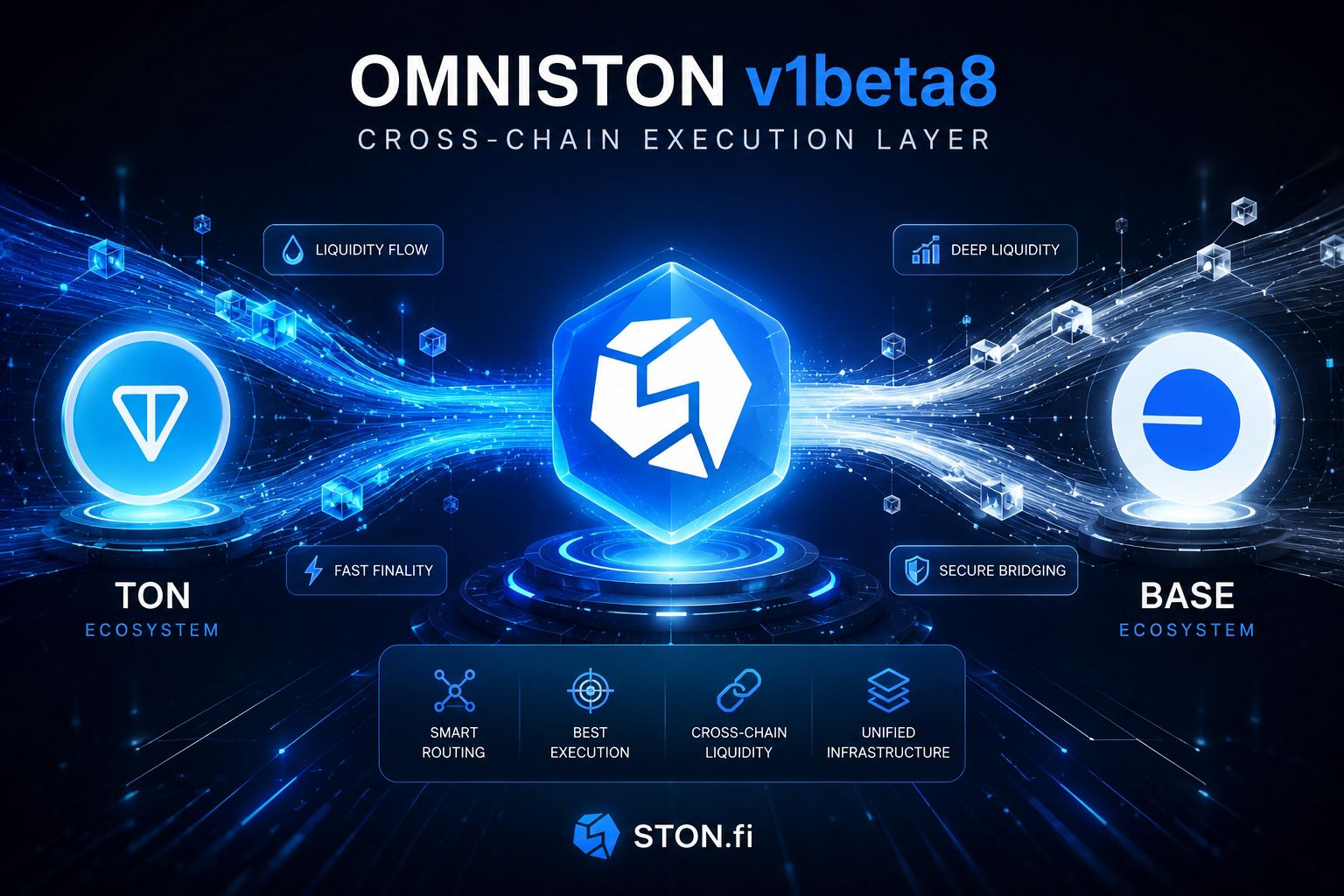
Omniston is no longer positioning itself as just another swap aggregator. With the release of Omniston v1beta8, the platform is evolving into a cross-chain execution layer designed to move liquidity more intelligently between ecosystems, starting with TON and Base.
This is more than a product update. It signals a broader shift in how DeFi infrastructure is being built: not only to help users swap assets, but to help liquidity move efficiently across networks that have traditionally operated in isolation.
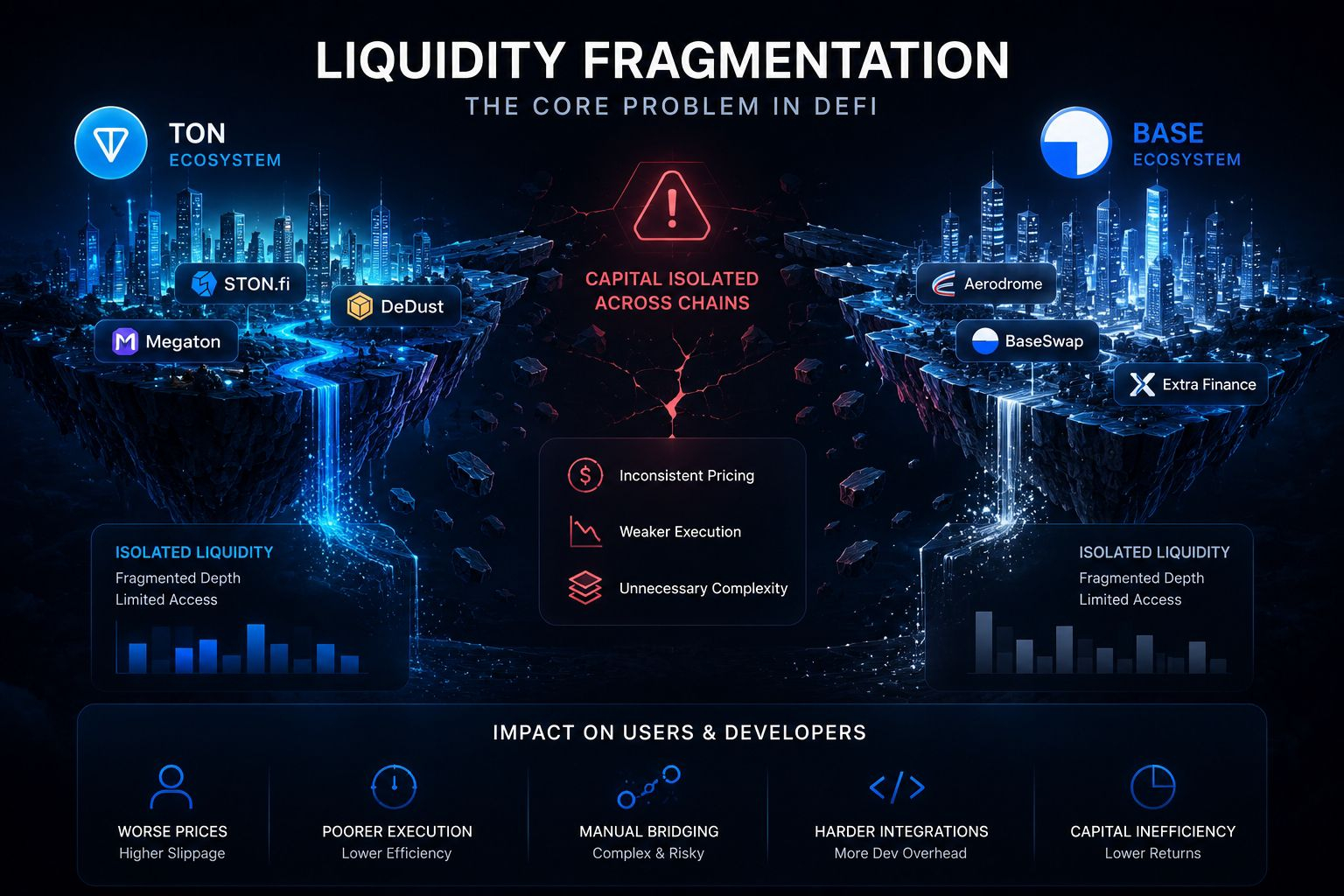
In a fragmented market, this matters. DeFi has grown across multiple chains, but liquidity has not grown evenly. Assets, trading depth, and execution quality are often spread thin across different ecosystems. The result is familiar to anyone active in decentralized finance: inconsistent pricing, reduced capital efficiency, and a more complicated user experience.
Omniston’s latest evolution is built to address exactly that.
Why Liquidity Fragmentation Remains a Core DeFi Problem
One of the biggest inefficiencies in DeFi is liquidity fragmentation. Capital is frequently locked within separate blockchain environments, each with its own pools, routes, and execution conditions. While this multi-chain reality has expanded DeFi’s reach, it has also created structural friction.
For traders, fragmentation can mean worse pricing and less reliable execution. For protocols, it can make integration and routing more complex. For developers, it adds another layer of infrastructure to manage. And for users, it often means more manual steps, more uncertainty, and a less seamless overall experience.
In simple terms, liquidity fragmentation prevents capital from flowing where it is most useful.
That is why cross-chain infrastructure is becoming increasingly important. The goal is not merely to support more chains, but to make those chains work together more effectively.
Omniston v1beta8 and the Move Toward Cross-Chain Execution
With v1beta8, Omniston takes a meaningful step forward by operating as a cross-chain execution layer supporting both TON and Base. This expansion is important because it turns Omniston from a swap-focused tool into a more foundational piece of infrastructure for liquidity movement.
Rather than treating liquidity as something confined to a single ecosystem, Omniston’s architecture is designed to connect liquidity flows across ecosystems. That means users and protocols can benefit from a more coordinated execution environment, where liquidity access is broader and routing becomes more efficient.
This is especially valuable in environments where speed, cost, and execution quality matter. A cross-chain execution layer can reduce the need for fragmented workflows and create a more unified path for liquidity to move between networks.
What This Means for Swap Execution
At the user level, the impact is practical.
A more connected execution layer can improve:
swap execution efficiency
liquidity accessibility across ecosystems
routing quality for traders
overall capital movement between chains
These improvements may sound technical, but their effect is straightforward: better access to liquidity can lead to smoother swaps, more reliable outcomes, and a cleaner user experience.
Instead of manually navigating separate liquidity environments, users can interact with infrastructure that is designed to handle that complexity beneath the surface. That is one of the most important promises of advanced DeFi infrastructure: making the system powerful without making it harder to use.
Why This Matters for Developers and Protocols
The benefits are not limited to traders.
For developers and protocols, cross-chain execution infrastructure can reduce integration overhead while widening access to liquidity sources across ecosystems. That can simplify how applications are built and how liquidity is routed behind the scenes.
In practice, this means protocols may be able to focus more on product design and less on handling fragmented liquidity logic themselves. It also creates the potential for stronger interoperability, more efficient execution pathways, and broader reach across multiple user bases.
In a DeFi landscape where liquidity access is often a competitive advantage, infrastructure that can connect ecosystems becomes strategically important.
TON’s Growing Momentum Makes This Timing Significant
The release of Omniston v1beta8 comes at an important moment for the TON ecosystem.
TON activity continues to accelerate, supported by:
lower transaction fees
faster transaction speed
increasing Telegram-driven adoption
As more users enter the ecosystem and on-chain activity expands, the demand for scalable liquidity infrastructure grows alongside it. More participation creates more trading activity, which in turn increases the need for efficient routing, deeper liquidity access, and cross-chain coordination.
This makes Omniston’s timing especially relevant. A growing ecosystem needs infrastructure that can scale with it, not just within its own boundaries but across the broader DeFi landscape.
STON.fi and Omniston as a Broader Liquidity Layer
The development of Omniston v1beta8 suggests a larger strategic direction for STON.fi and its infrastructure stack.
Rather than being viewed solely as a TON-native swap environment, the system is increasingly shaping up as a broader execution layer capable of connecting liquidity across multiple ecosystems. That is a meaningful evolution in positioning.
It reflects a shift from isolated DeFi tooling toward infrastructure that supports capital movement at a network level. In a multi-chain world, the projects that create efficient links between ecosystems may become just as important as the chains themselves.
STON.fi’s role in this context becomes clearer: not only enabling swaps, but helping define how liquidity can move more intelligently through the broader DeFi environment.
A More Connected Future for DeFi
The future of DeFi will likely belong to systems that can reduce friction rather than add to it.
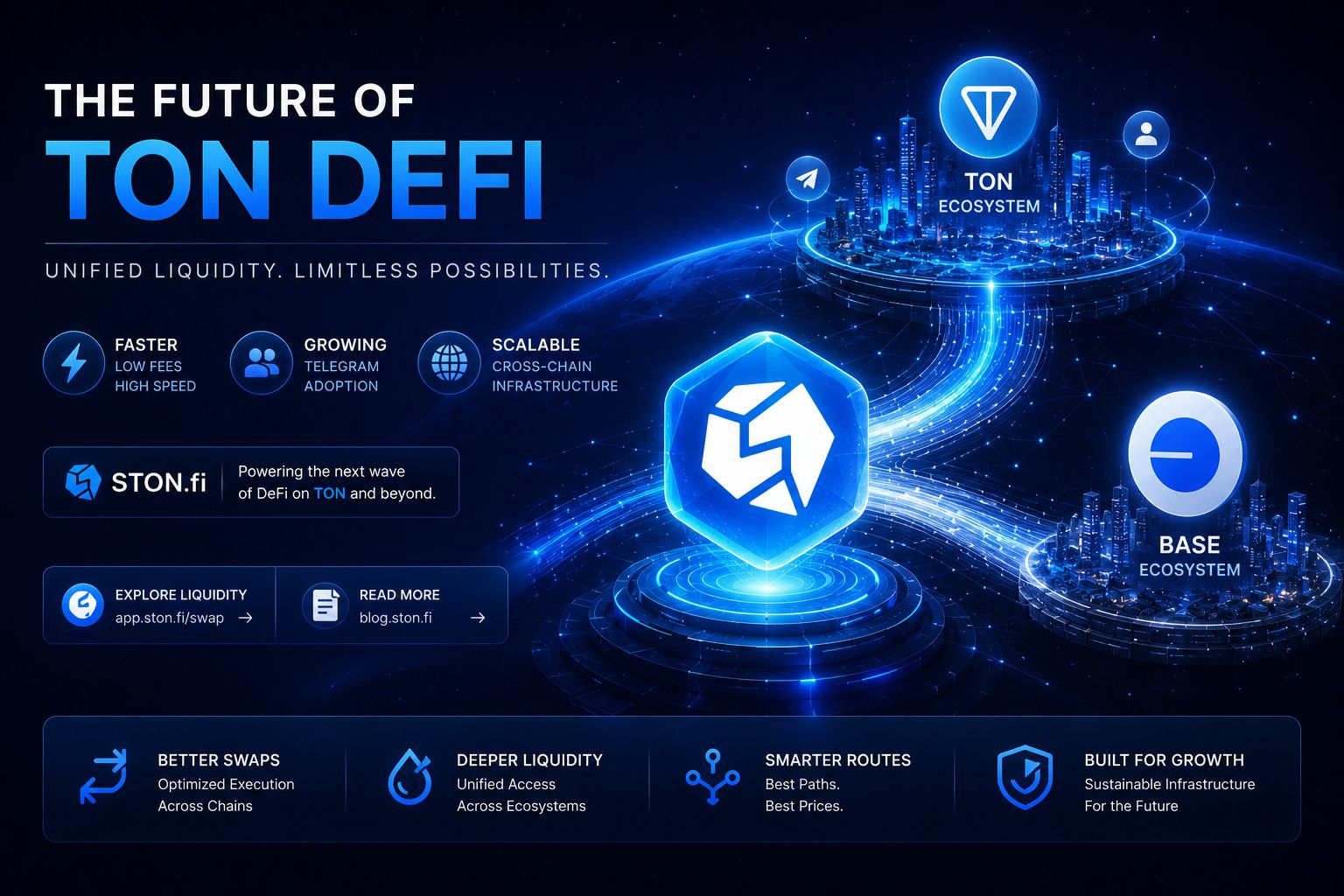
Liquidity fragmentation is still one of the sector’s most persistent problems, and cross-chain execution layers are one of the most promising responses. By connecting TON and Base through Omniston v1beta8, STON.fi is contributing to a more connected liquidity structure that can improve execution quality, user experience, and capital efficiency.
That is why this release matters. It is not just an incremental improvement. It is part of a larger transition toward infrastructure that can support DeFi across ecosystems, not just inside them.
As TON continues to grow and cross-chain activity becomes increasingly central to decentralized finance, infrastructure like Omniston may play a defining role in how liquidity moves in the next phase of the market.
Explore More
For users who want to experience the liquidity infrastructure directly, the swap interface is available at app.ston.fi/swap.
To learn more about STON.fi and its broader ecosystem, visit blog.ston.fi.