
Most people think they know the answer.
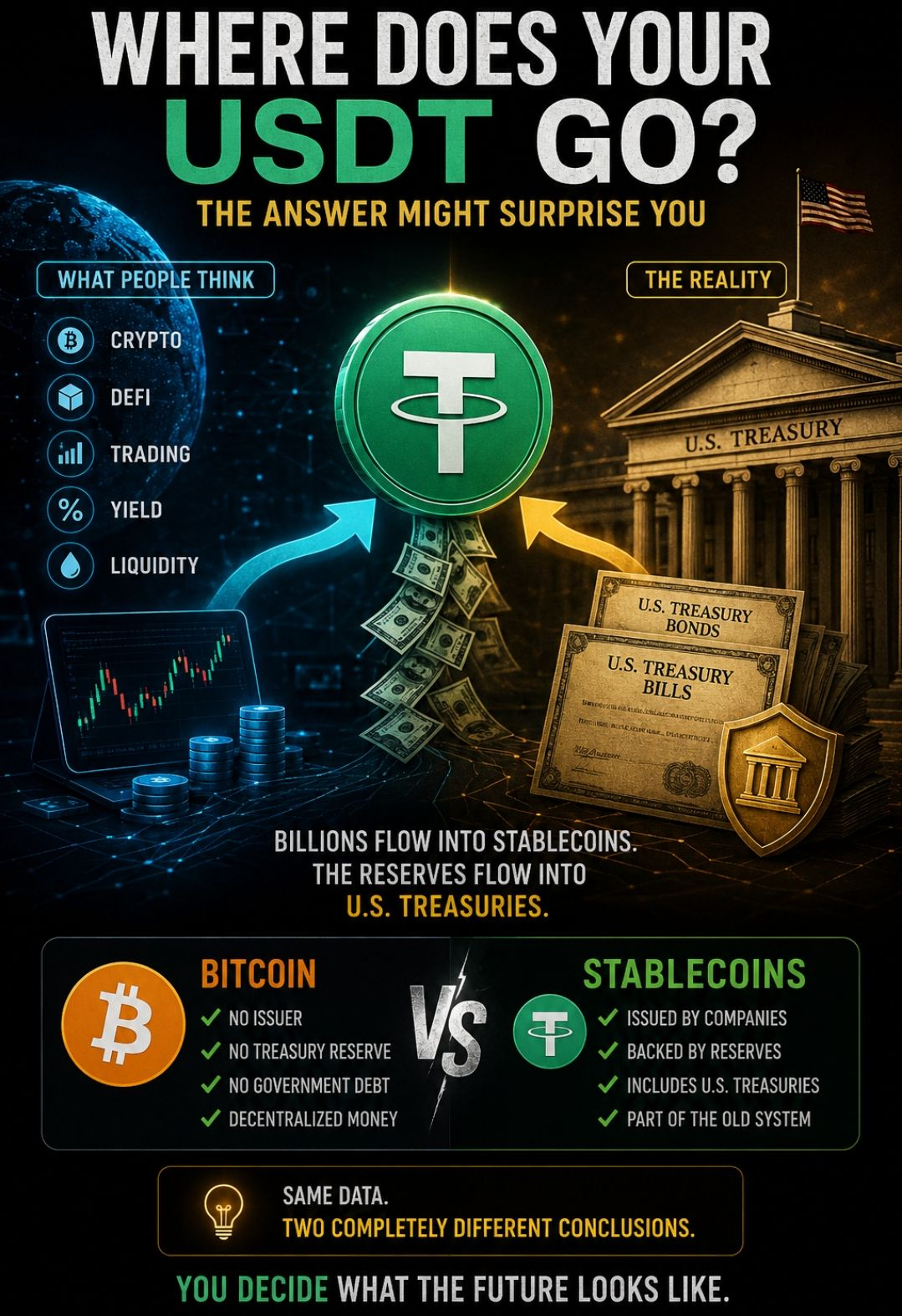
Crypto. Trading. DeFi. Yield farming. Liquidity pools.
But what if the reality is far more complicated?
Every day, billions of dollars flow into stablecoins like USDT and USDC.
Most users see them as a bridge between traditional finance and crypto. A safer place to park capital during volatility.
Yet behind the scenes, a significant portion of the reserves backing these stablecoins is invested in U.S. Treasury assets.
🏛️ Let that sink in.
A person in Argentina buys USDT to escape currency devaluation.
A trader in Vietnam buys USDT to protect purchasing power.
A user in Nigeria chooses stablecoins instead of trusting local banks.
They believe they're moving away from the traditional financial system.
But in many ways, they may be strengthening the global demand for the U.S. dollar.
For years, crypto promised an alternative financial future.
A system independent of governments, banks, and centralized control.
Yet today, the fastest-growing sector in crypto is built around dollar-backed stablecoins.
So here's the uncomfortable question:
If stablecoins become the financial layer of the internet, who benefits the most?
Crypto?
Or the dollar?
This isn't an attack on stablecoins.
USDT and USDC have played a massive role in driving adoption and providing liquidity across the entire digital asset ecosystem.
But it's important to recognize the paradox.
Many users believe they're exiting the old system, while simultaneously using products deeply connected to it.
Bitcoin stands apart in this debate.
No issuer. No central reserve. No Treasury holdings. No government debt backing it.
Just a decentralized monetary network operating on its own rules.
And that's what makes the conversation so fascinating.
The future of finance may not be a battle between crypto and traditional finance.
It may be a story of how the two become more connected than anyone expected.
What do you think?
Is stablecoin adoption strengthening crypto... or strengthening the dollar? 👇