
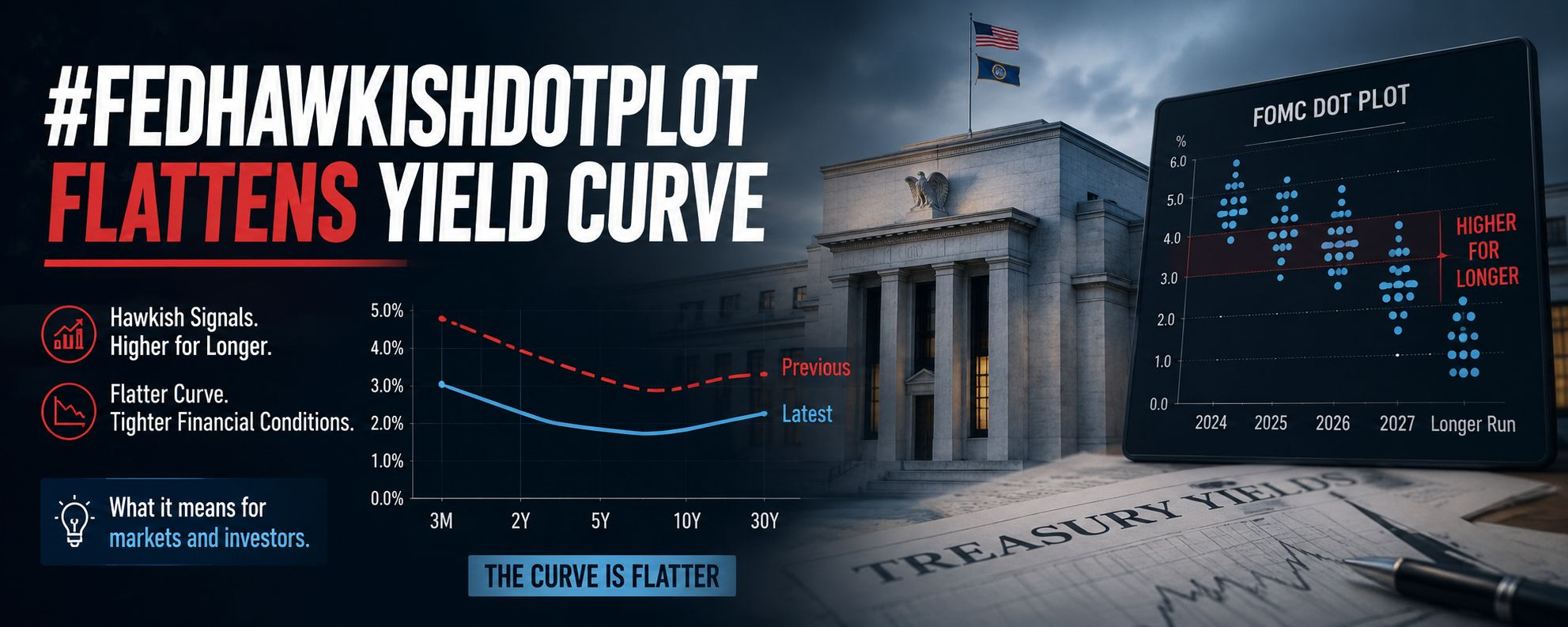
The latest Federal Reserve dot plot caught my attention because it reinforced a message the market has been trying to understand for months: interest rates could stay higher for longer. As soon as investors absorbed that signal, the Treasury yield curve flattened again, reflecting expectations that monetary policy will remain restrictive.
From my perspective, a hawkish dot plot doesn't just influence bond markets—it shapes sentiment across stocks, commodities, and even cryptocurrencies. When the Fed signals fewer rate cuts or a slower pace of easing, investors become more cautious. Money tends to move toward safer assets, while riskier markets often face pressure.
The flattening of the yield curve suggests that traders expect economic growth to slow while the Fed continues fighting inflation. Historically, this has been seen as a warning sign, although every economic cycle is different. That's why I believe it's important to focus on market data rather than react emotionally to headlines.
For equity investors, sectors that rely heavily on cheap borrowing may continue to face challenges. Growth stocks could remain volatile, while defensive sectors may attract more attention. In the crypto market, higher interest rates usually reduce liquidity, making it harder for digital assets to sustain strong rallies unless there is a separate positive catalyst.
Personally, I think the market is entering a phase where patience matters more than prediction. Instead of chasing every move, I prefer watching inflation data, employment reports, and future Fed communications. These factors will likely determine whether the current policy stance remains in place or begins to soften.
The Fed's latest outlook reminds us that central bank policy still drives global financial markets. While short-term volatility is likely to continue, disciplined investors who manage risk and stay focused on long-term trends are usually in a stronger position to navigate uncertainty.
Disclaimer: This article reflects my personal market views and is for informational purposes only. It should not be considered financial or investment advice.