
What Is a Blockchain?
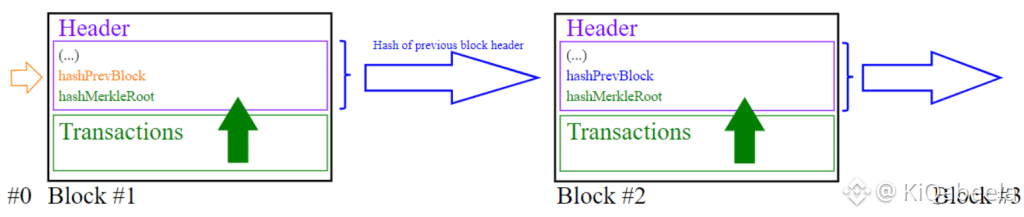
In its simplest form, a blockchain is a ledger, a record of transactions. Blockchains get their name from their structure.
Transactions are grouped in blocks by miners or validator nodes.
Each block references the previous or parent block using a cryptographic hash.
These connected blocks form a chain.
Because each block references its previous or parent block, the transactions in blockchains are difficult to change.
If a bank or a company wanted to reverse a transaction in traditional finance, they could do so quite easily by changing a value in a database. By contrast, cryptocurrency networks secure transactions by creating a chain that prevents earlier transactions from being easily changed.
This near-permanence is called immutability, and while it doesn’t make it impossible to change a transaction, it makes doing so extremely difficult. Transactions within blocks become more permanent as additional blocks are added to the chain.
For example, on the Bitcoin network, the cost to change a previous transaction outweighs the potential benefit. To change a transaction, you would have to re-mine every block after the block that holds the transaction in question — and you’d have to do it faster than the rest of the network can mine new valid blocks. (Bitcoin chooses the longest chain.)
After six block confirmations, a Bitcoin transaction is considered finalized. However, from a practical standpoint, smaller transactions are permanent after one confirmation due to the cost of re-mining a block.
The Bitcoin network uses proof of work to secure the blockchain, which we’ll cover next.
Proof of Work vs. Proof of Stake
For a ledger to be trusted (and for cryptocurrency to have value), there must be a way to agree the transactions are valid. In traditional finance, banks and institutions are typically the final arbiters. Crypto blockchains take a different approach. The network must reach a consensus and then have a method to secure the transactions so they can’t be changed.
The most common consensus methods are proof of work (PoW) and proof of stake (PoS).
Proof of Work
As a concept, proof of work dates back to a 2002 paper authored by Adam Back detailing a method to limit email spam and denial of service attacks by requiring a modest amount of CPU “work” to solve a cryptography problem.
Satoshi adopted the idea for Bitcoin, making Bitcoin miners guess the correct hash value to add a new block to the blockchain. The time and cost associated with this work made it cost-prohibitive to change existing transactions in the blockchain.
That’s the disincentive.
At the other end of the equation is the financial incentive: A miner can earn bitcoins by directing hashing power to mining new blocks to earn mining rewards.
Proof of work is still considered by many to be the most secure way to protect a blockchain. Several well-established networks like Bitcoin, Litecoin, Dogecoin, Bitcoin Cash, Ethereum Classic, and Monero use PoW.
Proof of Stake
One common criticism leveled against PoW is its energy consumption. As an alternative to PoW, proof of stake has become a popular, energy-friendly option. First pioneered by Peercoin, which uses both PoW and PoS, proof of stake requires that validators put up collateral.
This collateral puts something valuable at stake. If a validator breaks protocol (a set of rules), that validator could have its stake slashed, meaning all or part of the staked cryptocurrency can be taken from the validator.
A validator is a computer on the network that runs specialized software to ensure transactions are valid and that other validator nodes follow protocol.
Proof of stake networks often have minimum staking requirements for each validator, but they also might offer Delegated Proof of Stake (DPoS), which makes it possible for people with smaller balances to team up and stake to a qualifying validator.
Other consensus methods may be used as well, such as:
PoH: Proof of History
PoET: Proof of Elapsed Time
PoC: Proof of Capacity
The Role of Consensus in Crypto
Consensus (agreement between nodes) in crypto blockchains gives us a way to transact in a trustless way. This means we don’t have to trust a bank, institution, or a third party to account to track balances and verify transactions. Everything we need to see can be verified with a crypto wallet and a blockchain explorer for Bitcoin, Ethereum, or whichever network you’re using.
A consensus mechanism ensures that all nodes agree on the state of the blockchain ledger and that all transactions are legitimate.
As users, consensus allows us to feel confident in the validity of transactions, and we can choose crypto networks based on the security their consensus mechanisms provide. Some feel more confident in PoW networks, while others prefer PoS or other consensus methods. In either case, we don’t need to trust a third party that may not work in our best interest. Instead, we trust the process and can verify the results on a public blockchain.
Ways to Acquire Cryptocurrency
There are three primary ways to acquire cryptocurrency. Let’s explore the options.
Mining
The first bitcoins were mined with desktop CPUs. The same is true for litecoins, dogecoins, and newer projects like Kaspa and Zephyr. Initially, Ethereum was mined as well. The original Ethereum chain called Ethereum Classic is still mined using PoW.
Only proof-of-work coins can be mined in the traditional sense. Mining algorithms adjust for difficulty as hash power increases with the addition of more or better miners. As mining difficulty increases, hardware requirements also increase.
Today, Bitcoin can’t be mined competitively with CPUs or even high-end graphics cards. The Bitcoin mining industry is dominated by specialty hardware called Application-Specific Integrated Circuits (ASICs).
Some smaller coins, including Kaspa, Monero, Zephyr, and others, can still be mined with CPUs or graphics cards. However, it’s often more practical to buy these coins from an exchange when prices dip.
Earning
You can build a crypto stack through several ways of earning. In many cases, you’ll need to have some crypto already that you can put to work.
Staking: Proof-of-stake networks like Ethereum and Solana allow you to “stake” your tokens to earn staking rewards. Often, staking rewards can yield 3% APY or more.
Yield protocols: Smart contracts paved the way for decentralized finance (DeFi) applications. Popular decentralized apps (dApps) like Aave allow users to earn a yield by lending crypto to others. GMX, another well-known DeFi app, lets you own a part of the profits (or losses) in a decentralized exchange – paid in crypto.
Play-to-earn: Crypto-based games like Axie Infinity and The Sandbox provide ways to earn crypto in the game.
Crypto rewards cards: A handful of crypto rewards cards, like those from Coinbase or Gemini, let you earn crypto “cash back” when you make purchases.
Work for crypto: Freelance platforms may offer ways to get paid in crypto for the work you perform. Alternatively, payment apps like Cash App, Strike, and Venmo allow users to send crypto payments between users.
Buying
Often, buying crypto with fiat money offers the most efficient way to build a position.
In the next section, we’ll discuss places to buy cryptocurrency.
Where to buy Cryptocurrency?
The most common way to buy cryptocurrency is to use a crypto exchange like Coinbase, where you can buy crypto with USD, GBP, and other supported currencies. The first exchange dates back to 2010, when Bitcoin Market launched. Several of today’s exchanges date back to the same era. Coinbase was founded in 2012. Kraken and Bitstamp both launched in 2011.
Centralized exchanges: A centralized exchange (CEX) is run by a company, and most require identity verification. Examples include Coinbase and Kraken. These exchanges support trading fiat currencies for crypto and store your crypto in a custodial wallet until you withdraw.
Decentralized exchanges: A decentralized exchange (DEX) is run by software. Smart contract developers publish apps to the blockchain that let you trade one cryptocurrency for another or fund your account using fiat through a third-party provider. Popular DEX platforms include Uniswap and Pancakeswap.
Brokers: Similar to centralized exchanges, brokers let you buy crypto with traditional currencies. The difference is that you’re buying from or selling to the broker rather than trading directly with other traders. eToro and Robinhood are popular examples.
Payment apps: Cash App, PayPal, Venmo, and other payment apps now support buying and selling for popular coins. Some only support Bitcoin.
Wallet apps: Crypto wallets like MetaMask offer a way to buy crypto through a third-party provider like MoonPay or Mercuryo.
Peer-to-peer networks: Platforms like Bisq and HODL HODL offer peer-to-peer bitcoin trading. Trade with others worldwide. Prices may differ from market prices on centralized exchanges, however.
Bitcoin ATMs: In many countries, you can buy bitcoins from an ATM-like machine in a gas station or convenience store.
Is Cryptocurrency Safe?Cryptocurrency values are volatile, which brings upside opportunities as well as risks. Solana (SOL), a popular smart-contract cryptocurrency, surged nearly 9,500% from launch to reach an all-time high of $260.
A year later, SOL fell below $10. Like all assets, cryptocurrencies carry price risk.
But there are other safety considerations as well — and ways to mitigate risks.
Price risk: As a young asset class with relatively low trading volume, crypto values are volatile. When building a position, consider dollar-cost averaging — buying over time to lessen the effect of market volatility.
Platform risk: Crypto exchanges offer a convenient way to store your cryptocurrency with custodial wallets, but they also control the private keys to the wallet. If the exchange freezes withdrawals or becomes insolvent, your crypto is at risk. Consider moving larger balances to a self-custody wallet you control. We’ll cover crypto wallets in just a bit.
Smart contract risks: Smart contracts are powerful tools but can also be vulnerable to hacks, bugs, or malicious code. Research protocols carefully before connecting to a smart contract. Look for code audits by trusted security firms.
Political risk: Governments can make it difficult or even illegal to trade certain cryptocurrencies. In 2021, China banned crypto trading and mining. Make political risk part of your buying decision.
Rug pulls and abandonware: Promising crypto projects may not ever get off the ground, becoming abandonware; some projects or protocols may even be scams. Again, due diligence becomes a top priority.
Crypto Safety vs. Traditional Finance
In many ways, crypto can be safer than traditional assets due to its transparency. The code for smart contracts is often available to view, giving the community a way to identify issues or concerns. Code audits also highlight smart contract features and risks.
Many cryptocurrencies also limit supply. Bitcoin is limited to 21 million coins. Ethereum (Ether) supply is not strictly capped. However, the protocol burns base transaction fees, making the ETH slightly deflationary, given current market conditions.
By contrast, traditional currencies like the USD typically expand in supply. For example, M2, a measure of the US money supply, increased by 155% in the ten years following Bitcoin’s launch. During the same period, bitcoin’s value climbed from less than a penny to over $3,800.
Several countries are also experiencing hyperinflation with fiat currencies. Venezuela suffered 400% inflation in 2023 as the bolivar’s value collapsed.
Where to Store Crypto?
Most new crypto investors store their crypto on the exchange where they made the purchase. Modern exchanges use cold storage, keeping assets stored in offline crypto wallets. While convenient, this structure also means the exchange holds the private keys that control your assets.
Between 2011 and 2014, hackers reportedly siphoned off thousands of bitcoins from the Mt. Gox exchange. More recently, the CEO of the FTX exchange was convicted of fraud, allegedly using (losing) customer deposits in other risky trades.
Exchanges themselves can be a risk, but there’s also a risk that someone could gain access to your account. This risk parallels the risks found with online banking.
As a self-custody alternative, you can use a crypto wallet. Self-custody crypto wallets hold the private keys that control your crypto.
Hot wallets generate and store the private keys on a device that can connect to the internet. Hot wallets are apps that run on a computer or mobile device.
Cold wallets, typically hardware devices, store your private keys but do not connect to the internet. These devices then communicate with your computer or mobile device to authorize or decline transactions.
How Can You Use Cryptocurrency?
In many cases, cryptocurrency serves as a utility token on the network. ETH and SOL are good examples; both tokens serve as “gas” to power transactions, including smart contracts. This demand can give crypto value. Other cryptocurrencies, like Bitcoin, were intended to be used as money.
Here are some of the ways you can use cryptocurrency:
Use crypto as money: Hundreds of merchants ranging from Newegg to Burger King accept cryptocurrency. Additionally, crypto-funded debit cards let you spend your crypto like cash.
Part of an investment portfolio: Some crypto tokens can make promising investments. Chainlink, for example, is a company that plans to connect private and public blockchains, possibly making real-world assets available anywhere in tokenized form. The company’s token (LINK) is typically seen as an investment rather than a currency.
Earn DeFi yields: DeFi protocols like Aave and Radiant provide a way to earn a yield by lending cryptocurrency without an intermediary. The entire process is powered by smart contracts.
Earn staking rewards: By staking your crypto, such as ETH or SOL, you can earn a yield much higher than most bank savings accounts.
Cross-border transactions: Often, sending crypto is the cheapest way to send money to others, especially compared to payment services like MoneyGram or Western Union.
Store of value: If you choose carefully, cryptocurrency can be an effective store of value, similar to old or silver (but easier to transport).
Transact privately: Crypto networks allow you to transact without revealing your identity or sharing your buying preferences with financial institutions.
How to Use Cryptocurrency for Secure Purchases
Online vendors that support crypto purchases use a built-in process.
For example, when shopping for a computer with Newegg, you can pay with Bitcoin.
Add the item to your cart.
Select your shipping method.
Choose “Bitcoin” under billing.
Open your Bitcoin wallet app.
Scan the provided QR code or copy and paste the provided payment address.
Complete the transaction in your Bitcoin wallet.
Watch your email for a confirmation.
Payment completion times vary by network.
Alternatively, you can use a crypto card like the Coinbase Visa. Coinbase’s card lets you allocate crypto to the card and spend it like cash. Coinbase also pays crypto rewards (up to 3%) for purchases made with the card. Rewards change each month.
How to Invest in Cryptocurrency
Earlier, we discussed ways to buy cryptocurrency. The most common of these methods is to use an exchange or a broker.
To invest in cryptocurrency, you can follow these simple steps.
Visit the platform to open an account. Follow the prompts to provide your name, address, email, and phone number.
Verify your identity. To comply with regulations, most exchanges require a copy of your government-issued identification.
Deposit funds for trading. Connect a bank account, debit card, or PayPal account.
Choose a cryptocurrency. Many new traders start with BTC.
Make your crypto purchase. Search for the cryptocurrency you selected, then tap the trade button and complete the trade details to open your trade.
Top Cryptocurrencies
Many new crypto investors choose top cryptocurrencies as an initial investment. For instance, crypto market studies from 2023 show about 420 million crypto owners worldwide, with 219 million (more than half) Bitcoin owners globally. Bitcoin is still king in the crypto market.
Leading cryptocurrencies you can consider include:
Bitcoin (BTC)
Ethereum (ETH)
BNB (BNB)
Ripple (XRP)
Solana (SOL)
Cardano (ADA)
Avalanche (AVAX)
Dogecoin (DOGE)
Tron (TRX)
Polkadot (DOT)
Polygon (MATIC)
Chainlink (LINK)
Established cryptocurrencies provide larger trading markets and may bring less risk. However, future returns might not mirror the early days when each of these assets rose from much lower prices.
New Cryptocurrencies
You can also consider new cryptocurrencies or lesser-known projects with room to grow. These might include coins and tokens that solve a problem or improve upon older crypto protocols.
Here are several you can consider:
Celestia (TIA)
Sei (SEI)
Internet Computer (ICP)
Fetch.ai (FET)
Kaspa (KAS)
Hedera (HBAR)
Fantom (FTM)
Seamless (SEAM)
Cryptocurrency Legality
Crypto trading is legal in most countries throughout the world.
However, regulations vary, and in some jurisdictions, there remains some confusion over which cryptocurrencies must be registered as securities and which are more likely to be commodities.
In the US, the SEC has sued several exchanges, including Coinbase and Kraken, for selling “unregistered securities.”
What is a Security?
In the US, a security is an investment contract, meaning the buyer has an expectation of financial return based on the efforts of others. Whether an asset is a security has historically been determined by the “Howey Test,” which is comprised of four elements:
An investment of money
In a common enterprise
A reasonable expectation of profit
Derived from the efforts of others
A lack of regulatory clarity in the US and elsewhere could create challenges for trading if exchanges stop supporting crypto assets targeted by government agencies.
In recent filings, the SEC named several cryptocurrencies as securities.
SOL
ADA
MATIC
SAND
ICP
DASH
NEXO
However, many in the crypto community disagree.
Crypto Legal Tender
Cryptocurrencies can serve the same function as money in private trade, but most governments don’t see cryptocurrencies as legal tender.
Currently, just two countries have passed legislation to accept cryptocurrency as legal tender.
Central African Republic: Bitcoin
El Salvador: Bitcoin
Crypto Taxes
Many jurisdictions like the US and the UK see cryptocurrencies as property. This means gains on crypto are usually taxable.
Naturally, earnings paid in crypto are taxable as well, much like any income.
In the US, for example, the following are all taxable events:
Capital gains
Staking earnings
Mining earnings
Airdrops
Crypto payments
Interest and yields from crypto protocols
Interest from lending crypto
The US collects taxes in US dollars, so all transactions must be converted to USD value at the time of the transaction to determine the taxes due.
Should You Invest in Cryptocurrency?
Cryptocurrencies and blockchains promise to revolutionize financial markets and reach our everyday lives as real-world assets become tokenized, making their value accessible from anywhere.
However, with thousands of blockchain projects underway, it’s fair to say that not all will succeed and that some projects may just never gain the needed traction.
It’s often best to balance the risk and potential reward of cryptocurrency by allocating a portion of your total investment portfolio to cryptocurrencies you’ve researched and understand well.
Two time-tested investment strategies can help mitigate the risk.
Diversification: If you choose to invest in cryptocurrency, consider buying more than one to diversify your portfolio. But also consider making cryptocurrency part of a larger diversified portfolio that includes several sectors.
Dollar-cost averaging: Crypto prices are volatile, and with relatively small market capitalization, trading prices for coins and tokens can be pushed around by outside influences like news. Dollar-cost averaging, buying a fixed dollar amount on a set schedule, helps to smooth out purchase prices and optimizes your purchases by buying more when prices dip.