
📌

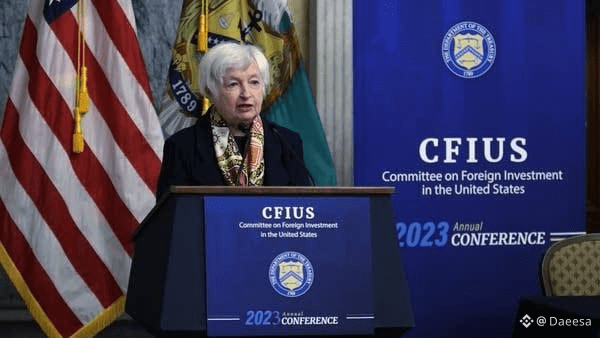
Washington, D.C., January 3, 2026 —
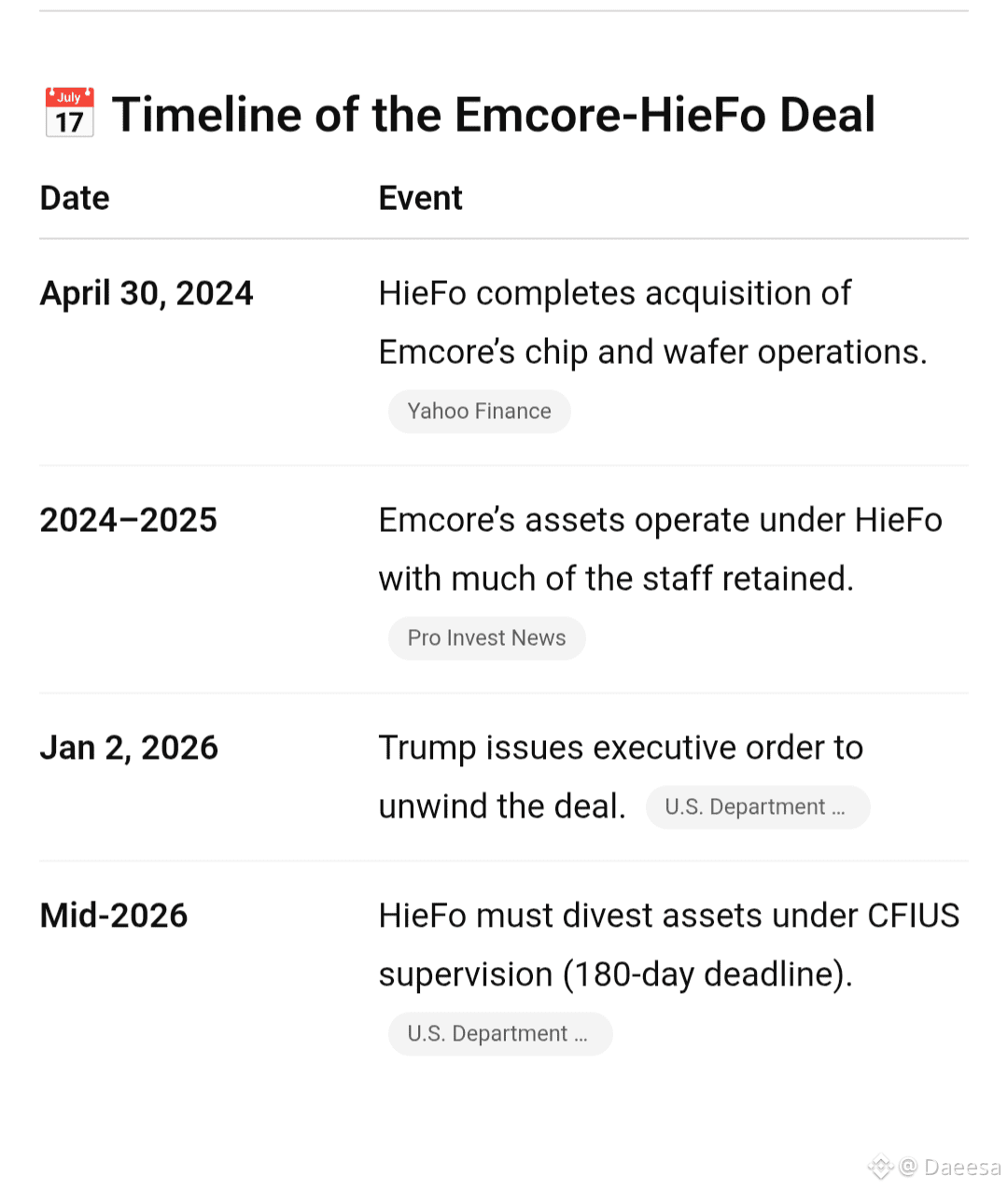
President Donald J. Trump has signed a decisive executive order forcing a Chinese-controlled firm to unwind its acquisition of U.S. semiconductor assets, marking a significant escalation in U.S.–China tech competition and national security policy. (Yahoo Finance)
🔎 What Happened
On January 2–3, 2026, the Trump administration ordered HieFo Corporation — a Delaware-registered company that the White House says is controlled by a Chinese national — to divest all interests in semiconductor assets it acquired from Emcore Corporation, a U.S. aerospace and defense technology firm. The transaction, originally closed in April 2024 for approximately $2.9 million, included the digital chips business and indium phosphide wafer fabrication operations. (Yahoo Finance)
The executive order, issued under U.S. national security authorities, states that the deal “threatens to impair the national security of the United States” and directs HieFo to complete divestment within 180 days, under the oversight of the Committee on Foreign Investment in the United States (CFIUS). (U.S. Department of the Treasury)
🧠 Why It Matters: Strategic & Security Concerns
⚙️ Technology at Stake
The assets involved include:
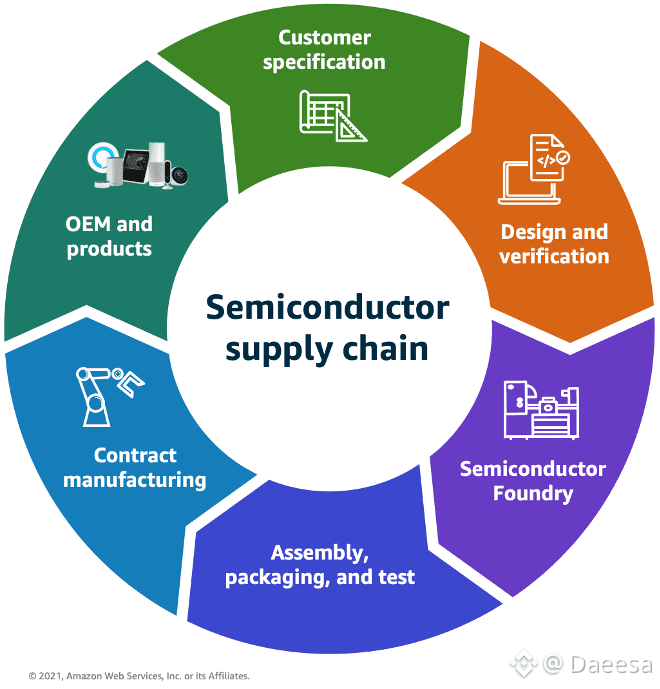
Advanced digital chip operations
Wafer design and fabrication infrastructure
Proprietary technical know-how and intellectual property
These technologies are used in systems ranging from telecommunications to defense platforms, making them strategically sensitive. (U.S. Department of the Treasury)
🛡️ National Security Risks
According to the U.S. Treasury, CFIUS identified potential risks from the transfer of intellectual property and expertise, along with the possible redirection of production away from the U.S. supply chain if controlled by foreign interests. (U.S. Department of the Treasury)
Security officials also flagged that the deal was not initially submitted to CFIUS for review, which triggered an investigation. (Pro Invest News)
📌 What Is CFIUS and Why It Matters?
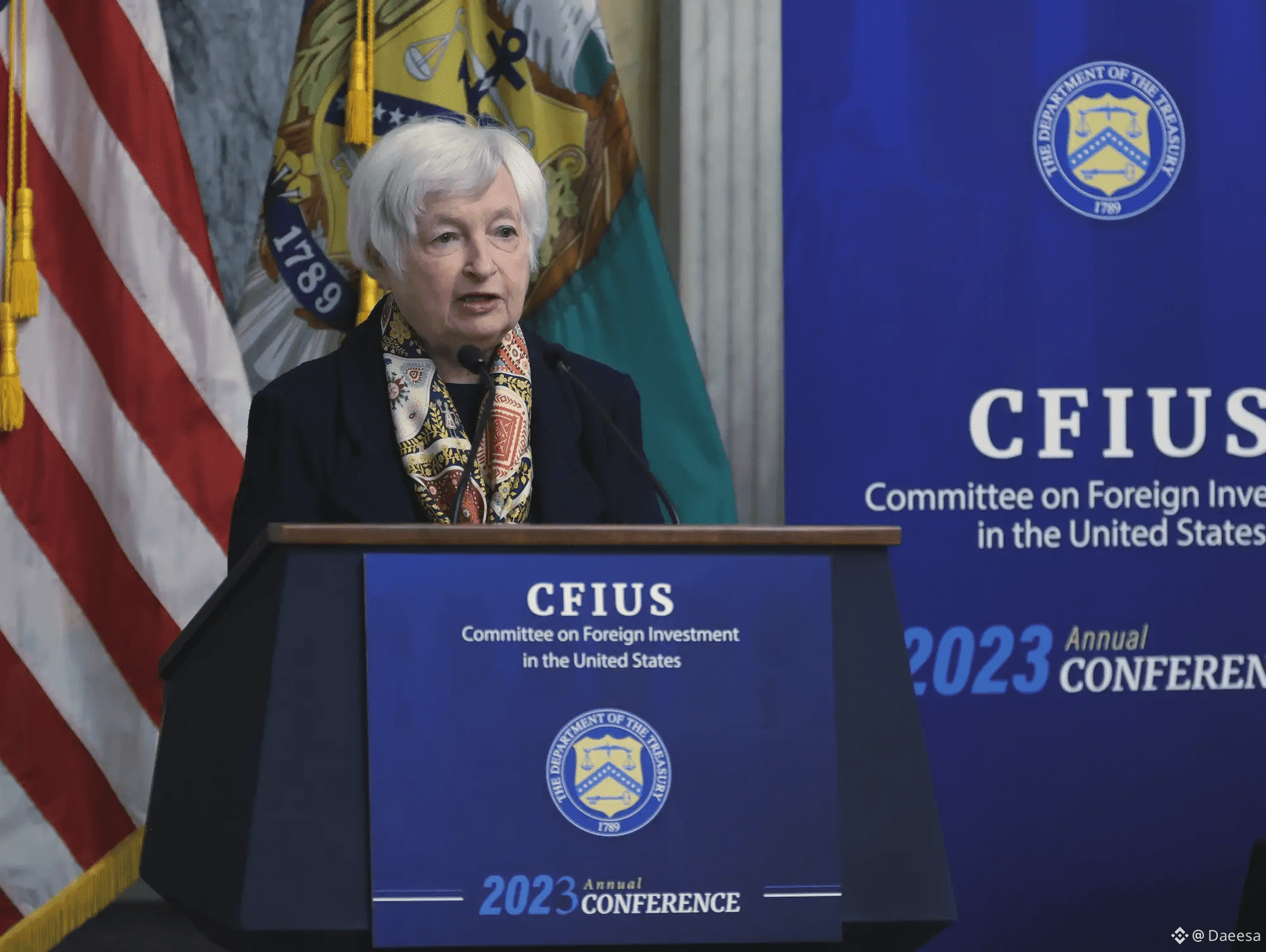
CFIUS — the Committee on Foreign Investment in the United States — is an interagency panel that reviews foreign transactions to identify national security risks from investments, mergers, and acquisitions. It includes representatives from the U.S. Treasury, Defense, State, Commerce and other agencies. (Wikipedia)
If CFIUS finds credible risks, it can recommend that the President block or unwind transactions — as in this case — even after a deal has closed. (U.S. Department of the Treasury)
🌍 Broader Implications
🔒 Rising Tech Tensions
This action reflects broader U.S. policy to limit Chinese access to advanced semiconductor technologies, a key component of modern computing, artificial intelligence and defense systems. Analysts see it as part of an ongoing effort to prevent strategic vulnerabilities arising from foreign control of critical technology assets. (Mondaq)
⚖️ Message to Investors
The ruling emphasizes the importance for companies engaged in cross-border tech deals — especially ones involving China — to notify CFIUS early and assess national security exposure long before transactions close. (U.S. Department of the Treasury)
📣 Reactions & Next Steps
HieFo and Emcore have not yet issued public statements responding to the order. (Reuters)
CFIUS will oversee divestment compliance and may grant extensions or impose conditions based on security findings. (U.S. Department of the Treasury)
Experts note that this move could discourage similar foreign acquisitions of sensitive U.S. tech assets without prior security clearance. (Mondaq)
#BTC90kChristmas #StrategyBTCPurchase #CPIWatch #WriteToEarnUpgrade #BTCVSGOLD
