
The internet is built on a quiet assumption: servers will stay online forever. But they don't. Links break, platforms shut down, and data vanishes without warning. A recent post from WalrusProtocol captured this perfectly, reminding builders that true independence means no single point of failure for data, uptime, or access. Having lost important files to cloud outages and dead hosts over the years, this resonates deeply with me as someone who's relied on digital storage for personal and professional archives.
Walrus Protocol on Sui tackles this head-on with a decentralized blob storage layer designed for the AI era. Instead of trusting one server or company, data spreads across a network of nodes, ensuring it outlives any single failure.
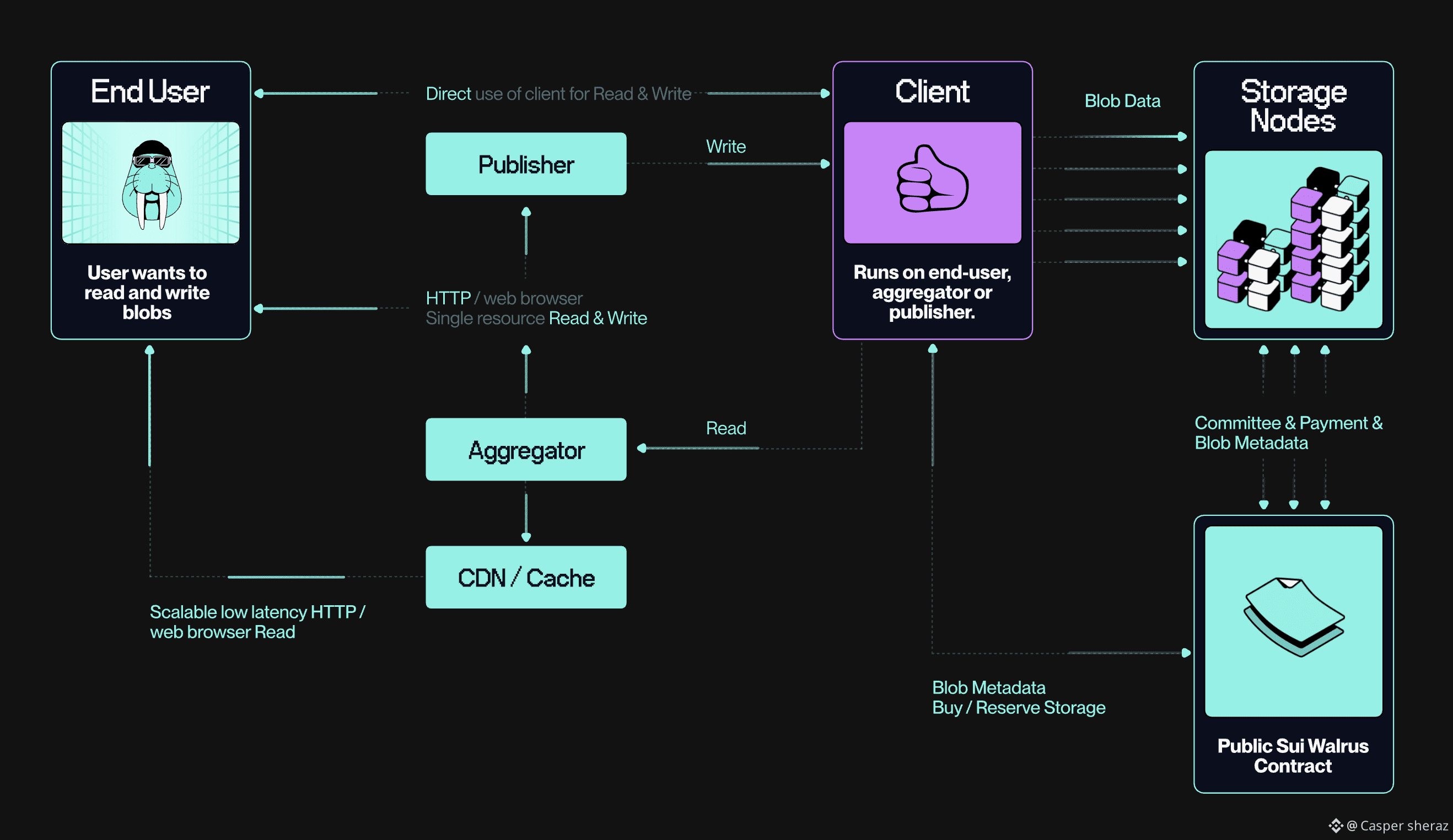
This client flow diagram shows how Walrus works: users upload blobs (large unstructured files like datasets or media), which get encoded and distributed efficiently across the network.
The magic lies in erasure coding and redundancy. Files break into fragments with extra pieces added—if some nodes go offline, the system reconstructs from what's available, without needing everything. Recent builder feedback highlights tools like Quilt for handling massive writes at low cost and Seal for precise access control, slashing operational headaches significantly.
Proof of availability takes it further. Nodes must cryptographically prove they still hold the data each epoch, with penalties for slacking. This eliminates silent degradation, a flaw I've seen erode centralized backups over time.
Privacy is baked in from the ground up. Distribution means no central entity can peek or censor—critical as AI datasets grow sensitive and regulations tighten. With 2025's milestones like over 1 billion WAL staked and hundreds of terabytes stored, Walrus has proven real adoption, backed by $140M from investors like a16z and Franklin Templeton.
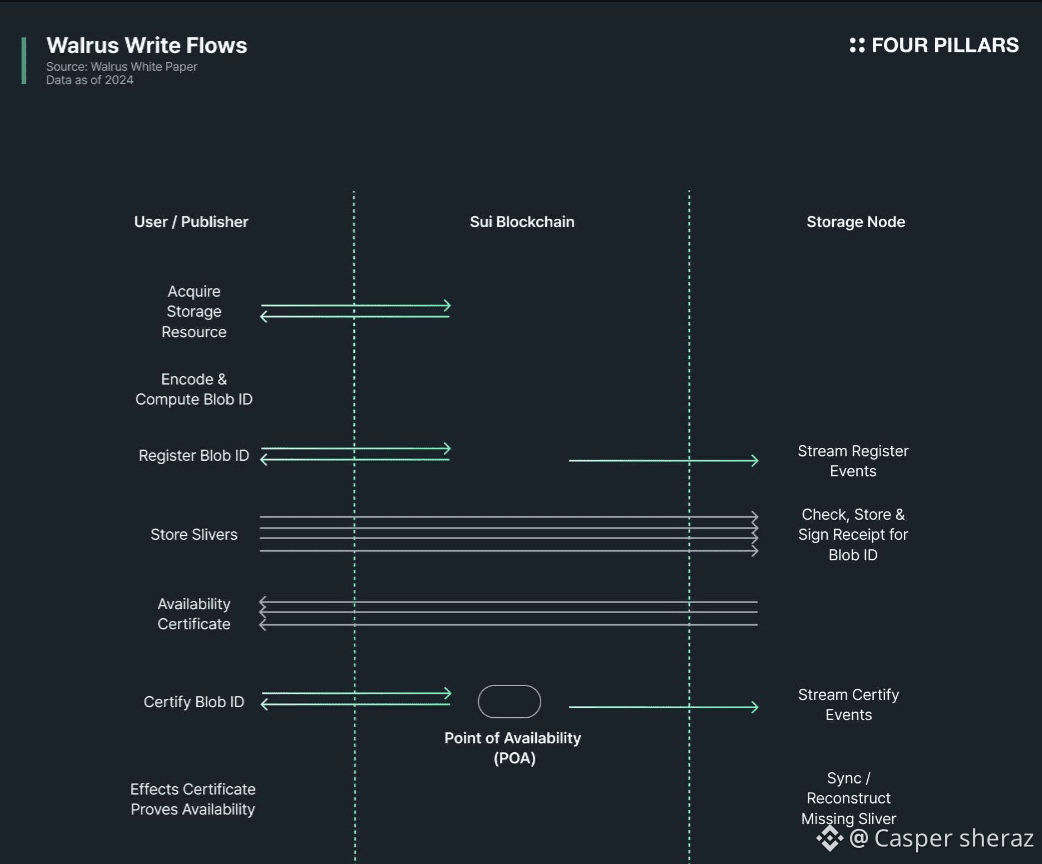
Here's a clear breakdown of Walrus's blob storage architecture, illustrating erasure coding and network distribution for resilience.
Staking WAL aligns the ecosystem. Rewards tie to network health and usage, encouraging reliable nodes while providing yields that feel sustainable compared to volatile alternatives.
Looking to 2026, gas-free stablecoin transfers on Sui and deeper developer tools (teased in the newsletter) will amplify everything. The January 27 token unlock (17.5M WAL) could boost liquidity, while the January 19 Tusky migration deadline ensures smooth user transitions.
For builders vibe-coding apps—as Brian Armstrong urged recently—Walrus provides the missing piece: somewhere permanent to put your data.
This visual captures Walrus's role in Sui's ecosystem, highlighting $WAL utility in programmable storage.
Enterprises get scalable, cost-effective alternatives to clouds. Individuals gain sovereignty over files. Walrus is not just storage, it's infrastructure for a more resilient web.


