
Upgrades don not slide through unnoticed. They don’t borrow legitimacy from excitement or momentum. They arrive like equipment being lowered into a live facility... slow, deliberate, checked twice, sometimes sent back up.
That friction is not accidental.
Chains learn to love change because change keeps things moving. Features ship. Parameters adjust. Governance votes pass because doing nothing feels worse. Over time, the network becomes adaptable and brittle. Every modification leaves behind a faint seam. Eventually those seams line up.

Dusk resists that rhythm.
Changes on @Dusk are constrained by the same logic that governs settlement and access. Authority is narrow. Conditions are explicit. The system is built so that not acting is often the safest state. When something shifts, it is because enough weight was applied in the right places, not because silence was mistaken for consent.
Picture a factory floor where machines are recalibrated while production continues. You don’t flip switches casually. You isolate sections. You wait for clearance. You accept downtime rather than risk contamination. Speed is less important than not poisoning the output.
That posture shapes incentives in uncomfortable ways.
Builders can not assume the protocol will flex around them. Operators can't smooth over inconsistencies with quick patches. Governance doesn't get to behave like a social feed where louder arguments win. Decisions harden slowly, or they donnot harden at all.
There's a cost to this.
Iteration slows. Experiments take longer to reach the network. Some ideas die simply because they require too many coordinated changes to justify the risk. The system trades agility for coherence, and not everyone benefits from that trade.
But the alternative is familiar.
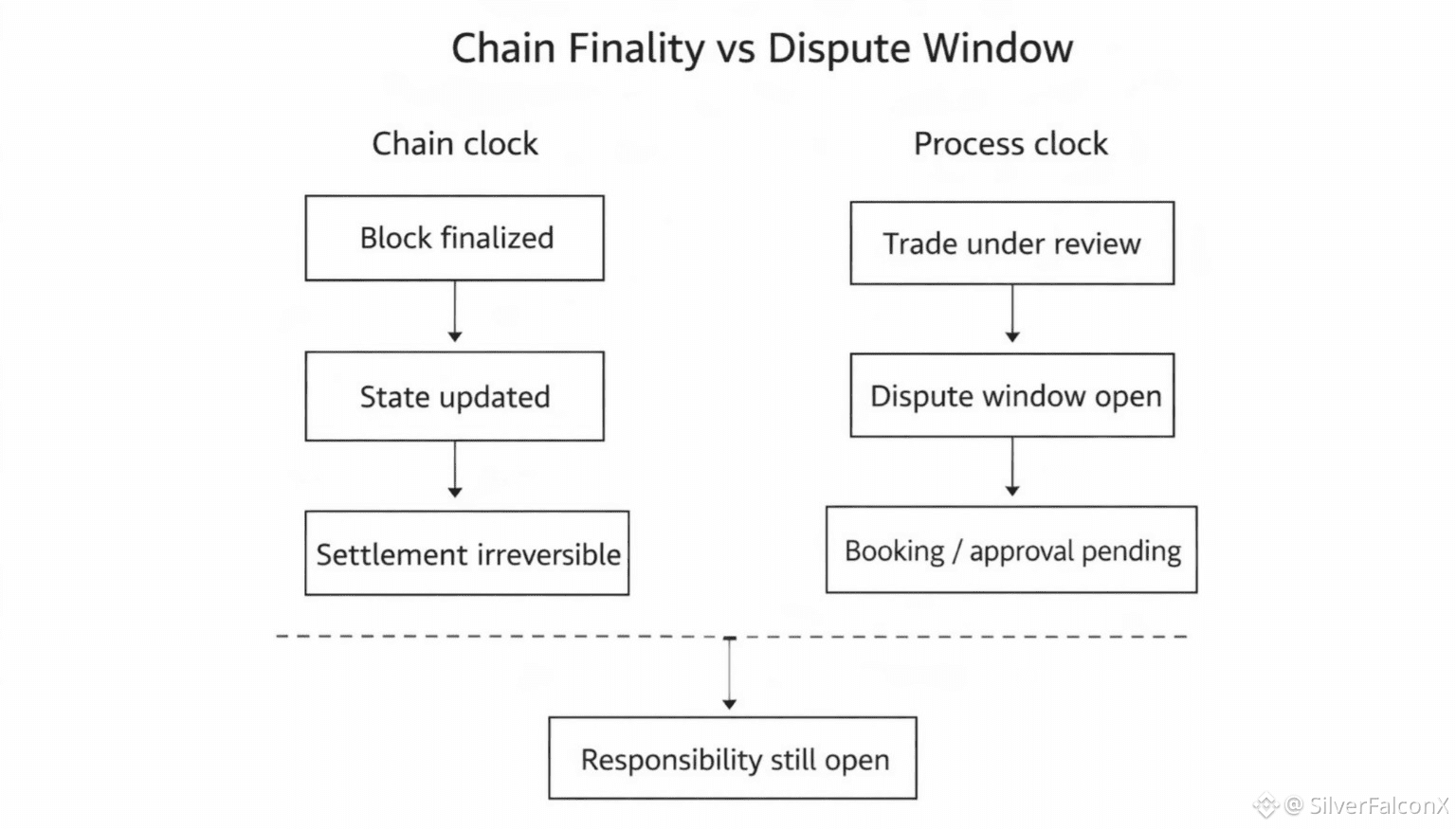
Frequent upgrades blur responsibility. When something breaks, nobody quite owns it because everyone touched it. Timelines overlap. Rollbacks become political. The network keeps moving forward, dragging unresolved decisions behind it.
Dusk doesn't give those problems much room to grow.
Privacy amplifies the effect. Without public spectacle, there's no performative pressure to "do something'... Decisions donnot need to look responsive; they need to be correct. The absence of constant observation removes the incentive to ship for optics.
Its closer to a bridge inspection schedule than a product roadmap. You don’t upgrade because users are bored. You upgrade because load, wear, or regulation demands it. Otherwise, you leave the structure alone.
This makes Dusk less forgiving for participants who thrive on constant change. It also makes it harder for mistakes to compound quietly. When the system does evolve, the blast radius is smaller because fewer parts are allowed to move at once.
The risk is obvious. Move too slowly and relevance erodes. Markets don’t wait politely. Capital finds paths of least resistance, not paths of best governance.
Dusk accepts that risk openly.
It chooses to make change expensive so that stability remains cheap. #Dusk chooses to disappoint impatience rather than surprise accountability. That choice narrows its audience and sharpens its purpose.
In environments where upgrades rewrite obligations, where a parameter change can alter compliance posture, hesitation is not a flaw. It’s a signal that the system understands what’s at stake.
Dusk doesn’t rush to become something else.
It waits until it has to... and then moves in one piece. $DUSK
