
The first time I tried to verify a file stored on Walrus (@Walrus 🦭/acc ), I realized how different my expectations were from how decentralized storage actually works. I was still carrying old instincts: if a system says my data is safe, I either believe it or I don’t. Walrus doesn’t ask for belief. It gives you something better proof you can touch.
On Walrus, files don’t live as single objects sitting somewhere waiting to be trusted. They’re broken apart, encoded, and scattered across the network. That sounds abstract until you try to answer a simple question: is my file really there, and is it still the same file I uploaded? Walrus treats that question as a first-class concern, not a philosophical one.
Verification starts at the moment of upload. When a file enters Walrus, it’s transformed into blobs and fragments, each cryptographically tied to the original data. What you get back isn’t just an upload confirmation. You get a commitment a fingerprint that represents the exact content you stored. If even one bit were different, that fingerprint would change. This is the anchor everything else hangs from.
Later, when you want to verify that your file still exists, Walrus ($WAL ) doesn’t ask you to trust a node or a provider. It asks the network to prove availability. Fragments are fetched from multiple storage nodes, reconstructed, and checked against the original commitment. If the pieces don’t match, the verification fails. There’s no room for interpretation here. Either the data reconstructs correctly, or it doesn’t.
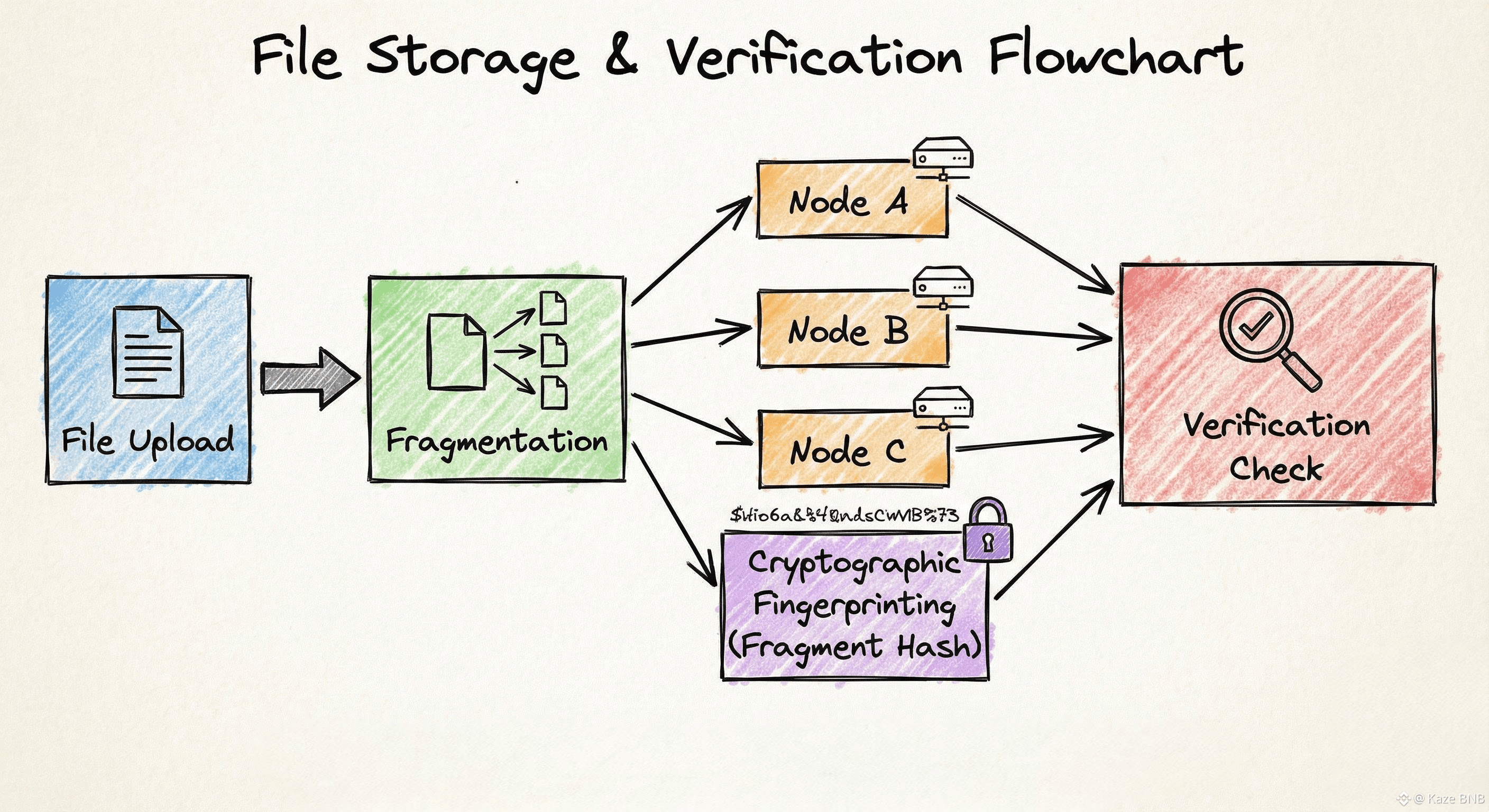
What surprised me was how calm this process feels. There’s no dramatic “audit mode.” Verification is just another interaction with the network. Under the surface, erasure coding makes this possible. You don’t need every fragment to be present. You need enough of them. That design choice matters because real networks aren’t perfect. Nodes go offline. Latency spikes. Walrus assumes this will happen and builds verification around resilience, not ideal conditions.
This is where WAL quietly enters the picture. The WAL token doesn’t verify files itself, but it shapes the behavior that makes verification reliable. Storage nodes are economically motivated to keep fragments available and respond quickly. When fragments are missing or slow, the network notices. Repairs are triggered. Time becomes the cost. WAL prices that cost explicitly, pushing the system toward recovery instead of denial.
There’s something grounding about running a verification and watching the result come back clean. It feels less like asking permission and more like checking your own work. Developers don’t have to build elaborate trust layers on top of Walrus. They can design flows where users verify data as naturally as they fetch it. That changes how applications think about storage not as a black box, but as a system with observable guarantees.
I started thinking about edge cases after that. What happens under load? What if parts of the network are slow? Walrus doesn’t hide these realities. Verification might take longer. Fetching fragments might stretch toward higher latency percentiles. But the result doesn’t lie. Availability isn’t confused with responsiveness. The data is either reconstructible or it isn’t, and that clarity matters more than speed when correctness is on the line.
Over time, verifying files on Walrus stopped feeling like a special action. It became part of how I understood ownership. If you can independently confirm your data’s existence and integrity, you’re not renting trust from the network. You’re exercising it. That’s a subtle shift, but it sticks with you.
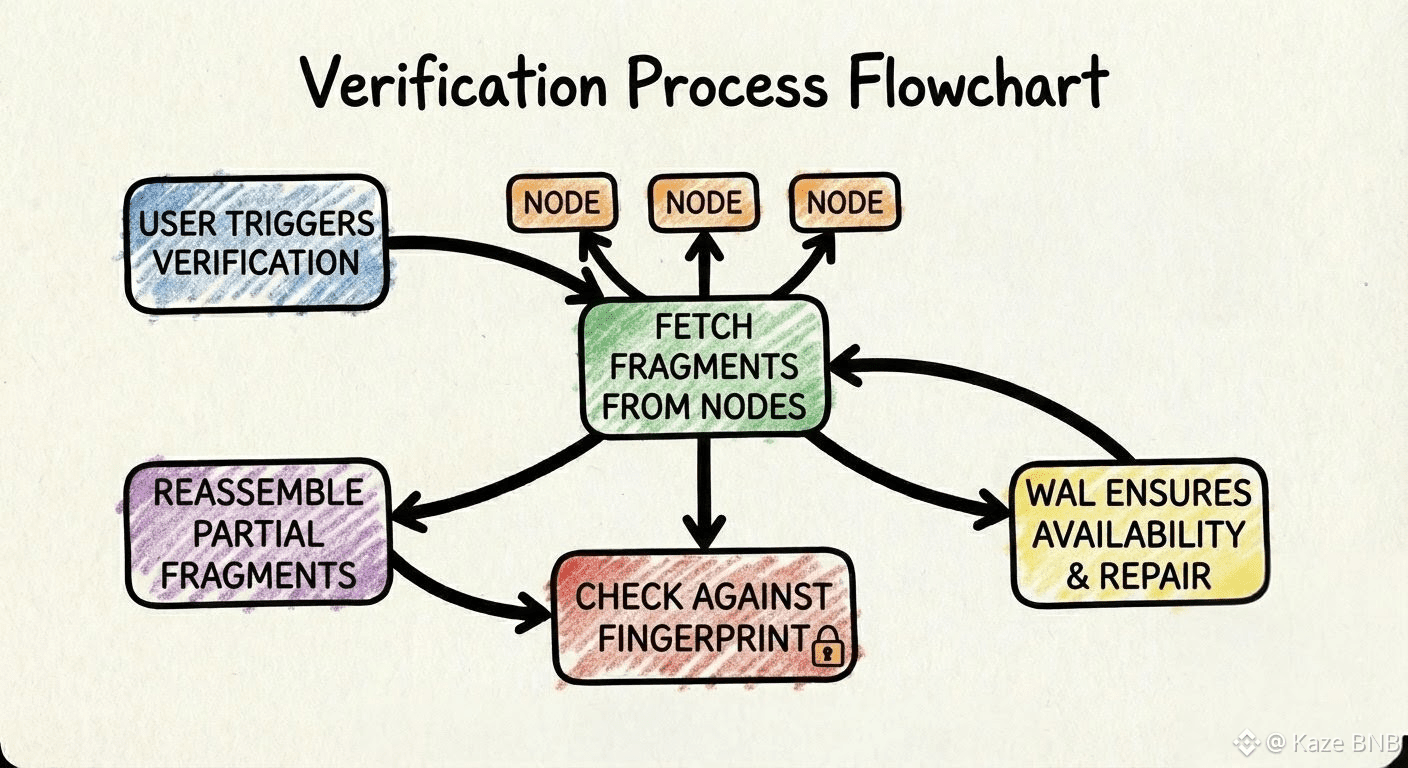
Maybe that’s the real takeaway. Walrus doesn’t ask you to believe that your files are safe. It gives you a way to know. And once you experience that once verification becomes something you can run instead of something you hope for it’s hard to go back to storage systems that only offer reassurance instead of evidence.