
In a blockchain ecosystem, tokens are more than just numbers on a screen. They are the lifeblood of activity, the means through which networks function, and the levers that align incentives across participants. For Dusk Foundation, the native token is designed with multiple purposes in mind: staking, fees, and governance each reinforcing the other while supporting a secure, compliant, and efficient Layer 1 blockchain.
Staking is the first pillar of token utility. It is a way to secure the network while rewarding commitment. Participants lock their tokens into the system, signaling trust and contributing to the overall health of the protocol. In return, stakers receive rewards proportional to their contribution, creating a feedback loop that balances participation with security. This mechanism ensures that those with the greatest stake in the network’s success are also its most active guardians.
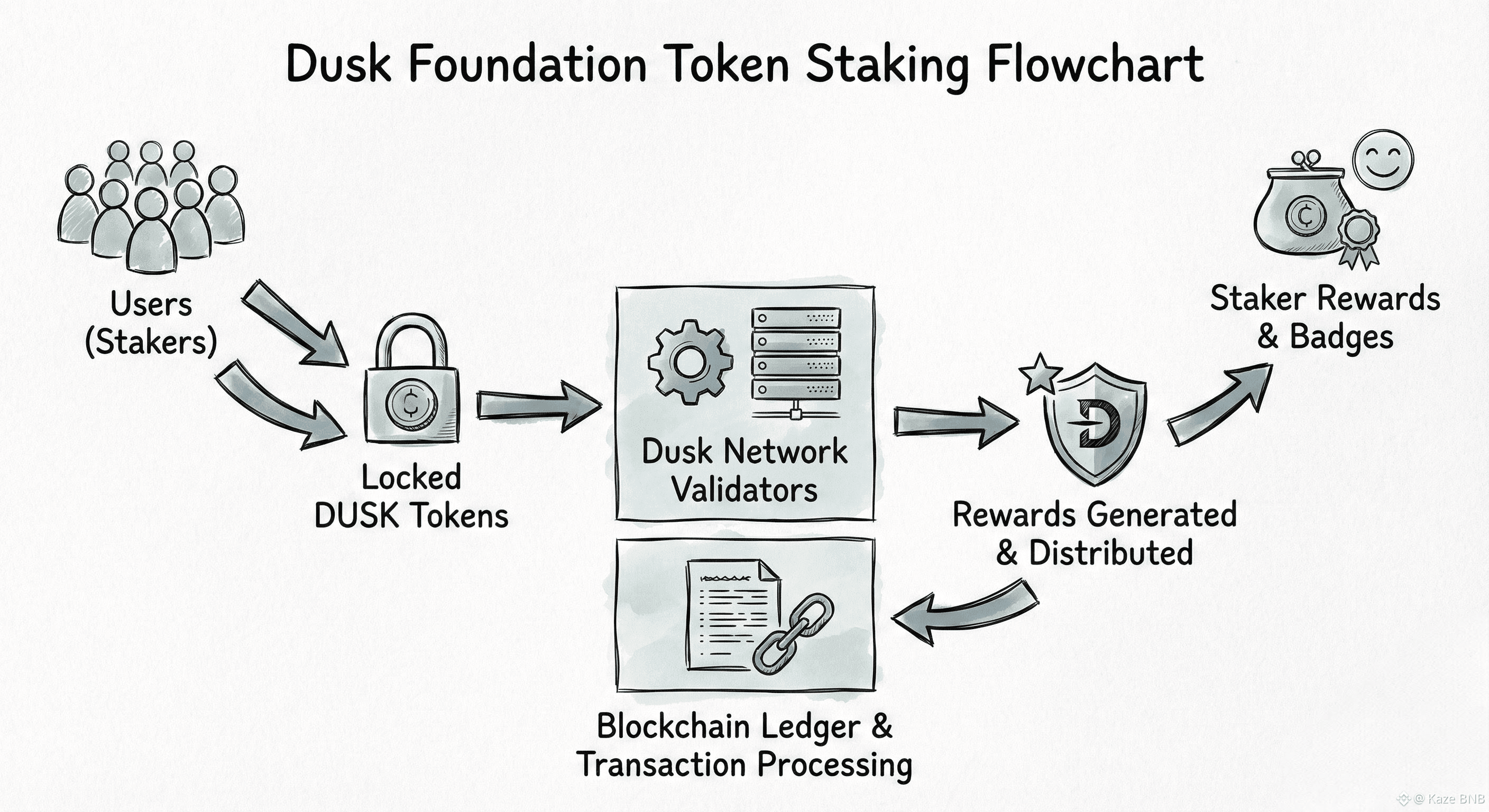
Fees represent the second critical layer of token utility. Every transaction on Dusk’s Layer 1 incurs a small fee, paid in the native token. These fees serve multiple purposes: they deter spam, compensate validators, and sustain long-term network operations. Unlike arbitrary costs, fees are dynamically structured to maintain efficiency while reflecting the real value of network activity. This ensures that economic incentives remain aligned with protocol integrity.
Beyond staking and fees, governance completes the token’s triad of utility. Dusk Foundation employs a decentralized governance model where token holders influence key network decisions. Proposals for upgrades, protocol adjustments, or changes in operational parameters can be submitted, debated, and voted upon by the community. Governance tokens are not just symbolic they are instruments of agency, giving participants a tangible voice in shaping the evolution of the network.
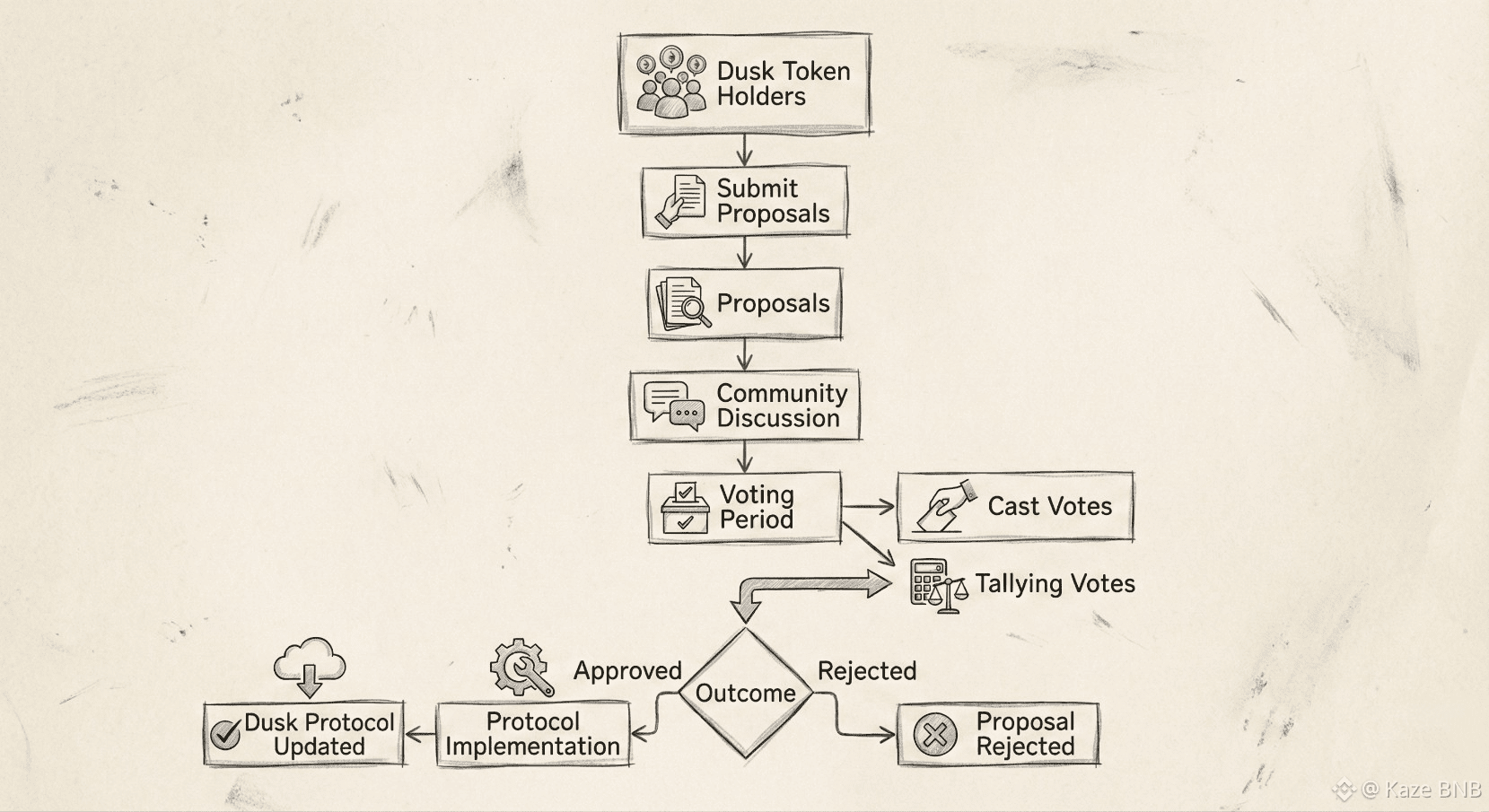
These three utilities staking, fees, and governance are not isolated functions. They intersect and reinforce one another. Stakers influence governance because they have the most at stake. Fees sustain the validators who maintain the security that underpins staking. Governance decisions can adjust fees, reward structures, or staking parameters, creating a holistic ecosystem where incentives, security, and decision-making are tightly interwoven.
From an institutional perspective, this design is particularly compelling. Compliance-conscious participants require predictable, auditable processes, and the Dusk token delivers. Staking ensures security without centralized oversight, fees are transparent and programmable, and governance allows stakeholders to maintain control without relying on external authorities. The architecture encourages participation while minimizing risk, a combination rarely achieved in public blockchain environments.
The Dusk token also offers flexibility for innovation. Developers building compliant DeFi applications, tokenized real-world asset platforms, or institutional-grade trading protocols can integrate these utilities directly into their systems. Staking can secure application logic, fees can be incorporated into settlement mechanisms, and governance can enable community-driven upgrades.
In the end, the Dusk token is more than a currency, it is the connective tissue of the network. It aligns incentives, sustains operations, and empowers participants to participate meaningfully in the network’s evolution. Like the gears in a finely tuned clock, each function must interact seamlessly for the system to keep accurate time.
By integrating staking, fees, and governance into a single, interdependent ecosystem, Dusk Foundation ensures that the token is not just a store of value, but a functional instrument for security, sustainability, and community-led growth.
The question remains: in a rapidly evolving financial ecosystem, how will participants choose to leverage these tools to shape the future of regulated, privacy-conscious, and auditable blockchain finance?
