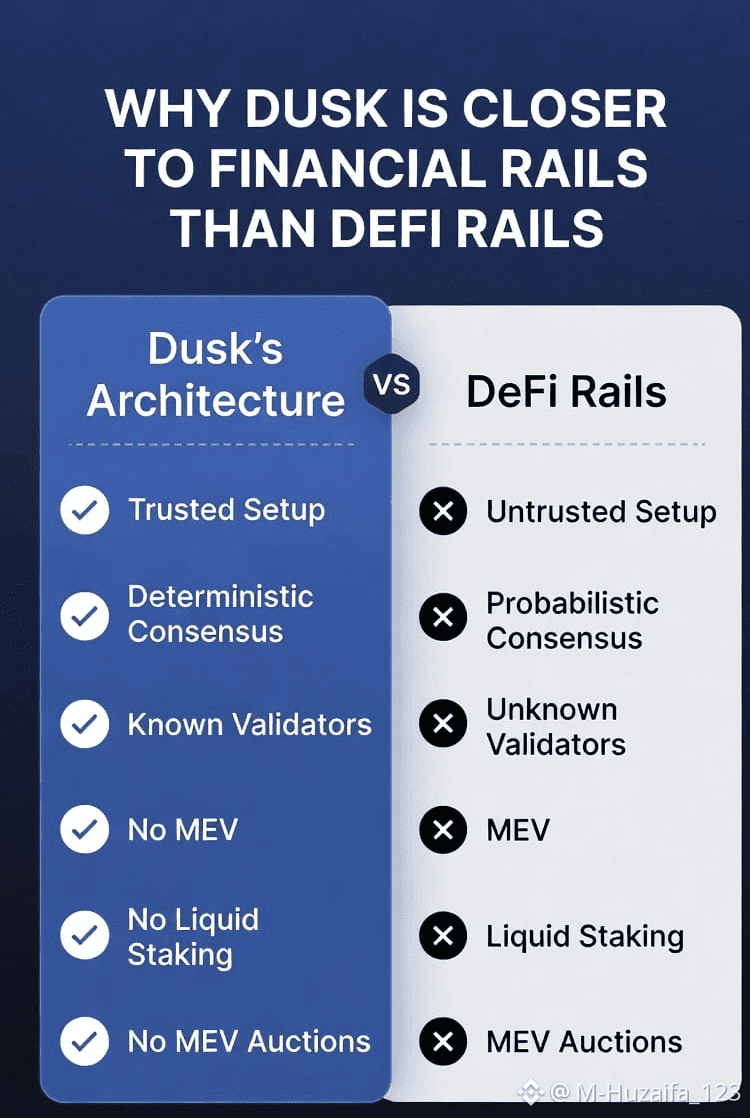
A lot of people misunderstand Dusk because they look at it through a DeFi-only lens. Most blockchains are built around DeFi ideas: open access, composability, yield farming, and rapid experimentation. $DUSK takes a very different path. It’s designed less like a DeFi playground and more like the core infrastructure used in real financial markets.
At the heart of Dusk is privacy with structure. In traditional finance, privacy isn’t optional and neither is compliance. When you’re dealing with securities, regulated assets, or institutional capital, you need transactions that are confidential, auditable, and settle exactly as expected. #Dusk is built for that reality.
Instead of open mempools where anyone can see transactions before they settle, Dusk uses zero-knowledge technology to keep activity private while still allowing verification when needed. That’s much closer to how real financial systems work, where data is protected but regulators and authorized parties can still audit it.
DeFi systems are usually designed for open participation and assume anyone can show up, including bad actors. Dusk doesn’t make that assumption. It’s built with regulated participants in mind entities that have identities, follow rules, and are accountable. Compliance checks and identity frameworks aren’t add-ons; they’re part of the foundation.
Because of this, Dusk prioritizes stability and predictability over fast upgrades and high-risk experimentation. That’s exactly what financial markets need, but it’s not what most DeFi platforms are optimizing for.
Dusk isn’t trying to compete with DeFi or replace it. Instead, it’s filling a gap connecting blockchain technology with the requirements of traditional finance. Think of Dusk as a settlement layer for capital markets, not a platform for speculative trading.
In short, Dusk isn’t building DeFi rails. It’s building financial rails.