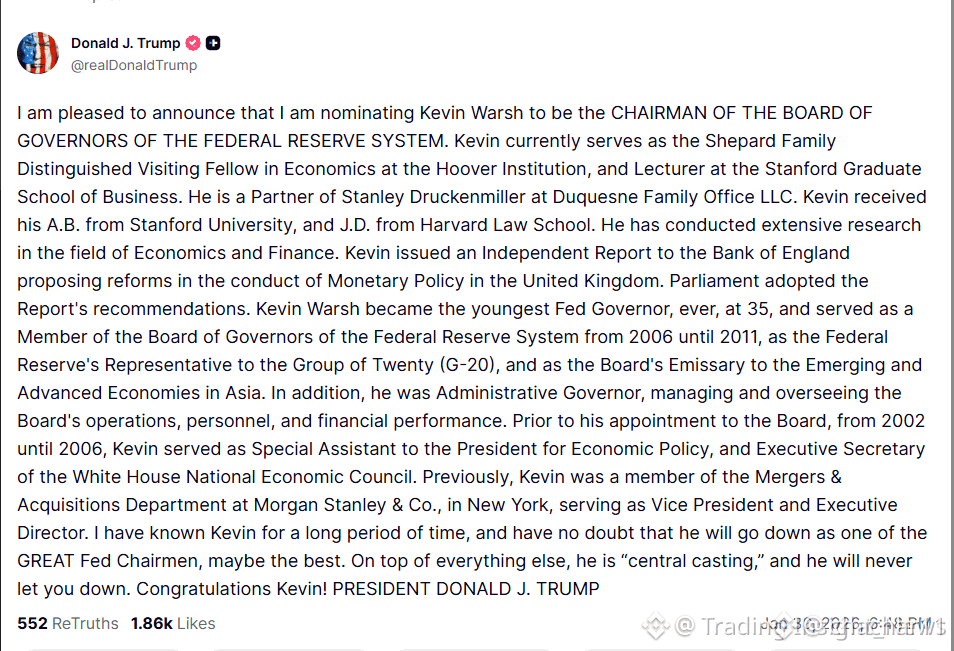
In a move that could reshape the future of U.S. monetary policy, former President Donald Trump has appointed Kevin Warsh as the successor to Federal Reserve Chair Jerome Powell. The decision signals a potential shift in how the Federal Reserve approaches interest rates, inflation, and financial market stability.
Kevin Warsh is no stranger to the Fed. He previously served as a Federal Reserve Governor from 2006 to 2011, a period that included the global financial crisis. During that time, Warsh was known for his skepticism toward aggressive monetary stimulus and long-term reliance on ultra-low interest rates.
Unlike Powell’s more pragmatic and data-driven approach, Warsh has often emphasized the risks of prolonged easy money. He has warned that excessive liquidity can distort asset prices, fuel inflation, and weaken confidence in the U.S. dollar over time. His appointment suggests a Federal Reserve that may prioritize monetary discipline over market accommodation.
Markets are already debating what this change could mean. A Warsh-led Fed could adopt a firmer stance on inflation, potentially slowing down rate cuts or maintaining tighter financial conditions for longer. While this may strengthen the dollar in the short term, it could also introduce volatility across equities, bonds, and risk assets.
For crypto and alternative assets, the implications are significant. Tighter monetary policy has historically pressured speculative markets, but it also reinforces the long-term narrative around decentralization and protection against policy uncertainty. Investors will be watching closely for early signals of how Warsh plans to balance inflation control with economic growth.
Ultimately, this appointment marks more than a leadership change—it represents a philosophical shift. If confirmed and implemented, Kevin Warsh’s leadership could redefine the Federal Reserve’s role in a world facing rising debt, geopolitical tensions, and fragile financial systems.
One thing is clear: the era of predictable, ultra-accommodative monetary policy may be coming to an end.