Hopes are dimming for a quick and full reopening of the Strait of Hormuz to tanker and other shipping traffic
Oil prices turned lower after touching a four-year high early Thursday morning.
Oil futures eased early Thursday, reversing direction after reaching a four-year high on a report that President Donald Trump is considering escalating the war in Iran.
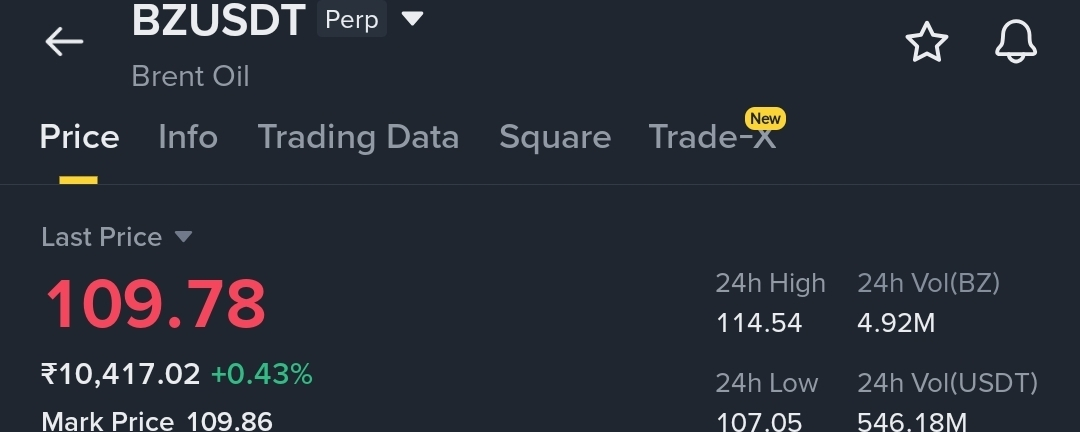
Demonstrating the level of volatility in the market, the West Texas Intermediate contract for June delivery (CL.1) (CLM26) fell 1.4% to $105.250 a barrel, after reaching nearly $111 overnight. Brent crude futures for June delivery (BRN00) (BRNM26) declined 3.2% to $114.20 a barrel after rising to a high of $126.41 early Thursday morning - the highest since 2022. The June contract expires today, which means prices may be volatile.
It has been a particularly tumultuous week for oil prices, as the U.S. and Iran appear far apart on any lasting peace deal. That's dimming hopes for a quick and full reopening of the Strait of Hormuz to tanker and other shipping traffic.
The stalemate also puts focus back on the depletion of global crude supplies and the real-world consequences of that trend, such as inflation pressures that can prevent central banks from cutting interest rates and jet-fuel shortages that have already prompted the airline industry to announce cutbacks to flights through the summer.
Big picture, Thursday's reversal in oil prices has been modest in comparison with silver's historic drop a few months ago, said Bob Savage, head of markets macro strategy at BNY. "High volatility in a market that spikes higher and reverses isn't a shock," he said.
The latest surge in oil prices came after Axios reported late Wednesday night that Trump will receive a briefing on Thursday from ?Adm. Brad Cooper, the head of U.S. Central Command, on plans for potential further military action against Iran. Centcom has prepared a proposal for a "short and powerful" round of strikes against Iran, which will likely include energy infrastructure targets, according to Axios, which cited two people familiar with the situation.
Mohamed El-Erian, chief economic adviser at Allianz and former CEO of Pimco, wrote in a post on X that markets are focusing on three main issues: "the stalemate in the Middle East War, with the balance of risk shifting toward escalation, the depletion of energy inventories in Asia and Europe, and the structural supply uncertainties in the Gulf region."
Trump told Axios on Tuesday that he will not be removing the naval blockade of Iranian ports until the Islamic Republic agrees to a deal that includes addressing the White House's concerns about its nuclear concessions.
Deutsche Bank's Jim Reid wrote in a note on Thursday that the continued closure of the shipping route has "fed growing fears about an extended stagflationary shock."
#oil #BrentCrude #us #OilPrice
Trade Oil Here 👇🏻