If you spend enough time in crypto, everything starts to sound the same. Faster chain. Lower fees. Better throughput. More validators.
But most people outside crypto do not care about any of that.
They care about playing a game. Owning something cool. Being part of a world. Feeling connected.
That is where Vanar becomes interesting.
Vanar is a Layer 1 blockchain powered by the VANRY token. On paper, that sounds technical. In reality, it grew out of something much more human, gaming, digital collectibles, entertainment, and brand experiences. The team behind it had already built products like Virtua Metaverse and the VGN games network before launching their own chain.
So Vanar did not start as infrastructure looking for a purpose. It started with users and experiences, then built infrastructure to support them.
That difference matters.
What Vanar Is, In Simple Terms
Vanar is a blockchain that wants to support digital worlds people actually spend time in.
It allows developers to build games, create digital assets, run marketplaces, and design virtual spaces. It gives users ownership of in game items, collectibles, and digital identities through blockchain technology.
But instead of focusing only on finance, Vanar focuses on entertainment and culture.
Think about how most people first heard about NFTs. It was not because they wanted decentralized finance. It was because they saw digital art, game items, or collectibles tied to movies and brands they liked.
Vanar leans into that reality instead of ignoring it.
The Real Problem It Is Trying to Solve
Web3 has a retention problem.
Millions of wallets are created during hype cycles. Many go inactive within months. Why? Because the main activity is trading. And trading is emotional. When markets slow down, attention disappears.
Vanar’s belief seems to be simple. If people come for entertainment, they might stay longer.
Games create habit. Virtual worlds create community. Collectibles create emotional attachment. These are powerful forces.
At a system level, Vanar is trying to fix fragmentation. Right now, gaming projects live on different chains. Identities are disconnected. Assets are stuck in silos. Users jump from place to place with no continuity.
Vanar is trying to create a connected environment where games, digital spaces, and assets live under one coordinated infrastructure.
That is less about speed. It is more about belonging.
How It Works Without Getting Too Technical
Under the hood, Vanar is its own Layer 1 blockchain. That means it runs its own network, validators, and token economy.
Developers can deploy smart contracts. They can mint NFTs. They can create in game currencies or systems. Users can own assets in their wallets.
But here is the human angle.
If you earn a sword in one game, that sword is not just a database entry. It can be a blockchain asset. In theory, it could move across compatible experiences within the ecosystem. It could hold value beyond a single app.
Vanar also explores AI integration and environmental themes. AI can help create smarter digital experiences, dynamic content, and more personalized interactions inside games or virtual spaces.
The important part is that the blockchain sits quietly in the background. Ideally, users should not feel like they are interacting with complex infrastructure. They should feel like they are just playing or collecting.
The VANRY Token, Beyond Speculation
The VANRY token powers the network.
It is used for transaction fees. It is used for staking, which helps secure the network. It can also be integrated into games, marketplaces, and ecosystem governance.
But here is the key question.
Does the token exist only for trading, or does it exist because people are actually using the ecosystem?
If VANRY becomes deeply embedded in gaming economies and digital experiences, it gains natural demand. If it is mostly held for speculation, it becomes fragile.
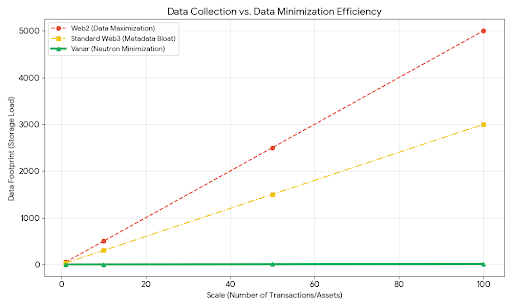
Sustainable tokenomics are about balance. Reward validators. Support ecosystem growth. Avoid excessive inflation. Encourage real usage.
The token’s health depends on real activity inside the system.
Ecosystem, Not Just a Chain
Vanar already has products connected to it.
Virtua Metaverse offers digital spaces and collectibles tied to entertainment and brands. The VGN games network connects multiple blockchain based games under one umbrella.
This gives Vanar something many chains lack, context.
Instead of saying build here and maybe users will come, Vanar can say there are already experiences forming here.
If the ecosystem grows correctly, users might enter through a game, then explore a virtual world, then trade collectibles, all without leaving the network.
That creates network effects.
The more experiences connect, the harder it becomes to leave. Not because of lock in, but because of attachment.
Where It Might Go
The future direction likely revolves around three main things.
Better onboarding. If using the chain feels complicated, mainstream adoption slows down.
More developers. Without new games and applications, ecosystems stagnate.
Stronger cross ecosystem integration. If assets and identity can move smoothly across experiences, the system becomes more cohesive.
Vanar also needs to navigate market cycles. Entertainment driven ecosystems often grow during optimistic markets and shrink during downturns. Surviving those cycles requires long term thinking.
The Honest Risks
It is a crowded field. Many Layer 1 chains target gaming and NFTs.
Execution is hard. Running a blockchain is complex. Running games and digital platforms is also complex. Combining both increases difficulty.
There is also the question of depth. Will users stay for years, or will they treat it as a temporary experience?
And as always, token volatility can disrupt ecosystem stability.
These are real risks, not theoretical ones.
A Human Way to See It
If we remove technical language, Vanar is trying to build a digital neighborhood instead of just a financial exchange.
A place where games, collectibles, brands, and digital identity connect.
Most blockchains are roads waiting for traffic. Vanar is trying to build roads and destinations at the same time.
Whether it succeeds depends on one simple test.
Do people actually enjoy spending time there?
If they do, the infrastructure underneath becomes valuable.
If they do not, no amount of technical performance will matter.
In the end, Web3 will not be adopted because it is faster. It will be adopted because it feels meaningful.
Vanar’s entire bet is that entertainment and ownership together can create that meaning.