
There is a quiet kind of loneliness in modern technology. So much of it is built to impress machines, investors, or charts, but so little of it is built to comfort the human being on the other side of the screen. We click, we wait, we sign, we confirm, we hope nothing breaks. Over time, we learn to expect friction. We even normalize it. And then something like Vanar appears—not loudly, not arrogantly—but with a question that feels almost intimate: what if this didn’t have to hurt?
Vanar doesn’t feel like it was born out of hype. It feels like it was born out of fatigue. The kind of fatigue that comes from watching people get excited about Web3, only to quietly walk away when the experience becomes confusing, slow, or emotionally cold. Somewhere along the way, the builders behind Vanar seem to have noticed something deeply human: people don’t reject new technology because they are afraid of it—they reject it because it doesn’t respect their time, their intuition, or their emotions.
At its core, Vanar is an L1 blockchain, yes. But emotionally, it behaves more like a translator between worlds. It stands between the complexity of decentralized systems and the simplicity people crave, absorbing the difficulty so users don’t have to. It doesn’t ask people to become crypto-native; it tries to become human-native. That shift alone carries enormous emotional weight.
The team behind Vanar comes from games, entertainment, and brand experiences—industries where attention is earned, not demanded. In games, you learn quickly that if a player is confused for more than a few seconds, you’ve already lost them. In entertainment, you understand that emotion always comes before explanation. Those instincts are embedded deeply into Vanar’s DNA. This is not a chain that wants users to marvel at its architecture; it wants them to forget it exists while they enjoy what it enables.
And that may be its boldest decision.
Vanar is built for the next three billion users, not the current few million who already speak the language of wallets and gas fees. It assumes that most people don’t want to learn new mental models just to play a game, explore a digital world, or connect with a brand. They want things to feel natural. They want progress to be immediate, rewards to feel real, and systems to behave consistently. Vanar treats those expectations not as limitations, but as design requirements.
There is something deeply emotional about reliability. When something responds the way you expect it to, you begin to trust it. When trust forms, fear dissolves. Vanar’s focus on certainty—on making sure actions resolve cleanly and predictably—may sound technical, but emotionally it’s about safety. It’s about letting people relax instead of brace themselves for errors, delays, or reversals. That relaxation is what makes room for joy.
Then there is the role of AI within Vanar’s ecosystem, which feels less like a buzzword and more like an extension of memory. AI here isn’t framed as a replacement for human creativity, but as a way for digital environments to remember, adapt, and respond. Imagine virtual worlds that notice how you play. Characters that remember how you treated them. Systems that evolve not randomly, but meaningfully. These are not just features; they are emotional bridges. They turn cold systems into responsive spaces.
Vanar’s products—like its metaverse experiences and gaming networks—aren’t positioned as futuristic experiments. They feel like rehearsals for a world where digital ownership doesn’t feel transactional, where earning something feels personal, and where participation carries emotional continuity. When you play, collect, or build within these ecosystems, the goal isn’t to constantly remind you that “this is Web3.” The goal is to let you feel immersed, rewarded, and connected, without interruption.
The VANRY token exists within this world not as the star of the show, but as its pulse. It moves value quietly in the background, enabling economies without demanding emotional attention. That restraint matters. Too many projects ask people to care deeply about tokens before giving them anything meaningful to experience. Vanar does the opposite. It asks people to care about the experience first—and lets value emerge naturally from that care.
What makes this story especially human is that Vanar feels like a second attempt done with more tenderness. The team carries the memory of past projects, past friction, past mistakes. Instead of pretending those never happened, Vanar feels shaped by them. There is humility in its approach. A sense that it has learned how fragile user trust is, and how hard it is to win back once lost. That humility shows up in the patience of the design, in the refusal to overpromise, and in the emphasis on real products over theoretical dominance.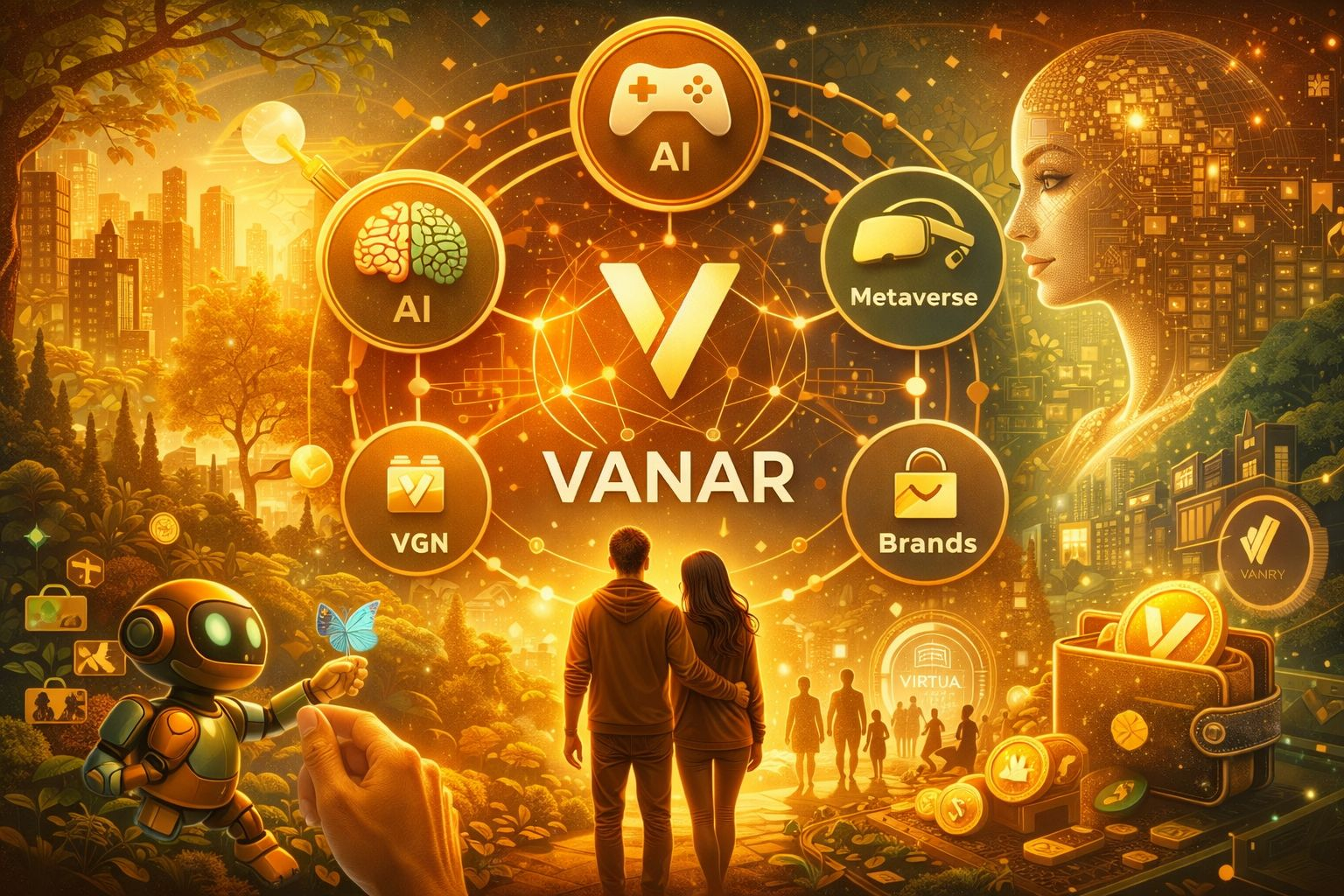
This is not the blockchain that wants to conquer everything. It wants to belong somewhere real. In games where players stay because they’re having fun. In virtual spaces where communities form naturally. In brand experiences that feel like conversations instead of campaigns. Vanar doesn’t chase attention; it builds environments where attention wants to stay.
Of course, this path is risky. Building for mainstream adoption means being judged by people who don’t care about roadmaps or tokenomics. It means competing with polished Web2 experiences that already feel effortless. It means regulation, long timelines, and quiet progress instead of explosive hype. But emotionally, it’s the braver choice. It’s easier to impress insiders than to earn the trust of everyday users.
What Vanar is really betting on is a future where Web3 stops feeling like a movement and starts feeling like infrastructure—present, reliable, and emotionally invisible. A future where someone plays a game, earns something meaningful, interacts with intelligent systems, and never once feels anxious about how it all works underneath. And when asked later what blockchain powered it, they pause, smile, and realize they never had to care.
That moment—when technology disappears and experience remains—is where real adoption lives.
And Vanar, quietly, deliberately, seems to be building toward that moment.
