

Bitcoin (BTC)$BTC is the dominant leader in the cryptocurrency market, often acting as the "rising tide that lifts all boats" — or sinks them. Its price movements have a strong, well-documented influence on other cryptocurrencies (altcoins like Ethereum, Solana, XRP, etc.), due to high correlations (typically 0.7–0.9 for major ones), shared market sentiment, trading mechanics, and investor behavior.
1. Mechanical Effect (Trading Pairs):
Most altcoins are traded in pairs against BTC$BTC (e.g., $ETH ETH/BTC). Their USD price is roughly:
Altcoin USD price = (Altcoin/BTC ratio) × BTC/USD price
BTC rises → Even if the alt/BTC ratio stays flat or rises slightly, the altcoin's USD value increases.
BTC falls → Unless the alt/BTC ratio surges dramatically (rare in a downturn), the altcoin's USD value drops too.
This creates an automatic multiplier effect.
2. When BTC Price Rises:
Positive spillover to altcoins: Investor confidence surges, new capital flows into crypto (starting with BTC as the "safe" entry point), and money often rotates into higher-risk altcoins for bigger gains.
Altcoins usually rise alongside or even outperform BTC in later stages of a rally (this is called "altseason").
BTC dominance (BTC's share of total crypto market cap) often falls as capital shifts to alts → bullish signal for altcoins.
Example pattern: BTC rallies first, stabilizes, then alts explode.
3. When BTC Price Falls:
Negative ripple effect:
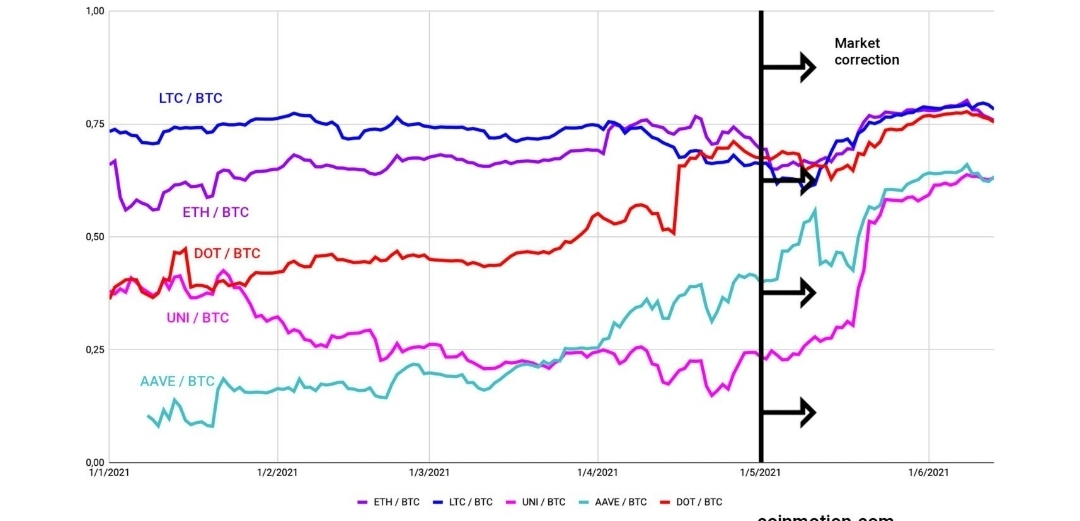
Panic spreads quickly. Altcoins often drop harder and faster than BTC due to lower liquidity and higher beta (sensitivity to BTC moves).
BTC might fall 5–10% → Many altcoins fall 15–30% or more.
Investors treat BTC as the "safe haven" within crypto and rotate out of alts into BTC → BTC dominance rises → further pressure on altcoins.
4. Bitcoin Dominance as the Key Indicator:
Rising dominance (especially with rising BTC price) = Bearish for altcoins (money flowing to BTC).
Falling dominance (with rising BTC) = Bullish for altcoins (altseason starting).
Current context (early March 2026): BTC dominance ≈ 57.9%, Altcoin Season Index ≈ 35/100 → "Bitcoin season" (alts are underperforming relatively).
5. Correlation in Action:
Major altcoins (ETH, SOL, etc.) move in the same direction as BTC most of the time, but with amplified volatility. Shared factors like macro news, ETF flows, halvings, or regulation affect the whole market, with BTC reacting first.
Extra Safety Tips:
(Apply to All Plays)
Never invest more than 1–5% of your total net worth in crypto (many pros say 2–3% max).
Use stop-loss only if swing trading — for holding/DCA, avoid them (they get triggered in flash crashes).
Diversify outside crypto too (stocks, gold, cash) — don't go all-in.
Ignore daily noise → focus on 6–12 month trends.
In big fear moments (like sharp dips), remember: historically, BTC dips have been among the best buying windows for patient holders.
The safest overall combo right now: DCA mostly into BTC, hold in a secure wallet, and only add small alt exposure when dominance clearly drops. This way you participate in rises, suffer less in dips, and sleep better.
Bottom line: BTC price is the single biggest driver for most other coins. In bull markets, BTC rises → altcoins follow and often shine. In downturns, BTC falls → altcoins get hit harder. Watch BTC dominance and price together to anticipate rotations. These patterns have repeated across cycles (2017, 2021, 2024–2025), though nothing is guaranteed — always do your own research and manage risk.
This isn't financial advice — crypto is still high-risk, and past patterns don't guarantee future results. Always do your own research and consider your situation. Stay disciplined.



#BTC #BTCEffect #MarketRebound #USIsraelStrikeIran #BitcoinDunyamiz