
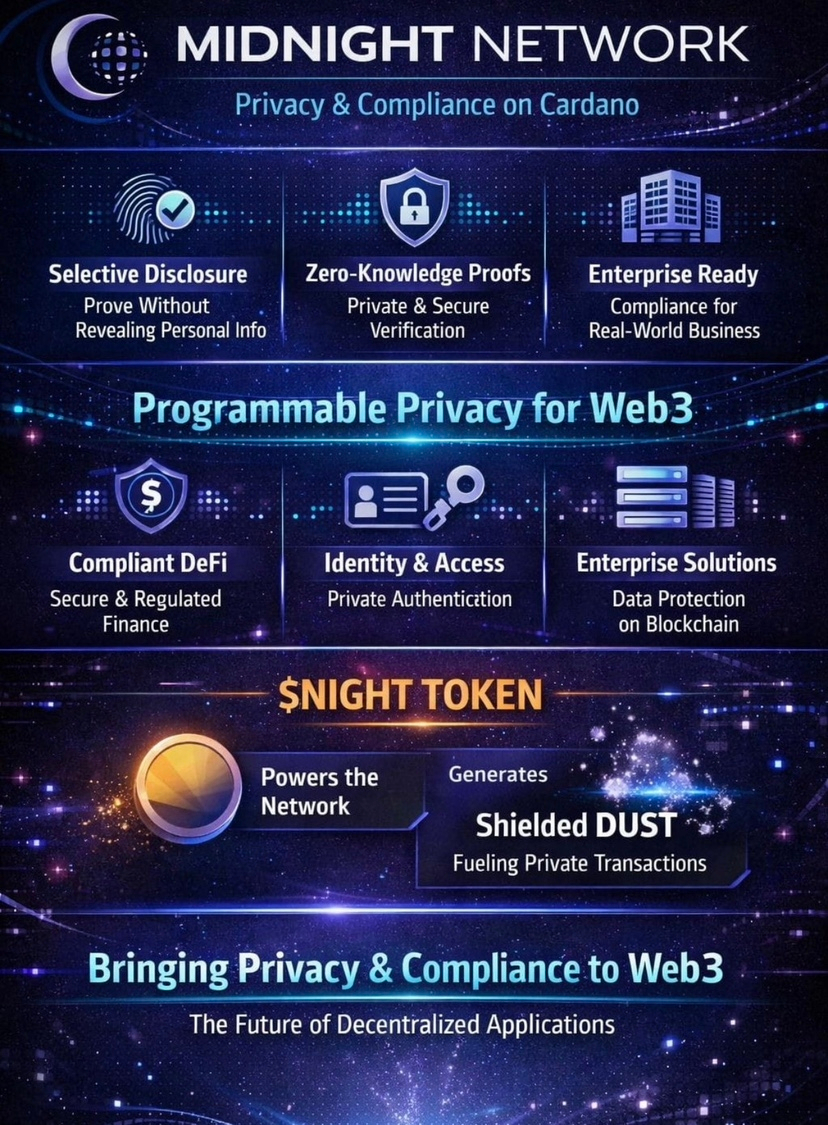
What keeps pulling me back to Midnight is not only the privacy narrative. A lot of projects can sound impressive when they talk about zero-knowledge proofs, identity, or confidential data. What makes me take Midnight more seriously is the way its economic model has been designed around actual use. The network separates NIGHT, which is the public native and governance token, from DUST, which is the shielded, non-transferable resource used for transaction execution. Midnight’s own materials describe this as a token-generates-resource model, where holding NIGHT generates DUST over time instead of forcing users to constantly spend the core asset just to keep using the network.
A cleaner split between value and usage
I think this is one of the smartest parts of Midnight’s architecture. In most crypto systems, one token is expected to do everything at once. It has to carry speculation, governance, gas, and sometimes even branding. That usually works fine until activity rises and the whole experience starts getting distorted by traders and fee volatility. Midnight tries to break that pattern. On the official #night page, the network says NIGHT acts as the capital asset while DUST functions as the operational resource for transactions and smart contract execution. Because users spend DUST rather than NIGHT, using the network does not directly reduce their governance position or long-term exposure to the ecosystem.
That matters to me because it changes the psychology of participation. Instead of feeling like every on-chain action is forcing me to sell a piece of my position, the design points toward continuity. Midnight even frames DUST like a rechargeable battery: it is consumed when used, then regenerates over time based on $NIGHT holdings. For builders, that also opens the door to self-funding applications where developers generate enough DUST to subsidize user interactions, making privacy-preserving apps feel much closer to normal product experiences instead of costly crypto rituals.
Predictable fees feel more important than hype
Another part I find genuinely practical is the fee logic. Midnight’s whitepaper does not present fees as random market chaos. It outlines a structure built from a minimum fee, a congestion rate that adjusts with network demand, and a transaction weight tied to resource use. The stated goal is to let costs rise or fall with actual conditions while keeping enough spare capacity in the network to avoid constant fee spikes. The whitepaper also says Midnight targets 50% block utilization to leave room for sudden increases in demand without major delays or dramatic fee jumps.
To me, this is where the project starts to look less like a privacy meme and more like infrastructure. A privacy network cannot become meaningful if users have to guess what simple actions will cost every time traffic increases. Midnight’s design reads like an attempt to make fees understandable, durable, and closer to resource pricing than speculative bidding wars. That is a healthier direction than the fee environments we have seen on chains where real users end up competing with volatility itself.
Cross-chain access lowers the friction
What also stands out is that Midnight is not trying to trap usage inside one closed token loop. In the tokenomics whitepaper, the project explicitly says users can pay for transactions with other blockchains’ native tokens, or even fiat, as part of its multichain and cooperative tokenomics approach. The same paper also describes an on-chain capacity exchange that could allow spot purchases of unused DUST generation through an exchange interface, reducing the trust needed for access.
I like this because it feels realistic. Most people already hold assets somewhere else. Forcing everyone to rotate into one ecosystem token before they can access privacy features creates friction before value. Midnight seems to understand that adoption is easier when the network meets users where they already are. If privacy is supposed to become normal infrastructure, then entry should feel lighter, not more complicated. That cross-chain thinking is one of the clearest signs to me that Midnight is aiming beyond a niche privacy crowd.
Distribution says a lot about the project’s priorities
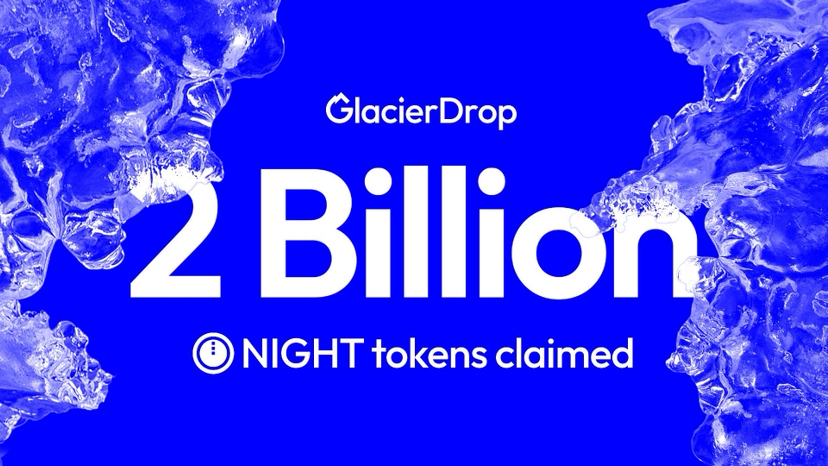
I also think Midnight’s distribution model deserves more credit than it usually gets. The network says Glacier Drop and Scavenger Mine allocated more than 4.5 billion NIGHT to the community across eight ecosystems, and the January 2026 network update describes that distribution as foundational to the project’s next roadmap phases. The Glacier Drop explanation says eligibility covered Cardano, Bitcoin, Ethereum, Solana, XRPL, BNB Chain, Avalanche, and Brave, with a historical snapshot used to determine participation.
What I find refreshing is that the second phase, Scavenger Mine, was not framed as a passive drop. Midnight’s own explanation describes it as an interactive phase designed to reward active engagement and community participation, and the launch guide later reported that it was open to anyone with a standard computer and internet connection. That design choice matters because it shifts the tone from pure extraction to participation. It tells me the team wanted some part of distribution to be earned through activity, not just captured by insiders, funds, or people closest to the cap table.
The redemption schedule looks deliberately anti-chaotic
This is probably the part I respect most. Midnight did not just throw everything into circulation at once. The official redemption guide says each destination address receives a randomized first unlock date within the initial 90-day window, followed by three additional unlocks every 90 days. It also says the thawing period ends on December 4, 2026, followed by a final 90-day grace period for any remaining claims. The whitepaper separately defines the broader redemption duration as 450 days.
To me, that is not a minor operational detail. It is a statement about market behavior. A staggered release with a grace period signals that the team is thinking about fairness, participation, and transition quality rather than only launch-day optics. In a market where token events are often designed to maximize noise first and consequences later, Midnight’s pacing feels much more intentional. I do not see that as a guarantee of success, but I do see it as evidence of discipline.
Privacy is the headline, but economics may be the real edge
I still think Midnight’s privacy stack is the bigger narrative magnet. The network is built around zero-knowledge smart contracts and “rational privacy,” which it defines as enabling people to verify the truth without exposing personal data. But the more I read, the more I think its economic design may be just as important. The network is trying to make privacy usable without turning it into a fee nightmare, a governance sacrifice, or a speculative choke point. NIGHT stays public and governance-oriented, DUST handles execution, and the broader system is designed to preserve auditability while protecting sensitive data.
That combination is what makes @MidnightNetwork feel different to me. It is not selling privacy as a luxury add-on for a narrow class of users. It is trying to build a structure where privacy, cost predictability, and access can coexist. Broad distribution, controlled redemption, renewable transaction resources, and cross-chain payment pathways all point in the same direction. When I step back, Midnight looks less like a token launch story and more like an attempt to fix some of the economic mistakes crypto keeps repeating.
Closing line:
Midnight’s real strength, in my view, is that it treats privacy as infrastructure and treats economics like product design. That is a much rarer combination than the market admits.
