
In the volatile world of cryptocurrency, hype often drowns out substance. Meme coins surge on social media buzz, celebrity endorsements spark temporary frenzies, and speculative narratives dominate headlines. Yet, beneath this noise, a profound shift is underway. The next era of crypto will not be defined by flashy tokens or viral trends but by robust, scalable infrastructure — the foundational plumbing that enables real-world utility, institutional adoption, and sustainable growth. As we move into 2026 and beyond, infrastructure is quietly positioning itself as the true winner.
Previous crypto cycles thrived on speculation. The 2017 boom centered on initial coin offerings (ICOs) and utility tokens with grand promises but little delivery. The 2021 surge was fueled by decentralized finance (DeFi) experiments, non-fungible tokens (NFTs), and layer-one blockchains chasing market share through hype. While these phases accelerated innovation and brought mainstream attention, they also exposed critical weaknesses: congestion, high fees, scalability limits, and a lack of genuine economic activity. Many projects faded once the euphoria subsided, leaving investors with worthless assets and reminding the industry that technology without solid foundations is unsustainable.
Today, the landscape is maturing. Blockchain infrastructure — encompassing layer-2 scaling solutions like rollups, modular architectures, data availability layers, interoperability protocols, and tokenization frameworks — is addressing these pain points head-on. Ethereum’s rollup-centric roadmap, for instance, has dramatically improved throughput. Optimistic and zero-knowledge (ZK) rollups bundle thousands of transactions off-chain before settling on the mainnet, slashing fees and boosting transactions per second (TPS) from Ethereum’s native ~15 to potentially thousands. This isn’t theoretical; it’s enabling high-frequency applications that rival traditional finance in speed and cost-efficiency.
Modular blockchains take this further by decoupling core functions: execution, settlement, consensus, and data availability. Projects like Celestia specialize in data availability, allowing developers to build lightweight rollups or app-specific chains without bootstrapping entire validator sets. This specialization enhances scalability, reduces redundancy, and lowers costs while inheriting security from established layers. The result? A more flexible ecosystem where developers can customize infrastructure for specific use cases, from high-throughput DeFi to enterprise-grade applications.
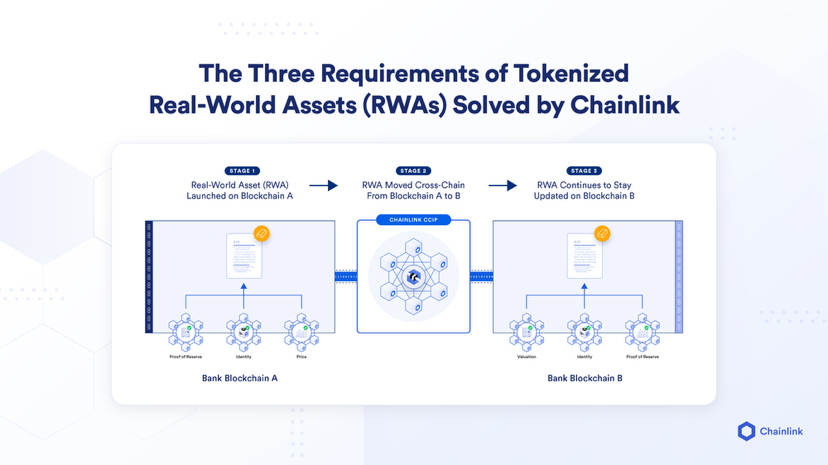
The real catalyst, however, is the convergence of crypto infrastructure with traditional finance through Real World Assets (RWA) tokenization. Tokenizing bonds, real estate, commodities, and private credit on-chain is moving beyond hype into regulated, institution-backed reality. Tokenized RWAs have grown significantly, with projections reaching trillions by 2030 as blockchain bridges illiquid markets with fractional ownership, 24/7 liquidity, and reduced intermediaries. This demands reliable infrastructure: secure settlement layers, compliant oracles like Chainlink, and scalable networks capable of handling institutional volumes without failure.
Stablecoins and DeFi lending protocols are already demonstrating this utility. They generate real yields and facilitate cross-border payments far more efficiently than legacy systems. Decentralized Physical Infrastructure Networks (DePIN) extend the model further, using token incentives to coordinate real-world resources like wireless networks, storage, and compute power. As regulatory clarity improves globally — with clearer frameworks in major economies — infrastructure becomes the gateway for mainstream integration. Institutions aren’t chasing memes; they’re building on rails that offer transparency, immutability, and efficiency.


Why does this matter for the next era? Infrastructure creates durable value through fees, yields, and productive capital deployment rather than pure speculation. It rewards execution over timing. Layer-2 solutions and modular designs solve the scalability trilemma (security, decentralization, scalability) more effectively than monolithic chains, paving the way for mass adoption where users interact with blockchain seamlessly, often without realizing it. In a post-hype world, sustainable growth stems from economic activity: tokenized assets unlocking trillions in liquidity, DeFi competing with traditional finance, and interoperable networks connecting fragmented chains.
Of course, challenges remain. Interoperability across ecosystems, privacy solutions for mainstream use, and regulatory harmonization are ongoing hurdles. Yet, the quiet progress in tooling, developer experience, and performance signals maturity. Crypto is transitioning from a speculative asset class to genuine financial and technological infrastructure.
In conclusion, while the noise of hype cycles will always exist, the winners of the next crypto era are being built today in the background. Investors and builders who look beyond memes to infrastructure — scalable rollups, modular stacks, tokenization platforms, and DeFi primitives — will capture the real upside. This isn’t about quick riches; it’s about creating the rails for a decentralized future that integrates with the global economy. The noise will fade, but solid infrastructure endures — and it is already winning.

@SignOfficial #BitcoinPrices #TrendingTopic #TrumpSaysIranWarHasBeenWon #OilPricesDrop