
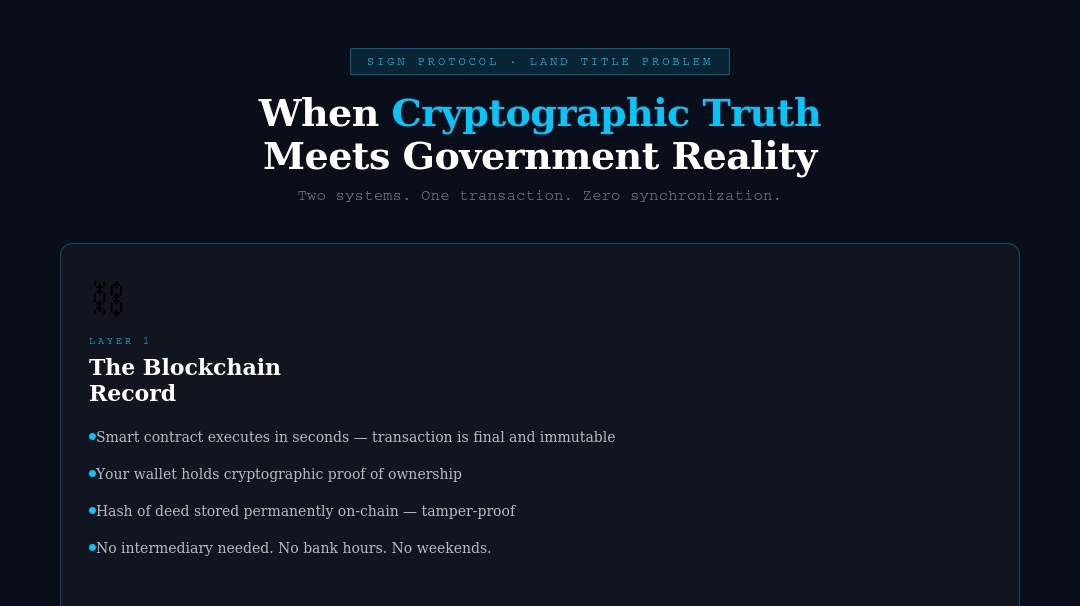

I have spent time looking at Web3 infrastructure lately.
Most projects build faster highways for traffic that does not exist.
Then there is @SignOfficial.
They are not trying to win the transaction speed war.
They are building a foundational trust layer.
They want to be the ultimate ledger for digital sovereignty.
The concept is brilliant.
We need a universal framework for on-chain attestations.
If a sovereign state wants to issue a Central Bank Digital Currency they need verifiable proofs.
They need to know who approved a transaction and what rules applied.
Sign provides the architecture for this scenario.
It is a massive step forward for institutional adoption.
Yet there is a fundamental friction at the core of this vision.
It is the friction between radical transparency and sovereign power.
Blockchain relies on open verification.
Governments rely on controlled silos.
They love verifiable data.
They despise public visibility.
The concept of bounded transparency sounds great in theory.
You verify the state without revealing the state itself.
The reality of state level implementation is incredibly messy.
Sovereign wealth funds and regulatory bodies never compromise on control.
Middle Eastern entities demand total oversight for digital assets.
They want distributed ledger benefits without the distribution.
This is the tension Sign must navigate.
The protocol wants to be the neutral layer of truth.
The sovereign clients want a private walled garden.
Consider the deployment of a regional digital currency.
A central bank needs to track capital movement for compliance.
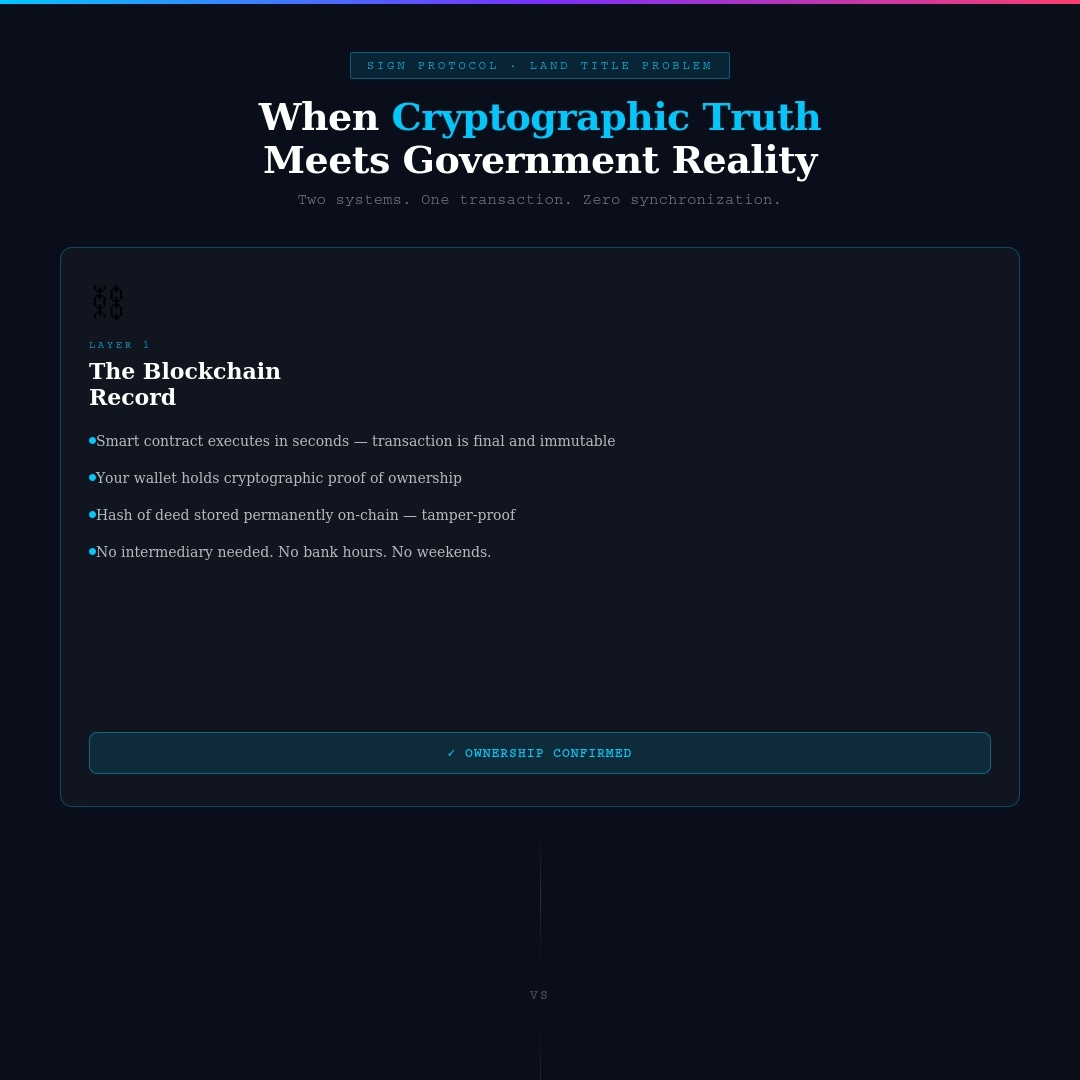
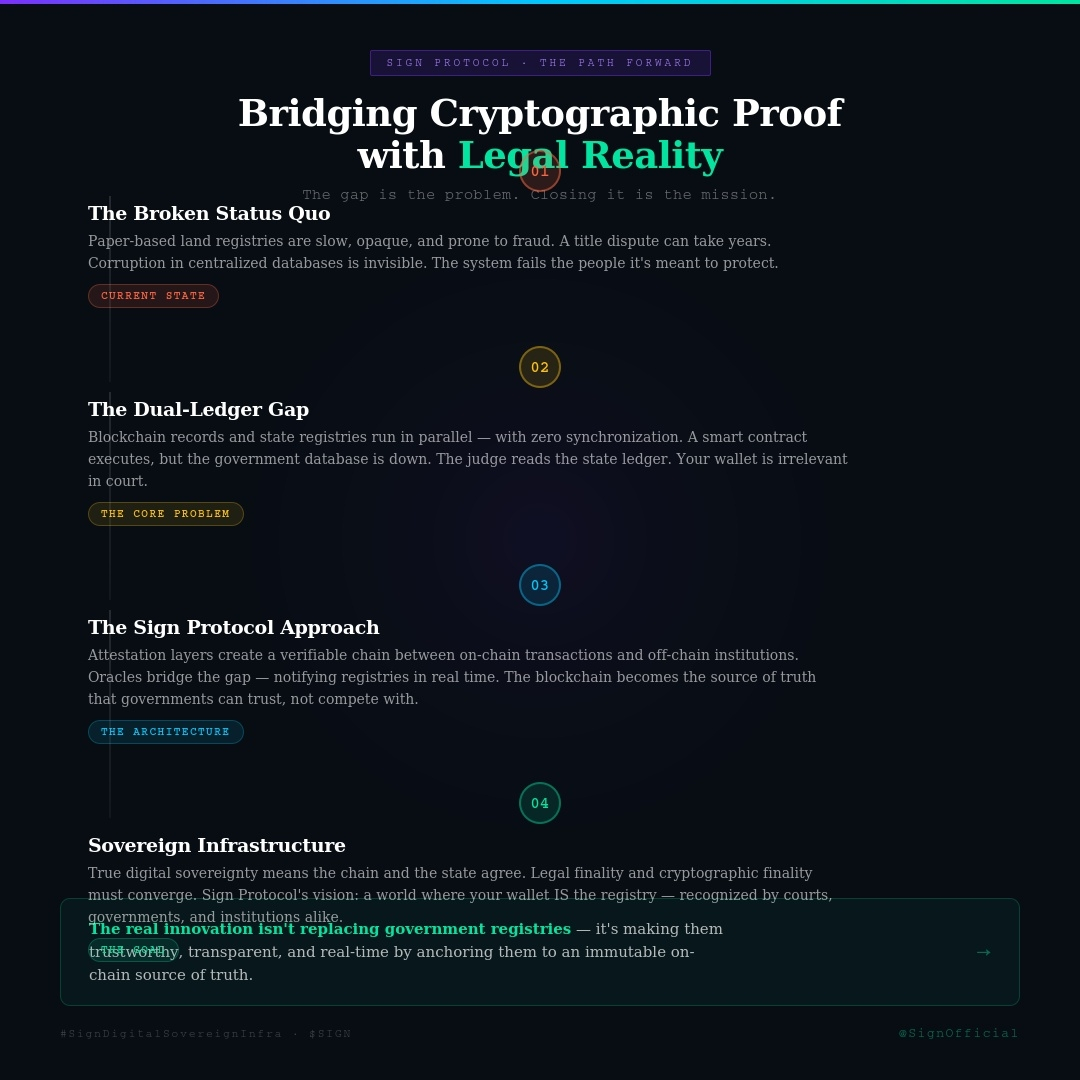
They use an attestation protocol to record the issuer and timestamp.
The public chain verifies the hash.
Everything looks perfect.
Then geopolitical reality strikes.
A foreign regulator demands access to the verification nodes.
Or an update requires consensus from decentralized validators.
The central bank realizes their digital sovereignty depends on a network they do not command.
The attestation is secure.
The control is completely illusionary.
This is a massive ideological collision.
You cannot easily serve two masters with opposed philosophies.
Web3 prioritizes censorship resistance.
National infrastructure prioritizes compliance and authority.
You can build elegant zero knowledge proofs.
You can design flawless schemas for credentials.
It does not solve the human problem of control.
Institutions will push to internalize the verification process.
They will demand dedicated private instances.
They will want to run their closed validator sets.
Slowly the revolutionary protocol gets watered down into specialized enterprise software.
It becomes just another database with a cryptographic wrapper.
We have seen this cycle before.
They start with visions of shared public infrastructure.
They end up as internal tools for bank consortiums.
Sign has exceptional execution capabilities.
Their framework separating the business layer from the proof layer is technically sound.
Focusing on lightweight client verification is exactly what is needed for real world deployment.
The technical foundation is undeniably solid.
The question remains whether technology alone can bridge the gap.
Can a single protocol remain neutral when dealing with sovereign entities?
The geopolitical stakes are too high for simple technical compromises.
The moment a conflict arises between state secrecy and public verifiability the state will always choose secrecy.
If the protocol bends too far towards institutional demands it loses its decentralized soul.
If it remains too rigid it will never be adopted by the entities that matter most.
The middle ground is incredibly narrow.
Navigating it requires political maneuvering on a global scale.
The architecture is ready.
The institutions are watching closely.
The real test is not whether the attestations actually work.
It is whether the people in power will ever truly relinquish control of the ledger.
Can @SignOfficial maintain its identity as a neutral public good while serving entities whose primary objective is absolute control?