The Resurgence of QuarkChain: Analyzing QKC’s Market Trajectory
QuarkChain (QKC) has long been recognized in the blockchain space for its ambitious multi-layer sharding architecture. However, as we move through the second quarter of 2026, the project is undergoing a significant identity shift. By transitioning into an Ethereum Layer-2 (L2) framework—branded as the "Super World Computer"—QuarkChain is attempting to recapture its position as a top-tier scaling solution.
Historically, QuarkChain gained prominence during the 2018-2021 cycles for its high-throughput capabilities, theoretically supporting over 100,000 transactions per second (TPS). In early 2024 and 2025, QKC maintained a steady but consolidated presence, often trading within a narrow range as the team pivoted toward Ethereum compatibility.
The launch of the Gamma Testnet in August 2025 marked a turning point. This phase allowed the team to refine its "Root Chain + Shard" model to align with the OP Stack (Optimism), signaling to investors that QuarkChain was moving away from being a siloed Layer-1 and toward becoming a vital piece of the Ethereum ecosystem.
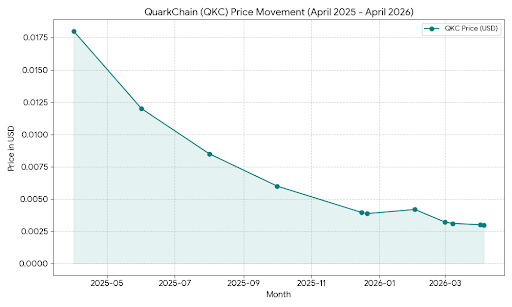
As of April 2026, QKC is navigating a phase of "bullish consolidation." The token is currently trading around the $0.0030 mark, with a market capitalization hovering near $21.5 million. While the 200-day moving average suggests a period of long-term accumulation, short-term indicators show resilience.
Current sentiment is largely driven by technical milestones rather than pure speculation. The recent integration of updated Optimism Stack forks (op-geth) has validated the team's progress. Traders are closely watching the $0.0031 resistance level; a sustained break above this could signal a move toward the $0.0060 range, as projected by several market analysts for the mid-2026 outlook.
* Mainnet Transition: The most anticipated event is the official migration from the Gamma Testnet to the L2 Mainnet. This will fully deploy the "Super World Computer" architecture, providing a scalable environment for dApps that require heavy computational power.
* EIP-7907 Integration: QuarkChain’s co-founder has been a vocal proponent of EIP-7907, which aims to remove Ethereum’s contract size limit. If this proposal gains further traction in upcoming Ethereum upgrades, QuarkChain will likely see a massive surge in institutional visibility.
* AI-Native Infrastructure: In a strategic move to capture the 2026 "Web3 x AI" narrative, the team is positioning its L2 as the go-to infrastructure for AI-native applications. By participating in global forums like the Institutional Onchain Forum in Hong Kong, QuarkChain is actively courting RWA (Real World Asset) and AI developers.
QuarkChain is no longer just a "sharding project"; it is a sophisticated Ethereum scaling contender. While the market remains cautious due to lower liquidity compared to major L2s, the technical delivery of the "Super World Computer" provides a credible path for recovery. For investors, the upcoming months will be critical in determining if QKC can convert its technical prowess into sustained market dominance.