

The latest FBI data reveals the full scope of fraud in 2025, with crypto-related losses reaching $11.3B—the largest single category. Investment scams alone account for $8.6B, with romance scams, impersonation, and tech support fraud all leveraging crypto as the payment rail.
Notably, those aged 60+ suffered the largest losses (~$4.4B), but victims span all age groups. The common thread is structural: irreversibility, pseudonymity, and instant settlement make crypto highly exploitable.
At the same time, a structural shift is underway—toward self-custody. On-chain data shows persistent outflows from exchanges as users move assets to wallets, driven by institutional custody strategies, long-term holding, and rising risk awareness.
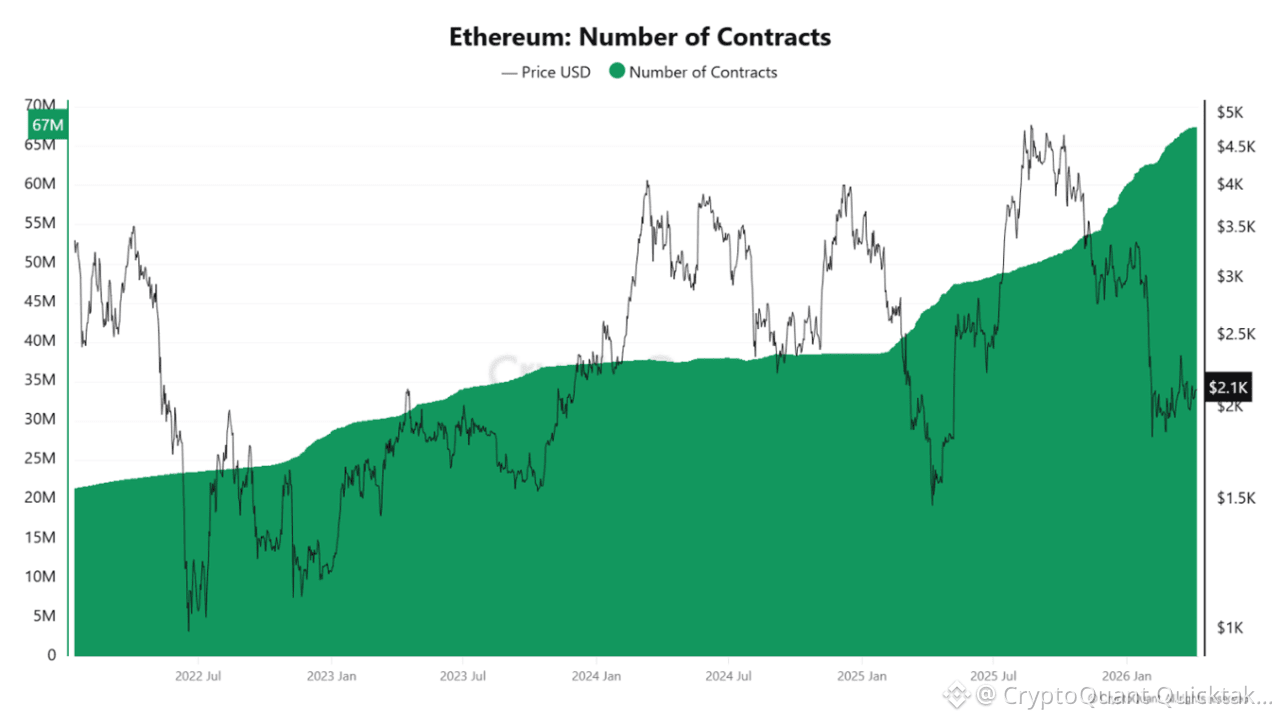
This trend is especially visible in Ethereum. The number of smart contracts continues to grow, reflecting expanding real usage across DeFi, NFTs, and stablecoin payments. Ethereum’s design encourages direct wallet interaction, making it inherently more self-custody oriented.
Today’s market reflects a paradox: scams are rising, network usage is expanding, and assets are leaving exchanges. But self-custody does not mean safety—it means full responsibility. Losses from scams or mistakes are irreversible.
Crypto is entering a phase where freedom increases, but so does personal accountability. In this environment, risk management—not price—becomes the most critical skill.
Written by XWIN Research Japan