
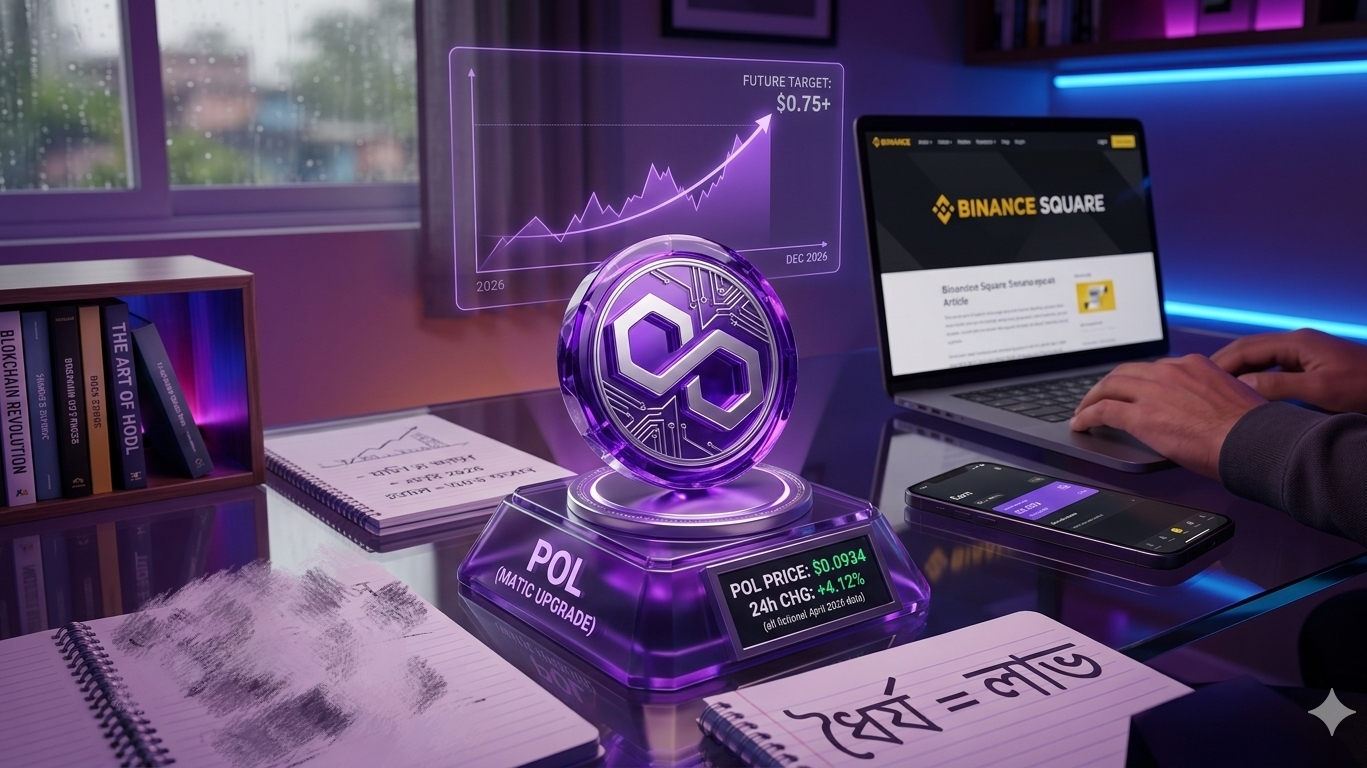
When we look back at the history of blockchain, we often see that the most significant gains weren't made during the loudest hype cycles, but during the quiet periods of intense building.
In the current landscape of 2026, the noise of retail speculation has faded slightly, making room for a much more important conversation about utility. At the center of this conversation is Polygon and its evolved ecosystem token, POL.
For those who have been watching the space closely, the transition from MATIC to POL wasn't just a simple ticker change. It represented a fundamental shift in how we think about network productivity.
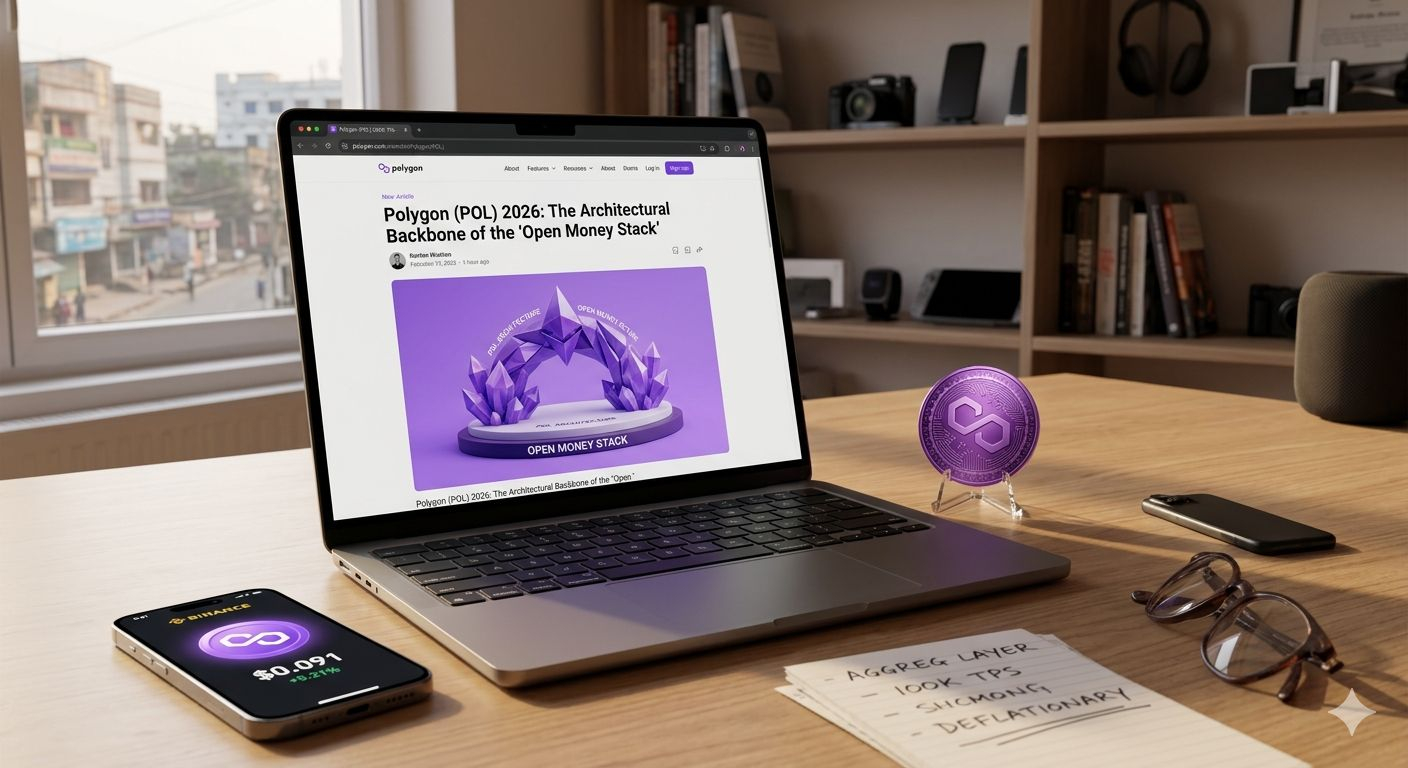
Currently, the market seems to be overlooking the sheer scale of what is being built here. Trading around the nine-cent mark, POL is sitting in a zone where the price is disconnected from the actual network value. This creates a fascinating divergence for anyone who values long-term infrastructure over short-term charts.
The real star of the show this year is the Aggregation Layer, or what the industry calls the AggLayer. For years, the biggest headache in crypto was fragmentation. If you had funds on one chain, moving them to another felt like a chore—it was slow, expensive, and often risky.
Polygon’s AggLayer has effectively solved this by creating a unified environment. It allows different chains to share liquidity almost instantly. Imagine a world where you don't even know which blockchain you are using because everything just works in the background. That is the "Open Money Stack" vision, and POL is the asset that coordinates that entire system.
Technically, the network has never been stronger. Following the Giugliano upgrade earlier this April, we’ve seen a massive optimization in how transactions are settled. We aren't just talking about being "faster" anymore; we are talking about institutional-grade reliability.
This is exactly why over half of the global USDC volume is now moving through Polygon. When major stablecoin issuers and global brands choose a specific layer to settle their transactions, they aren't looking for a "moon-shot"—they are looking for a network that won't break and won't charge ten dollars for a simple transfer.

From a market perspective, POL is in a "deep value" zone. If you look at the on-chain data, the number of active addresses and the volume of assets being tokenized on Polygon are hitting all-time highs, yet the price remains in a long-term consolidation.
This is usually what happens before an aggressive re-pricing. History shows us that when the technology outpaces the price for too long, the market eventually catches up.
Many analysts looking at the current cycle see a move toward seventy-five cents as a return to fair market value, especially as the supply continues to decrease through the network’s burn mechanism.
The supply-side economics of POL are actually quite interesting. It’s designed to be a hyper-productive token. This means it doesn't just sit in a wallet; it works. Stakers can secure multiple chains across the ecosystem, earning fees from various sources.
At the same time, the network is burning a significant amount of tokens every day as transaction volume grows. This creates a deflationary pressure that acts like a coiled spring. As the global economy moves more toward decentralized payments, this pressure only increases.
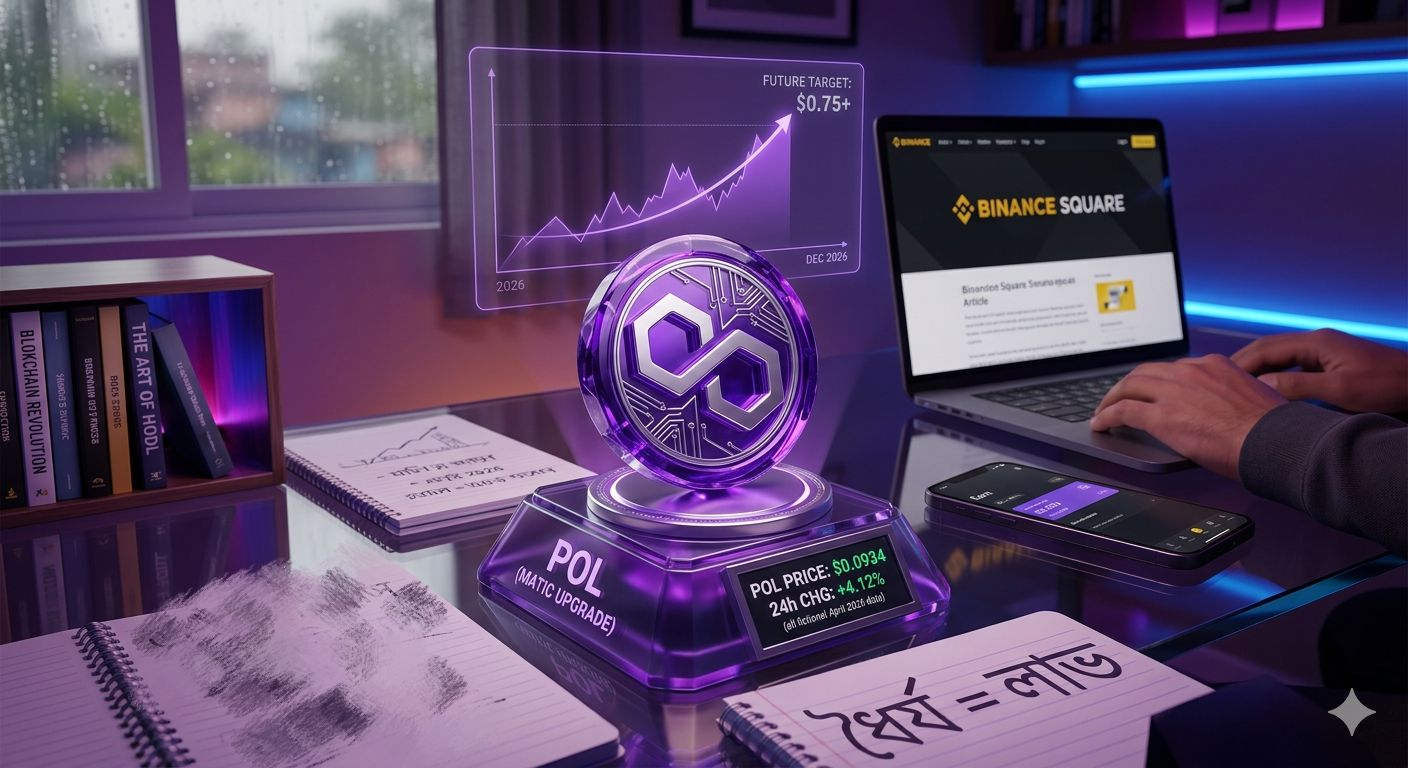
For freelancers and digital creators, this infrastructure is a game-changer. We are seeing a shift in how remote work is compensated. Instead of waiting days for a bank transfer and losing a chunk of money to fees, people are starting to accept payments directly on-chain.
Polygon is the preferred choice for this because you can send a payment worth five dollars and only pay a fraction of a cent in fees. It’s the democratization of finance in its purest form.
Success in this market, however, requires a level of patience that most people simply don't have. It is easy to get distracted by whatever coin is trending on social media today, but the real wealth is built by identifying the projects that the world will actually use five years from now.
The "HODL" philosophy isn't just a meme; it’s a risk management strategy. It’s about recognizing that volatility is the price we pay for opportunity. By focusing on the fundamentals—the code, the partnerships, and the actual usage—investors can tune out the noise and wait for the value to be realized.
As we move into the second half of 2026, the catalysts are lining up. We have the full maturity of the ZK-EVM, the expansion of real-world asset tokenization, and a growing demand for private, secure transactions.
Polygon is checking every box. It isn't trying to be the loudest project in the room; it’s trying to be the most useful. And in a world that is becoming increasingly digital, utility is the only thing that ultimately matters.
In conclusion, the story of POL in 2026 is one of resilience. It is a project that has survived multiple market cycles, evolved its technology, and stayed focused on the mission of scaling the global economy. While the charts may be quiet for now, the building is louder than ever.
For those who understand the importance of infrastructure, the current landscape isn't a time for doubt—it's a time for strategic observation. The future belongs to the patient, and the patient are looking at Polygon.
#Polygon #analysis #TrendingTopic #MarketRebound #Market_Update