


Central Bank Gold Buying Still Looks Strong And That Matters for the Bigger Precious Metals PictureA new report from Citic Securities argues that the global central bank gold-buying trend remains structurally strong, even if the market may be misunderstanding what is actually driving it.
The key point is that this is not just a simple story about reserve management anymore. More central banks are now using non-standard purchasing channels and increasing domestic storage, which suggests gold is being treated more explicitly as a sovereign safe asset. In other words, gold is not only a financial reserve — it is increasingly seen as strategic protection in a world shaped by sanctions risk, geopolitical tension, and monetary uncertainty.
That said, Citic also pushes back against the common narrative that all central bank gold buying should be viewed as direct “de-dollarization.” The report says that is too simplistic. The real motivation is still more traditional and practical: crisis hedging, reserve diversification, and protection against external shocks. Gold gives central banks an asset that carries no direct counterparty risk and can serve as a stabilizer when confidence in global financial conditions weakens.
Another important takeaway is that short-term interruptions in buying do not necessarily signal a structural reversal. Countries like Turkey and Russia may temporarily reduce purchases or adjust holdings when fiscal pressures rise, but Citic views those moves as tactical rather than trend-breaking. The broader pattern of net global central bank buying remains intact.
On price impact, the report makes an interesting distinction. Central bank demand is seen as a long-term force that lifts the overall price floor of gold, but not necessarily the main driver of every short-term move. Because central banks often buy on dips rather than chase rallies, their activity tends to support the market rather than aggressively push prices higher at all times. For shorter-term gold price action, Citic says variables like real interest rates still matter more.
This matters because many investors can overstate the immediate effect of official-sector demand while underestimating its structural importance. Central bank buying may not explain every rally, but it helps reinforce the idea that gold’s long-term valuation backdrop has changed. A steady, price-sensitive official bid in the market can create a stronger base over time.
Citic also highlights the large gap in gold reserve allocations between many emerging-market central banks and developed economies. That gap suggests the current buying cycle may still have a long runway. If emerging markets continue trying to improve reserve resilience, diversify exposure, and strengthen monetary credibility, gold accumulation could remain a multi-year theme rather than a temporary burst.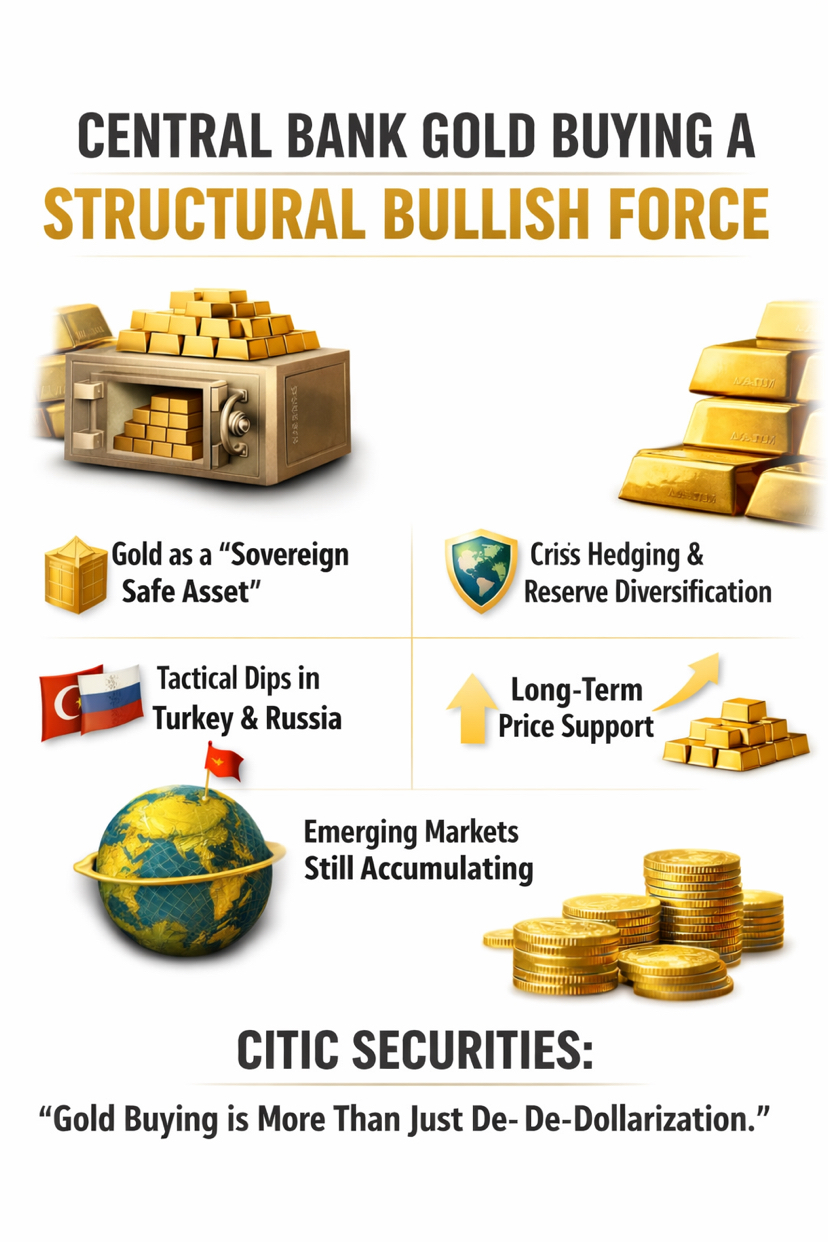
The practical takeaway is balanced: Citic stays constructive on gold over the medium to long term, but in the short term, investors should watch for signals that gold is weakening its correlation with broader risk assets. That kind of setup could offer a cleaner dip-buying opportunity.
Overall, the message is clear: central bank gold buying is not just a headline trend. It is becoming a deeper structural pillar for gold, even if the short-term pricing story still depends heavily on rates, macro stress, and investor positioning.#Write2Earn #TrendingTopic $BNB
