

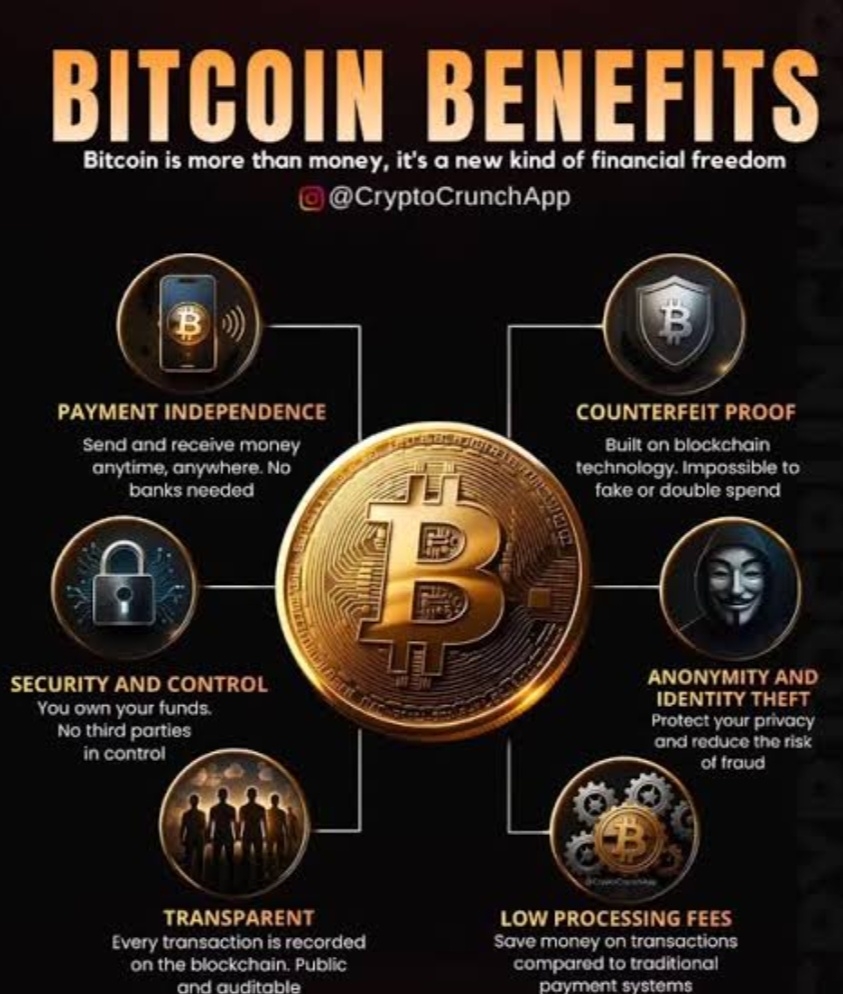
Bitcoin ($BTC) is not just another crypto asset it is the original and most resilient implementation of decentralized money, operating as a global, permissionless financial system that has fundamentally reshaped how value can be stored, transferred, and secured. Since its launch in 2009, Bitcoin has evolved from a peer-to-peer experiment into the backbone of the entire blockchain industry, maintaining its role as the most trusted Layer-1 network in existence.
At its core, Bitcoin represents a simple but powerful idea: a financial system that operates without intermediaries, where trust is replaced by mathematics, cryptography, and distributed consensus.
The Core Architecture: A Pure Layer-1 Blockchain
Bitcoin runs on a Layer-1 blockchain, meaning it is a base protocol that independently validates and records transactions without relying on any external system. Layer-1 blockchain
Its infrastructure is built on a public, permissionless distributed ledger, where anyone can participate as a user, node operator, or miner without approval from a central authority.
The network is secured through Proof-of-Work (PoW) a consensus mechanism where miners compete to solve cryptographic puzzles, adding new blocks approximately every 10 minutes. This process ensures:
Strong security
High resistance to censorship
Immutable transaction history
Bitcoin’s design deliberately prioritizes security and decentralization over speed, which is why its base layer processes roughly 3–7 transactions per second.
Rather than being a limitation, this design choice is intentional it makes Bitcoin one of the most secure financial systems ever created.
Digital Scarcity and Tokenization
Bitcoin introduced the concept of digital scarcity, enforced by a fixed supply cap of 21 million BTC.
This scarcity is not theoretical it is embedded in the protocol itself, making Bitcoin fundamentally different from traditional currencies that can be inflated. As a result, BTC functions as:
A store of value (“digital gold”)
A settlement asset for large-scale transfers
A base monetary layer for the digital economy
In terms of tokenization, Bitcoin’s native asset (BTC) is not just a currency it is the unit of security, settlement, and economic incentive within the network. Every transaction, mining reward, and fee revolves around BTC, aligning incentives across participants.
Real-World Use Cases: Beyond Speculation
Bitcoin’s real-world relevance has matured significantly, moving beyond early narratives of speculation.
1. Global Value Transfer
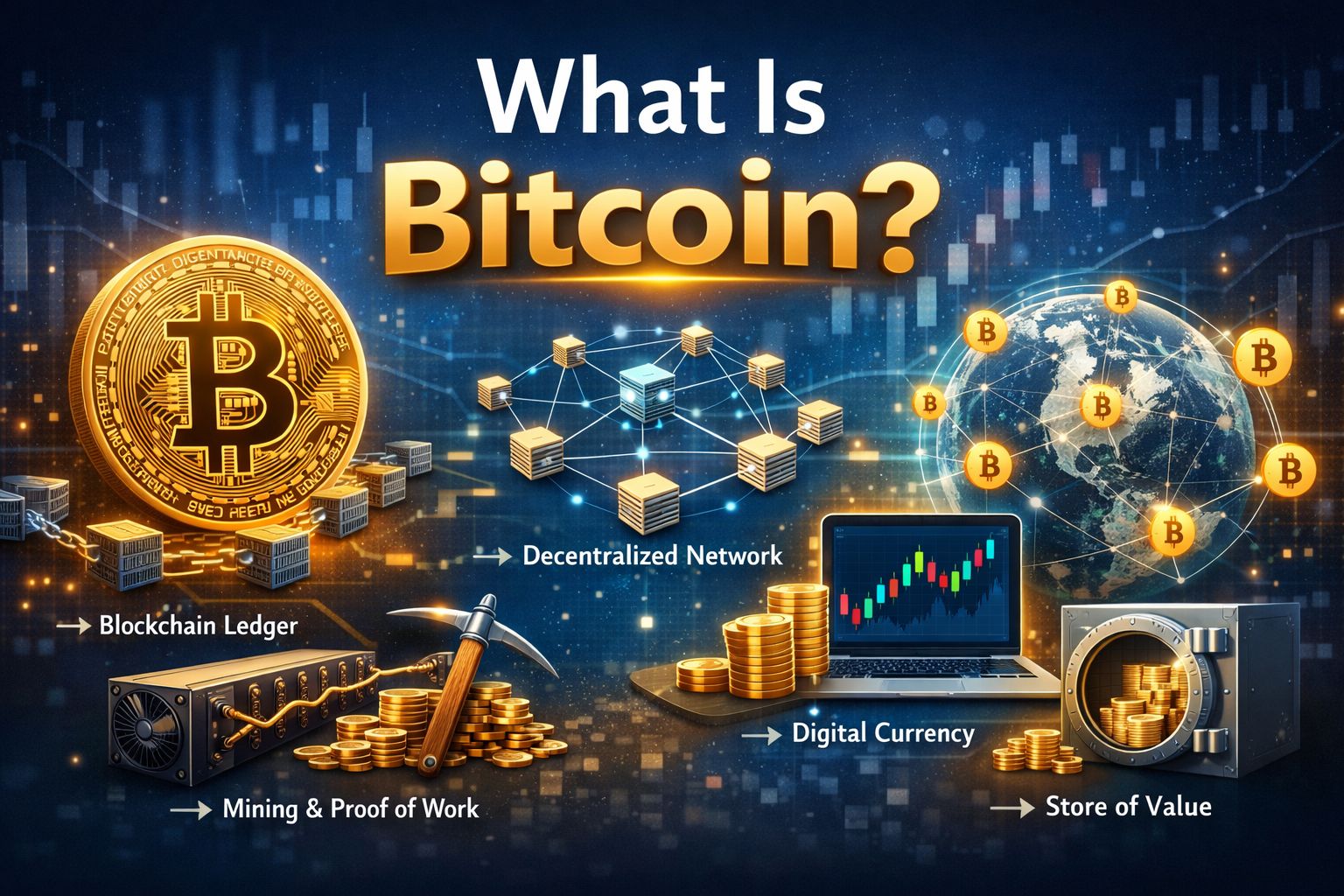
Bitcoin enables borderless payments without banks, allowing users to send value anywhere in the world with minimal trust requirements.
2. Store of Value
Its fixed supply and long-term stability have positioned BTC as a hedge against inflation and monetary debasement.
3. Settlement Layer
Large transactions especially institutional transfers are increasingly settled directly on-chain due to Bitcoin’s unmatched security.
4. Financial Inclusion
Anyone with internet access can use Bitcoin, making it a viable alternative in regions with limited banking infrastructure.
Privacy and Transparency: A Delicate Balance
Bitcoin operates on a transparent ledger, where all transactions are publicly visible. However, it maintains pseudonymity, meaning users are identified by addresses rather than real-world identities.
This creates a unique balance:
Transparency ensures auditability and trust
Pseudonymity offers a degree of privacy
While not fully anonymous, Bitcoin’s model has influenced the broader conversation around financial privacy in decentralized systems.
The Rise of Layer-2: Scaling Without Compromise
Bitcoin’s long-term scalability strategy does not involve altering its base layer significantly. Instead, it relies on Layer-2 solutions secondary protocols built on top of Bitcoin.
Layer-2 scaling
These systems process transactions off-chain while inheriting Bitcoin’s security. By 2026, the Layer-2 ecosystem has expanded into a diverse landscape including:
State channels
Sidechains
Emerging modular scaling protocols
This approach allows Bitcoin to maintain its core principles while enabling:
Faster transactions
Lower fees
Expanded functionality
Importantly, this layered architecture reflects a broader industry trend: Layer-1 for security and settlement, Layer-2 for speed and usability.
Expanding Utility: The Evolution of Bitcoin’s Ecosystem
Historically, Bitcoin was seen as limited in functionality compared to programmable blockchains. However, this perception is shifting as infrastructure evolves.
The growth of Layer-2 networks and modular systems is enabling:
Payment networks for microtransactions
Financial primitives built around BTC
Enhanced liquidity and capital efficiency
Investment and development in Bitcoin Layer-2 solutions have increased significantly, with funding and ecosystem growth accelerating in recent years.
This signals a transition from passive asset to active economic layer, where BTC can participate in broader financial activity without compromising its core security model.
Real-World Assets (RWA) and Bitcoin’s Role
While Bitcoin itself is not designed for complex asset tokenization like some programmable chains, it plays a crucial role as:
A collateral base
A settlement asset for tokenized systems
A trust anchor for financial infrastructure
As tokenized real-world assets (RWAs) grow across blockchain ecosystems, Bitcoin’s role increasingly resembles that of a global reserve layer, underpinning value rather than directly hosting complex applications.
Security, Decentralization, and Network Strength
Bitcoin’s greatest strength lies in its unmatched network effect and security model.
Over 15 years of continuous operation
Massive global node distribution
Robust mining ecosystem

These factors make Bitcoin the benchmark for trust in the blockchain space.
Its simplicity is its advantage: fewer moving parts mean fewer vulnerabilities.
Challenges and Limitations
Despite its dominance, Bitcoin is not without trade-offs:
Limited throughput on Layer-1
Higher fees during network congestion
Slower innovation compared to more flexible systems
However, these are largely intentional design constraints, preserving Bitcoin’s core identity as a secure settlement layer rather than a high-speed execution environment.
The Future Outlook: A Layered Financial System
Bitcoin is no longer just a cryptocurrency—it is evolving into a multi-layer financial ecosystem.
The direction is clear:
Layer-1 remains the foundation of trust and settlement
Layer-2 expands usability and scalability
Off-chain systems integrate Bitcoin into broader financial infrastructure
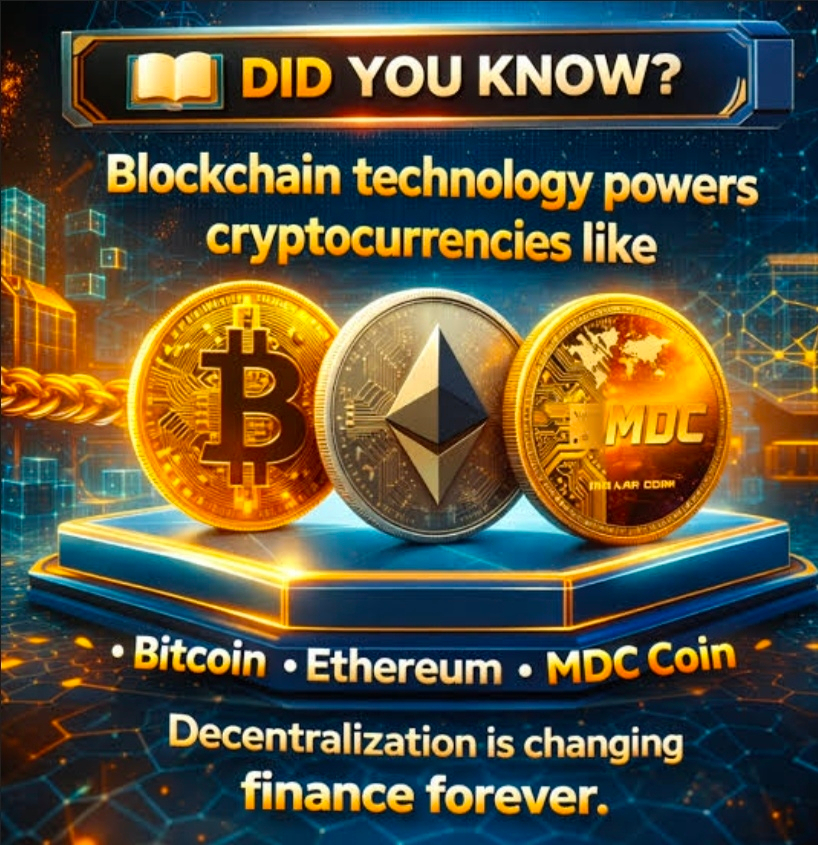
This layered model ensures Bitcoin can scale globally without sacrificing its defining characteristics.
Conclusion: The Enduring Backbone of Digital Value
Bitcoin’s significance cannot be reduced to price or market cycles. Its true importance lies in what it represents: a neutral, decentralized system for storing and transferring value without reliance on centralized institutions.
While newer technologies continue to emerge, Bitcoin remains the anchor of the entire digital asset ecosystem a system defined by scarcity, security, and resilience.
Its evolution into a layered architecture marks a critical turning point. Bitcoin is no longer just “digital gold” it is becoming the base layer of a new financial paradigm, where trust is minimized, sovereignty is maximized, and value moves freely across borders.


