When people talk about the future of Web3 gaming, the conversation usually revolves around tokens, NFTs, and earning opportunities. But the truth is, none of that matters if the game itself is not enjoyable.
That is where Pixels feels different.
Instead of building a blockchain project that simply adds game mechanics on top, Pixels starts with what players actually care about: a world that feels alive, relaxing, and rewarding to be part of. It brings together farming, exploration, community interaction, and digital ownership in a way that feels natural rather than forced.
That balance is exactly why Pixels is becoming one of the most talked-about projects in the GameFi space.
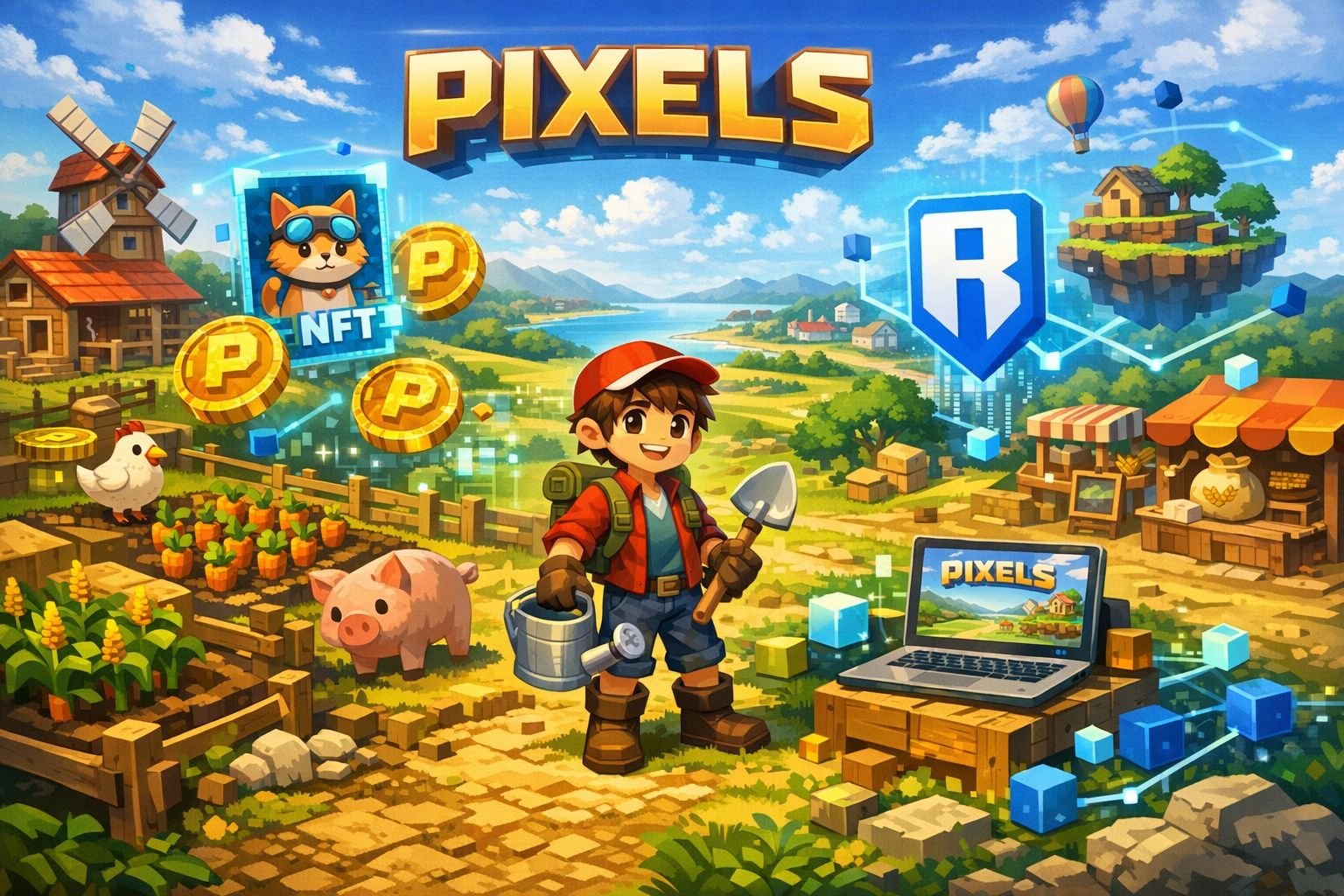
At its heart, Pixels is a social open-world farming game where players can grow crops, gather resources, complete tasks, and explore alongside thousands of others. The gameplay is simple enough for casual players to enjoy, yet deep enough to keep people engaged over time.
What makes this especially powerful is that the in-game economy is tied to real ownership. The resources players collect, the assets they upgrade, and the value they build inside the game are all part of a blockchain-powered ecosystem. This means players are not just spending time in a virtual world—they are helping create value in an economy they can actually participate in.
That sense of ownership changes the player experience completely.
In traditional games, hours of grinding often lead to rewards that remain locked inside the platform. In Pixels, progress carries real value because the ecosystem is designed around player participation. This creates stronger motivation, deeper engagement, and a much more meaningful relationship between the player and the game.
Another reason Pixels stands out is the technology behind it.
The project is built on the Ronin Network, a blockchain designed specifically for gaming. For most players, that means fast transactions, low fees, and a smooth overall experience. Instead of dealing with the clunky and expensive interactions that often scare users away from Web3, Pixels offers an environment where blockchain works quietly in the background.
That kind of seamless infrastructure matters because mainstream gamers do not want to think about blockchain—they just want a game that works.
Pixels understands this. It removes the friction while keeping the benefits of ownership, making the transition from traditional gaming to Web3 much easier for everyday players.
The PIXEL token is another major part of what makes the ecosystem work.
Rather than existing purely as a reward token, PIXEL has clear use cases inside the game. Players can use it for premium memberships, upgrades, accessing special features, and interacting with in-game assets. As the ecosystem expands, the token is expected to play an even bigger role in governance and broader utility.
This matters because many GameFi projects fail by creating tokens that have supply but very little purpose.
Pixels is taking the opposite approach by making the token useful within the actual gameplay loop. The more players engage with the ecosystem, the more reasons they have to use the token. That creates natural demand and gives the in-game economy stronger foundations.
This focus on utility is also what supports long-term sustainability.
One of the biggest problems in blockchain gaming has been inflation. Projects often attract players with high rewards, but if there are not enough reasons to spend tokens, the economy becomes flooded and rewards lose value. That cycle has damaged trust across the GameFi sector.
Pixels is trying to solve that by designing its economy around active token sinks such as memberships, upgrades, crafting, and premium progression systems. These features encourage players to spend within the ecosystem, reducing inflation pressure while increasing demand.
It is a much healthier model than relying on hype alone.
And perhaps the strongest part of Pixels is the community element.
The game is designed to be social. Players are not isolated farmers grinding alone—they are part of a growing world where trading, collaboration, and interaction drive the ecosystem forward. This creates stronger retention because people stay not only for rewards, but because they feel connected to the world and to other players.
That kind of community-driven growth is incredibly important in Web3.
A strong community creates economic activity, boosts engagement, and increases the overall value of the ecosystem. Every new player adds to the network effect, making the game world more vibrant and the economy more active.
Pixels is benefiting from exactly this momentum.
As the project introduces more gameplay features, expands land utility, and creates new ways for players to participate, the ecosystem becomes even stronger. Each update adds another layer of engagement, and every layer creates more reasons for players to stay involved.
That is why Pixels feels like more than just another blockchain game.
It represents a shift in how GameFi is evolving—from speculative “play-to-earn” experiments toward real gaming ecosystems built around fun, ownership, and sustainable economics.
The projects that will shape the future of Web3 gaming are not the ones making the loudest promises. They are the ones building real experiences that players genuinely want to return to.
Pixels is doing exactly that.
By combining enjoyable gameplay, smooth blockchain infrastructure, meaningful token utility, and strong community engagement, it is laying the groundwork for a digital economy that can last.
That is what makes Pixels so exciting.
It is not just offering players rewards—it is building a world where players become part of the value being created.
And in a Web3 gaming industry searching for its breakthrough moment, Pixels may be one of the clearest signs of what the future really looks like.