
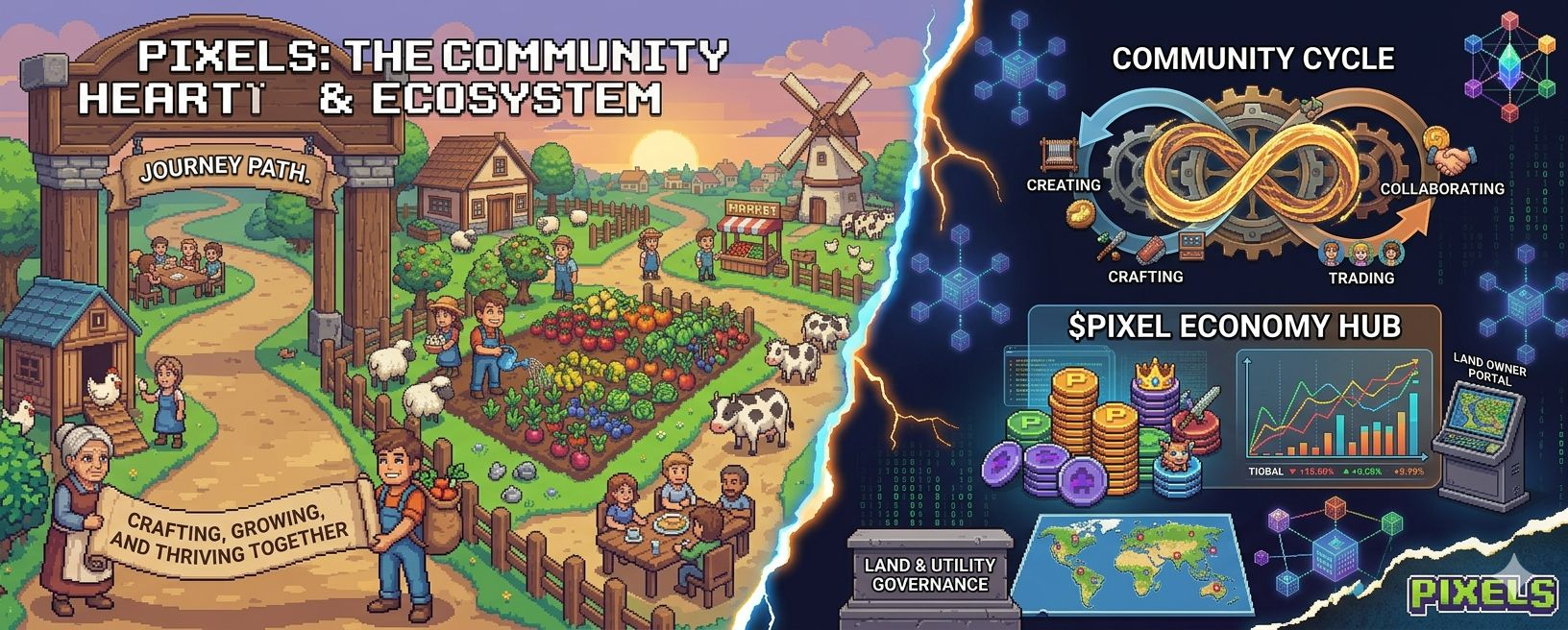
At the start, Pixels really does feel simple. A social, casual Web3 game built on Ronin, where you farm, explore, and create in an open world. That’s the description—and honestly, that’s exactly how it looks in the beginning. You log in, plant crops, move around, and enjoy the slow pace.
But after spending some time in it, I started to feel like there’s more happening beneath the surface.
The game is not just about farming loops. It’s about how everything connects. When you harvest crops or complete activities, you earn. When you upgrade, craft, or progress, you spend. At first, it feels like normal gameplay, but slowly you realize that this flow—earning and spending—is what shapes your entire experience.
When earning feels easy, rewards don’t feel special. When spending becomes too much, progress feels heavy. The interesting part is that this balance doesn’t stay the same. It shifts depending on how active players are and how they behave inside the game.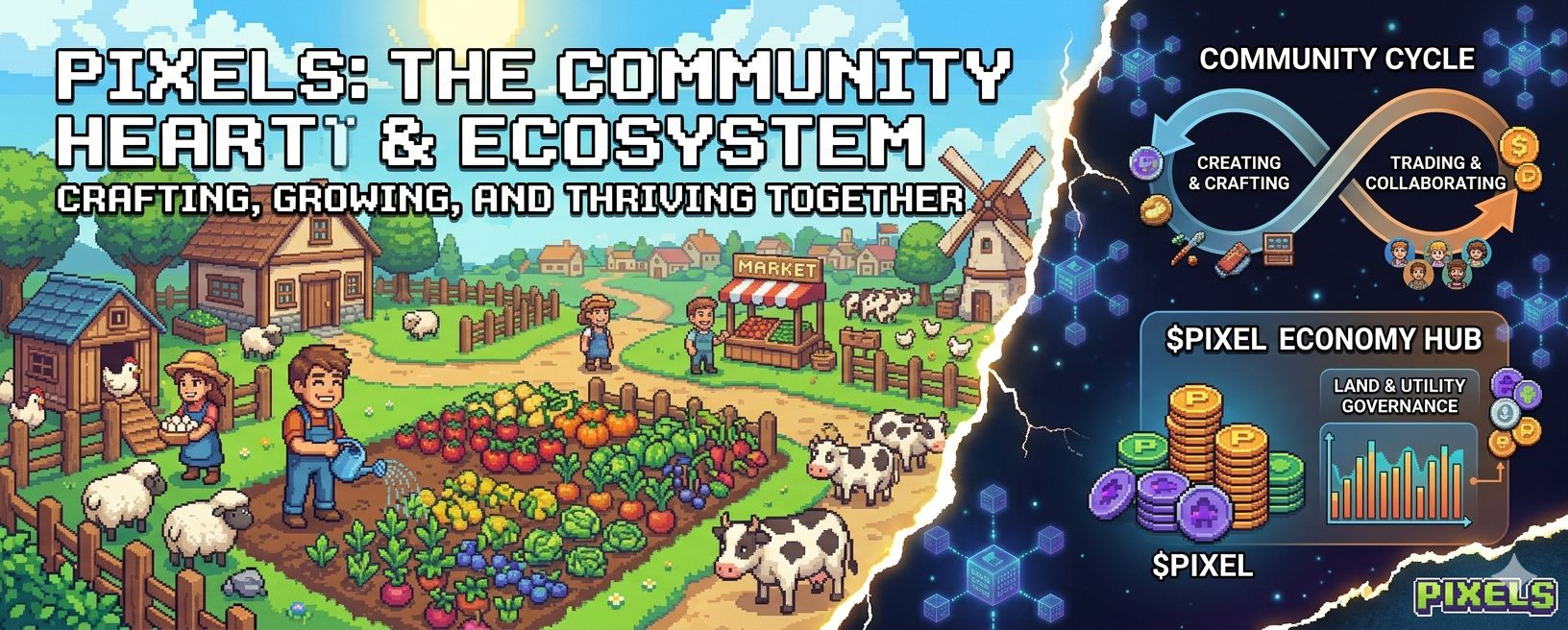
I noticed this more clearly after the early hype phase. When more players were active, everything felt alive. Resources moved faster, interactions were higher, and the game had more energy. Later, when activity dropped, the pace changed. It wasn’t broken—but it felt different. Slower, quieter, and more noticeable.
Then there’s land, which adds another layer. Owning land changes how you experience the game. Landowners can earn from others, while players without land give up a share of what they make. It creates two sides inside the same world. Some players grow with the system, while others grow through it.
Events also bring temporary energy. During these moments, players spend more, interact more, and the game feels active again. It’s a smart design choice, but it also makes you wonder how the system behaves without that extra push.
The more I observe, the more Pixels feels less like a fixed game and more like something that adjusts over time. It reacts to players, to activity, and to changes in the environment. It’s not perfect, but it’s clearly evolving.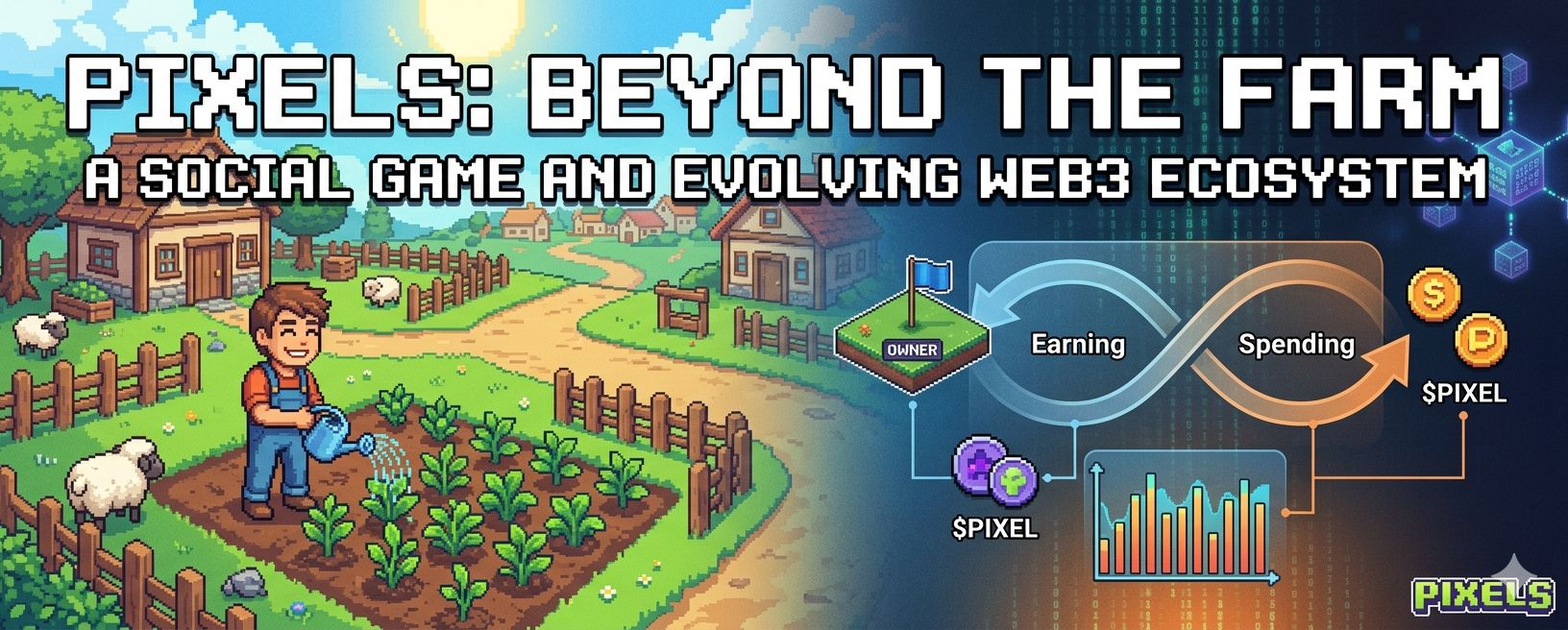
And maybe that’s the most interesting part.
Because in the end, different players want different things. Some come to earn and look for rewards. Others come to relax and enjoy the experience. Both exist in the same world, but they don’t always want the same balance.
That’s not an easy problem to solve.
But it’s what makes this game worth watching.