
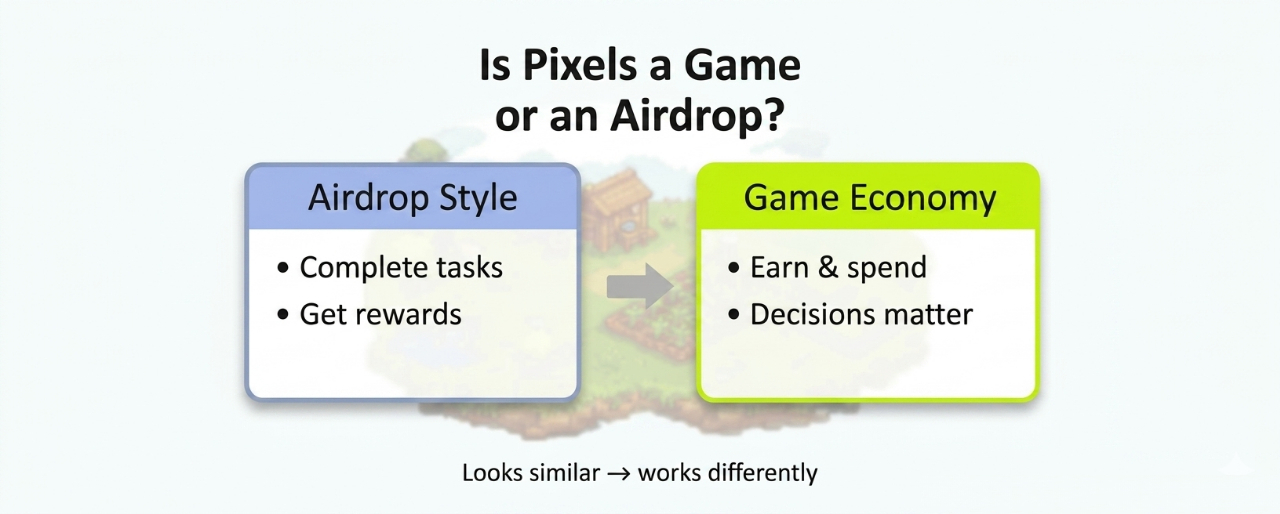
I thought Pixels was just a game at first.
You play, complete tasks, earn some $PIXEL That’s it. It looked like a normal play-to-earn loop which rewards you for playing.
But after spending some time with it, it didn’t feel that simple anymore.
Because the way rewards are distributed started to look familiar.
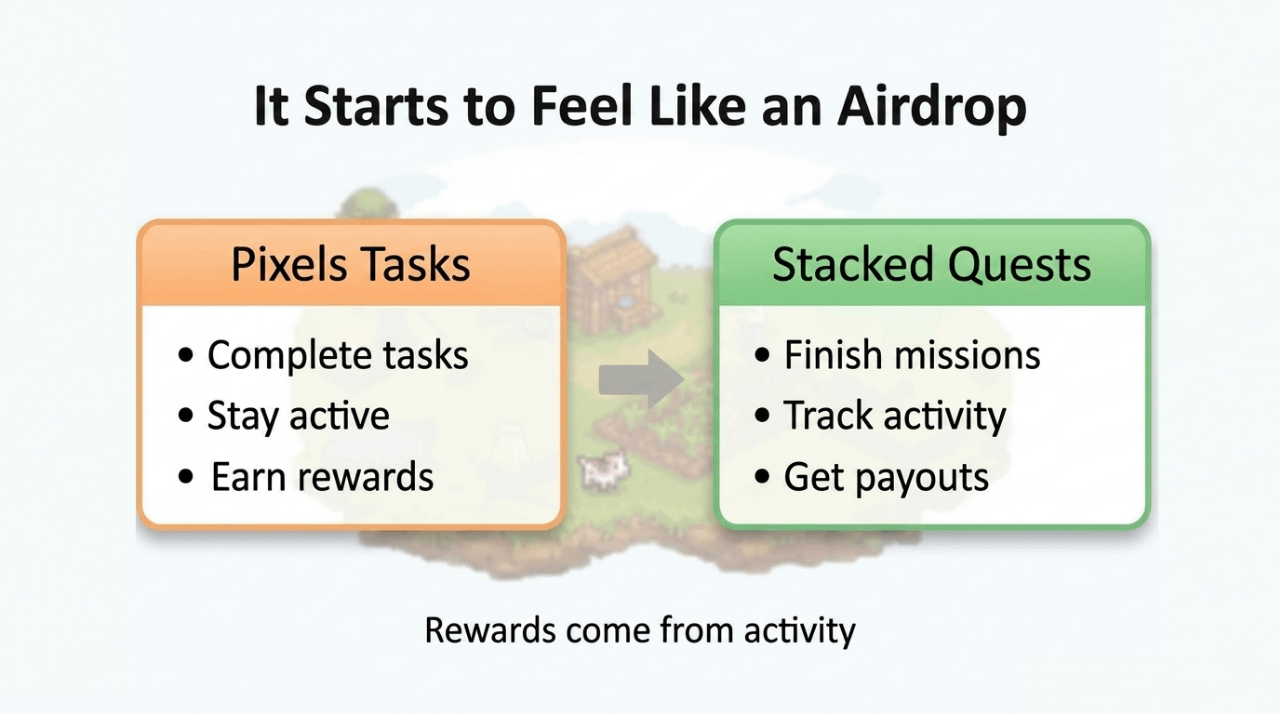
Complete tasks → earn tokens.
Stay active → earn more.
Miss activity → earn less.
That structure felt very close to how airdrops work and when I saw Stacked on top of this, it made that feeling even stronger.
You complete quests there, and you get rewarded separately. Some players even started receiving payouts recently.
So now it doesn’t just look like a game rewarding players, it looks like a system distributing tokens across different layers.
At that point, it started to feel like Pixels was running an ongoing airdrop.
But the more I looked at it, the less accurate that comparison felt.
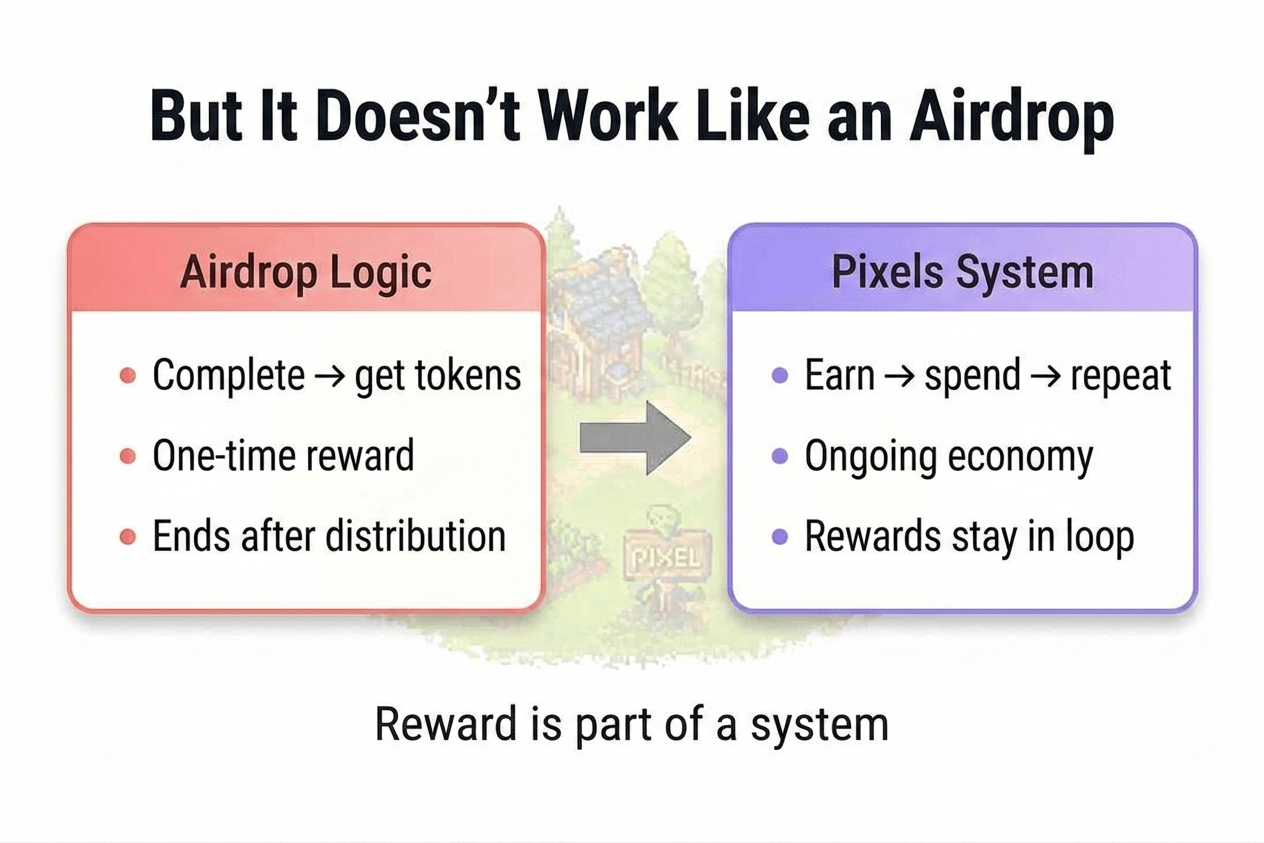
Because an airdrop is usually simple. You complete conditions, you get tokens, and that’s the end of it.
Pixels doesn’t work like that.
The rewards you earn inside the game don’t just sit in your wallet. They move through the system.
You spend them, you hold them, you use them to unlock access, and sometimes you lose value depending on how you play.
That means the reward is not the final output.
It’s part of a loop.
Stacked, on the other hand, works differently. You complete quests, and you get rewarded from an external layer. That part behaves more like an airdrop.
So what’s happening here is not one system, it’s two reward layers on top of each other.
One that distributes rewards like an airdrop, and another that tries to keep those rewards circulating inside a game economy.
When both run together, it creates something that looks like a continuous airdrop.
But it isn’t exactly that.
Because one part ends with the reward, and the other starts from it.
So now it doesn’t really feel like I’m just playing a game anymore.
Is Pixels actually a game with rewards?
or a reward system that just happens to look like a game?