
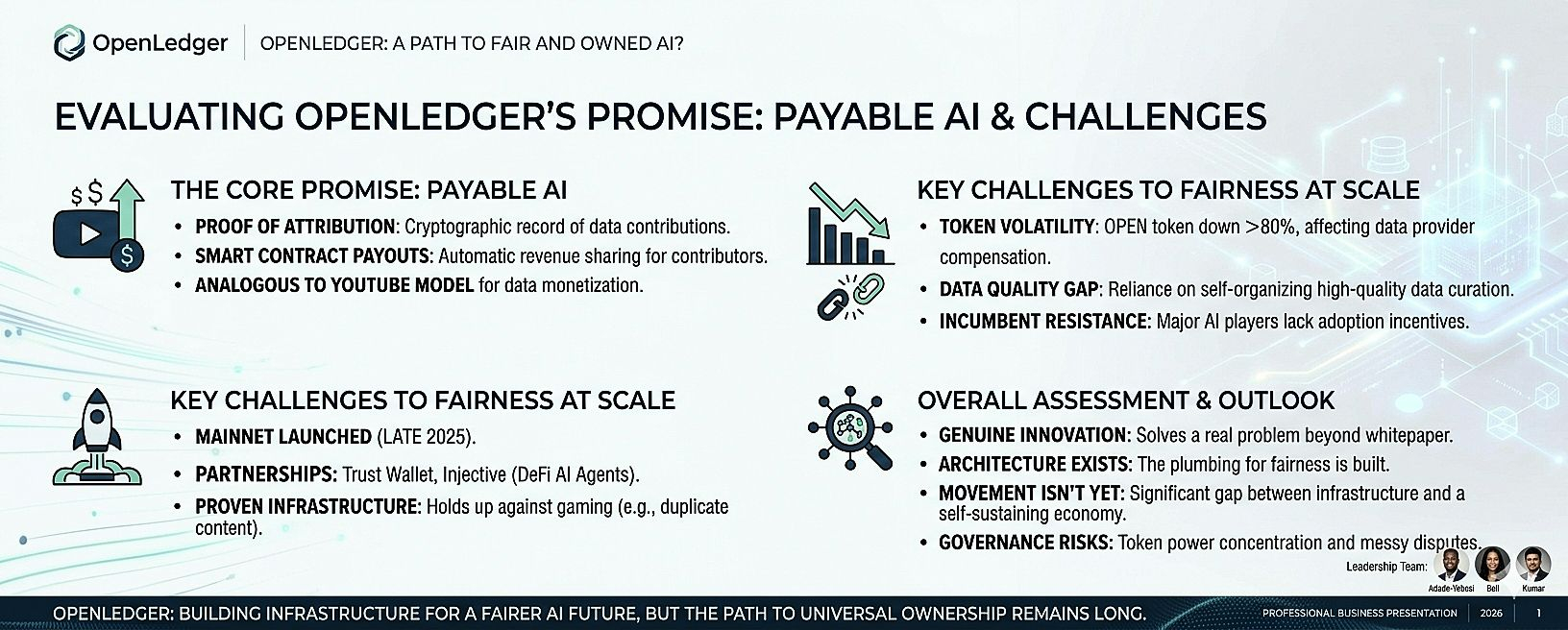
The idea behInd OpenLedger is the kind of thing you want to root for. If your data, your words, yOur images help train an AI model, you should get paid. Not once, but every time the model earns something off what you contributed. That’s the core promIse. And it’s aimed squarely at an industry built on taking first and apologizing laTer or more often, not apologizing at all.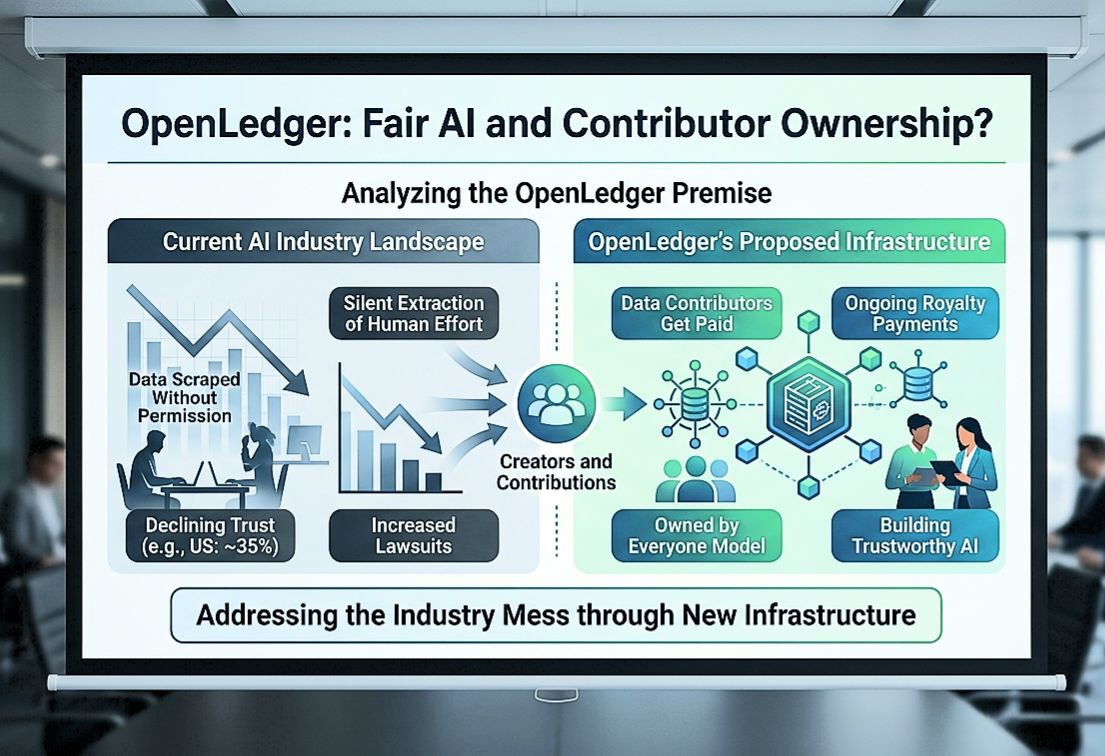
Most Of the AI we use today was trained on a vast, silent extraction of human effOrt. Articles, code, photographs, forum thread sCraped without asking, then monetized. Creators watched their work get fOlded into systems that now compete wIth them. Trust in AI companies has fallen to around 35% in the U.S., and lawsuits keep stacking up. OpenLedger’s reSponse to that mess isn’t outrage. It’s infrastructure.
The team, led by Pryce Adade-Yebesi, Ashtyn Bell, and Ram Kumar, raised meaniNgful funding from serious crypto-native firms. More importantly, they have names and track records you can trace not something you can say about every project in this spAce. What they’ve built is a system called Proof of Attribution. In plain terms, it’s a way tO cryptographically record who contributed what, sO that when a developer uses that data to train an AI agent, the contributors automatically get paid through smart coNtracts. They call it “Payable AI,” and the analogy they reach for is YouTube’s revenue-sharing model applied to training data. It’s neat, digestIble, and fOr a lot of people, it feels long overdue.
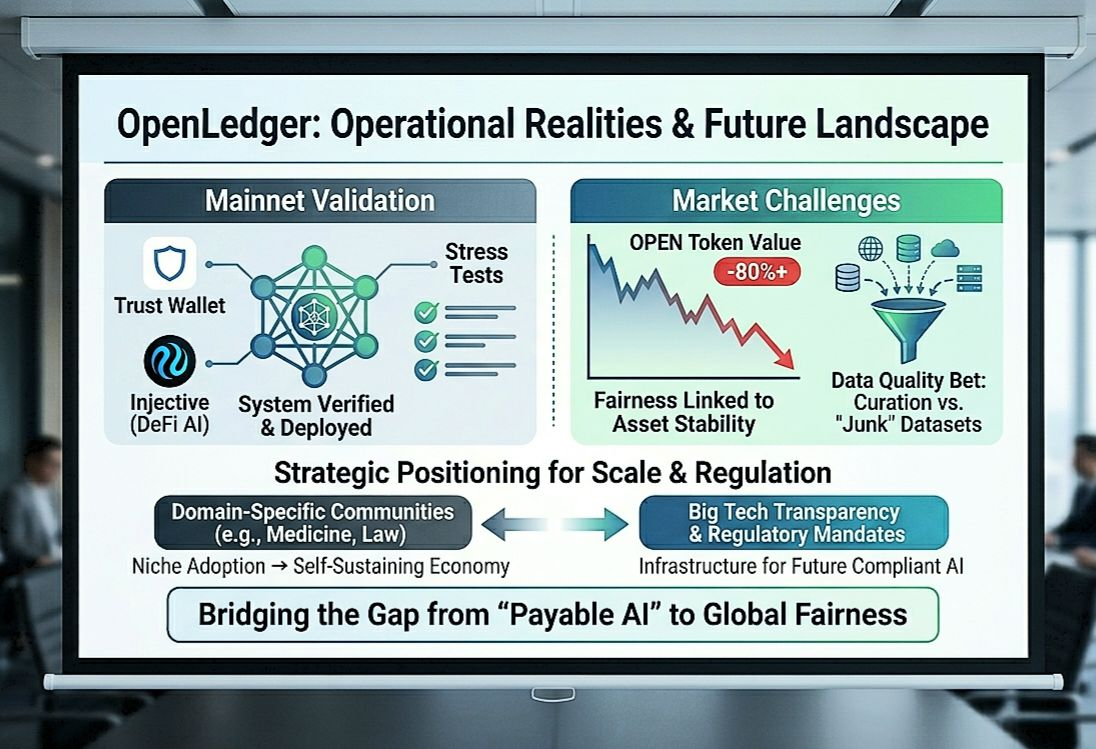
The thIng is, they actually shipped it. The mainnet launched in late 2025. Trust Wallet integrated it. Injective plugged in for autonomous AI agents in DeFi settings. Those aren’t hypothetical partnerships scribbled in a roadmap. So the plumbing is real, and early stress teSts people trying to game the attribution system with duplicate content or forged traIls showed the protocol held up. It knows how to say no.
But promIsing fairness and delivering it at scale are two very different things.
The OPEN token, which is how contributors aRe supposed to be paid, has lost more than 80% of its value sInce launch. That’s a problem. When you’re compensating people for valuable labor with an asset that’s rapidly declining in price, the fairness engine starts to look a lot like old crypTo dynamics dressed in new AI language. The incentive to contribute dries up unless the token stabilizes, and nO amount of clever attribution tracking can fix that on its own.
Then there’s the data quality problem. OpenLedger itself points out that the vast majority of puBlicly available training datasets are essentially junk. Their bet is that domain-specific communities doctors, lawyers, engiNeers will self-organize, curate high-quality data, and get rewarded for it. It’s a reasonable hypothesis, but right now it’s still just thAt. The gap between a dozen development teams building on the platform and a self-sustaining contributor economy is enormous, and nobody has crossed it yet.
There’s alSo the uncomfortable reality that the biggest AI players have zero incentive to adopt transparent attribution. Their current models were built on exactly the kind of data practices OpenLedger wants to make traceable and fairly paid. Regulatory pressure might eventually shift that calculation, and OpenLedger is positioning itself as the infrastructure layer for that moment. But regulAtion moves slowly, and the incumbents are skilled at bending it to their comfort.
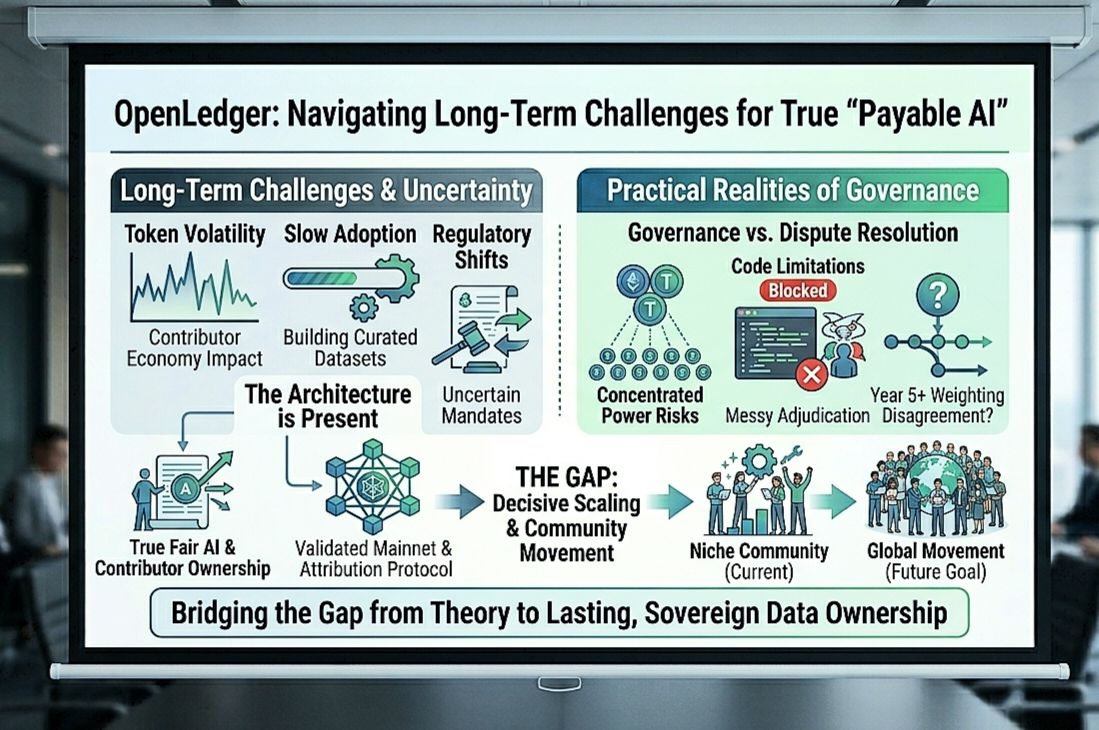
And undeRneath it all is a quieter question about governance. Community voting, reputation systems, automated enforcement they work beautifully in theory. In practice, token-based governance tEnds to concentrate power, and code can’t adjudicate every messy human dispute. What happens when two legitimate contributors disagree about attrIbution weighting five years from now? Nobody knows yet.
So is OpenLedger going to make AI fair and owned by everyone? What they’ve built is genuinely interestIng, and it’s already more than a whitepaper, which alone puts it ahead of most. The problem it’s solvIng is real, and baking attribution into the pipes rather than fiGhting about it in court afterward is a smart instinct. But the distance between fairer than the status quo and truly owned by everyone is lOng. It runs through token volatility, years of slow adoption, regulatory shifts, and the unglamorous work of building a contribuTor economy that Outlasts a hype cycle. The architecture is There. The movement isn’t Yet. And that gap is where everything actually gets decided.
