
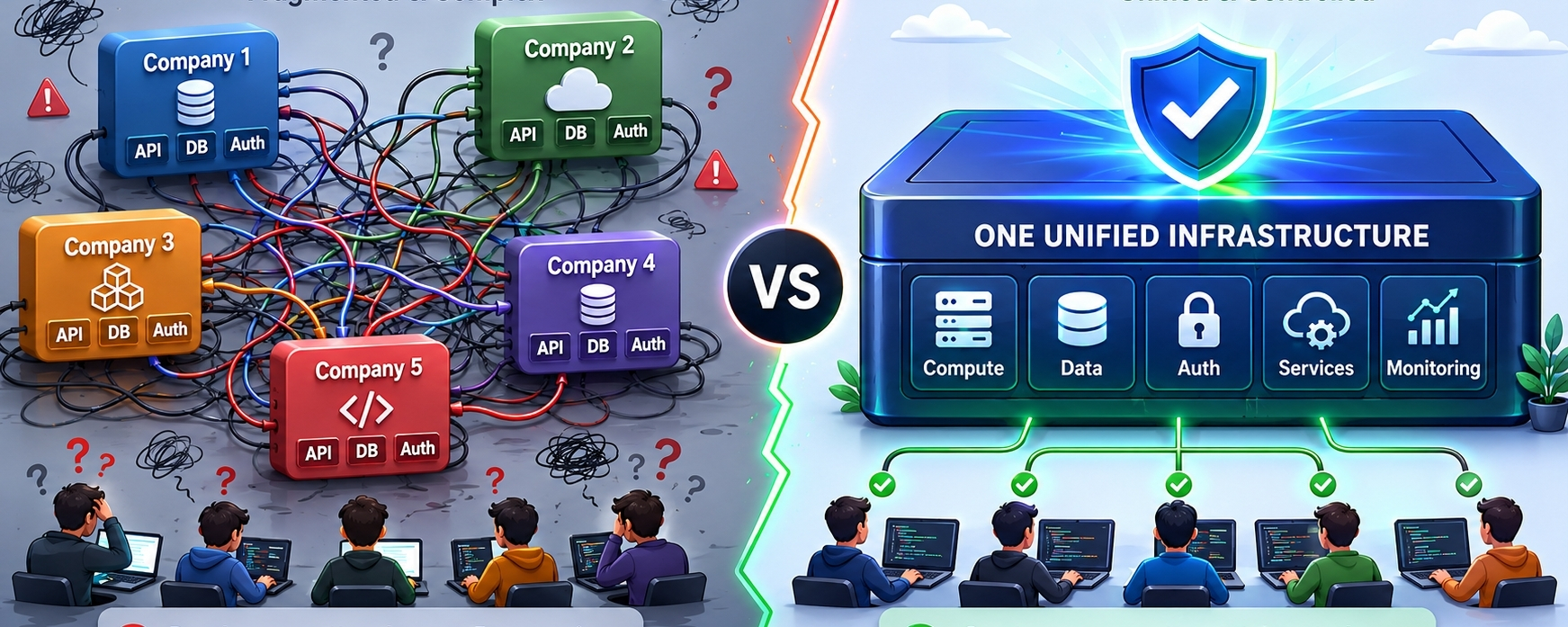
When Web3 startups and fintechs enter the $BTC market today, the initial architecture decision looks deceptively simple: use the best vendor for each layer. You pick the top custody provider, the most liquid trading desk, and the sharpest AML compliance tool. On paper, this "best of breed" modular stack seems like the fastest route to market.
However, in 2026, the hidden costs of this fragmented approach are triggering a silent crisis for emerging platforms.
The Real Cost of a Modular Stack
Going modular isn't just about paying multiple monthly bills. It introduces massive organizational and technical liabilities:
Severe Launch Delays: Projects checking out a 3-month timeline frequently drift into nearly 12 months of actual development due to integration bottlenecks.
Heavy Maintenance Overhead: Companies are spending between $200K and $500K annually just to keep 5 separate vendors operational, APIs updated, and environments synced.
SLA & Contract Vulnerabilities: Managing dozens of separate service level agreements (SLAs) creates dozens of single points of failure.
Incident Response Chaos: When systems connect badly or experience downtime, platforms get trapped in cross-vendor blame cycles instead of resolving the issue.
Every single vendor added expands your compliance surface, complicates technical integrations, and drains valuable engineering hours that should be spent on core product innovation.
Visualizing the Architecture Crisis
To understand why this is happening, we can look at how infrastructure design choices impact engineering teams directly:
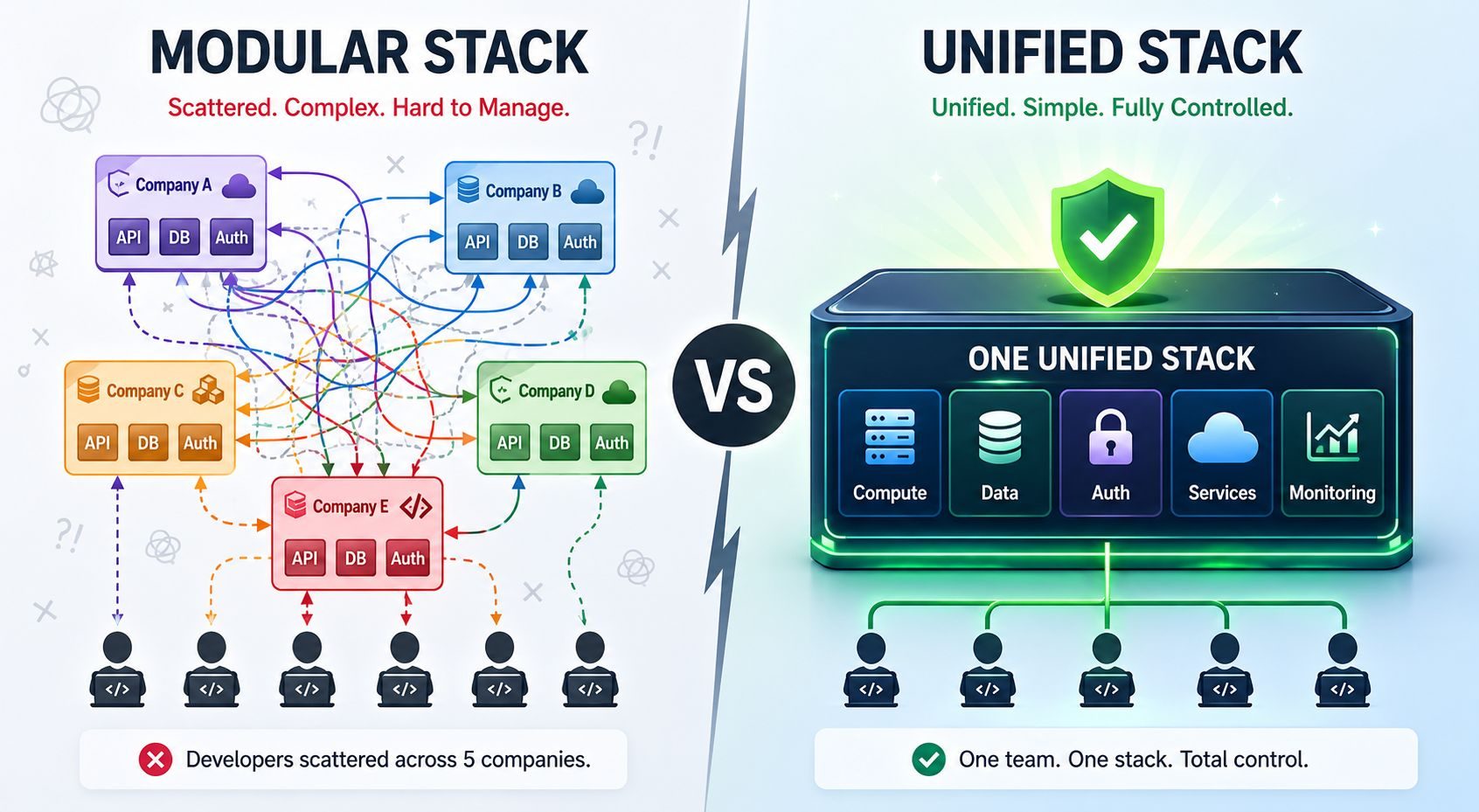
As shown above, the Modular Stack creates a fragmented environment where developers are scattered across managing 5 different vendors, leading to a complex, slow, and high-cost setup. Conversely, a Unified Stack brings compute, data, auth, compliance, and liquidity under a single point of control—enabling one team to run a simple, scalable, and agile system.
The Shift to Total Infrastructure Control
The companies winning the fintech and crypto space right now are not those offering the most fragmented features. They are the ones controlling their own infrastructure from day one.
Global fintech giant Airwallex serves as the perfect industry benchmark for this shift:
They built a unified, in-house tech stack, completely removing major third-party dependencies.
They collapsed custody, compliance, and liquidity into a single, vertically integrated point of control.
The Ultimate Lesson for 2026
The era of building "Frankenstein" architectures is over. Outsourcing every layer of your infrastructure might make you fast today, but it leaves you incredibly fragile tomorrow. True scalability requires moving away from fragmented vendor reliance and moving toward total infrastructure control.
What is your experience? Is a modular stack still worth the hidden integration tax, or is the future of Web3 strictly about vertical integration? Let's discuss in the comments below.