
I’ve been through enough cycles to know that whenever a project claims to "revolutionize industry X with blockchain," usually after 6 months, all that's left are a few PR articles and a token struggling at the absolute bottom.
So when I first heard about OpenLedger, I spent quite a bit of time just… sitting tight and watching. No FOMO. No chasing trends.
And there was one thing that genuinely caught my attentionnot the TVL, nor the node count, but what they call Proof of Attribution (PoA).
The Old Problem of AI: An "Untamed Horse" Most AI projects on the blockchain that I’ve come across do something very… predictable: they put a model onchain, allow inference via smart contracts, and call it "decentralized AI." It sounds impressive, but in reality, it's just an API wrapped in a blockchain.
But there is a massive question they usually overlook: Where does the training data come from? Who created it? And when the model monetizes, who actually benefits?
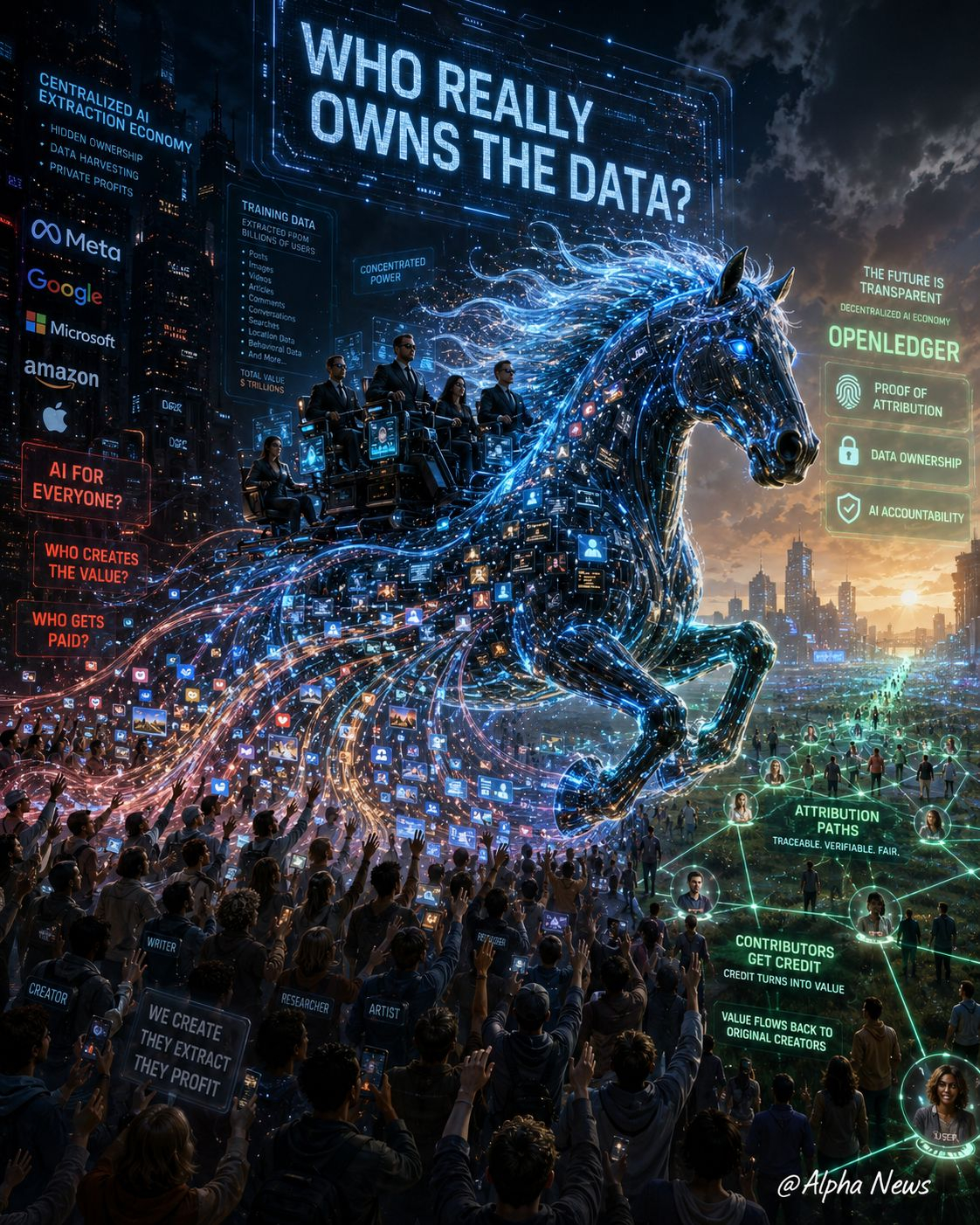
In the centralized AI world, the answer is crystal clear: big tech sucks up free data from users, trains their models, sells the services, and pockets the entire profit. What do we the data creators get? A thank-you emoji, or worse: being exploited without even knowing it.
That is why I am always skeptical of "AI for everyone" promises. Because if data ownership isn’t solved fundamentally, then "everyone" is just providing raw materials for a machine they have absolutely no control over.
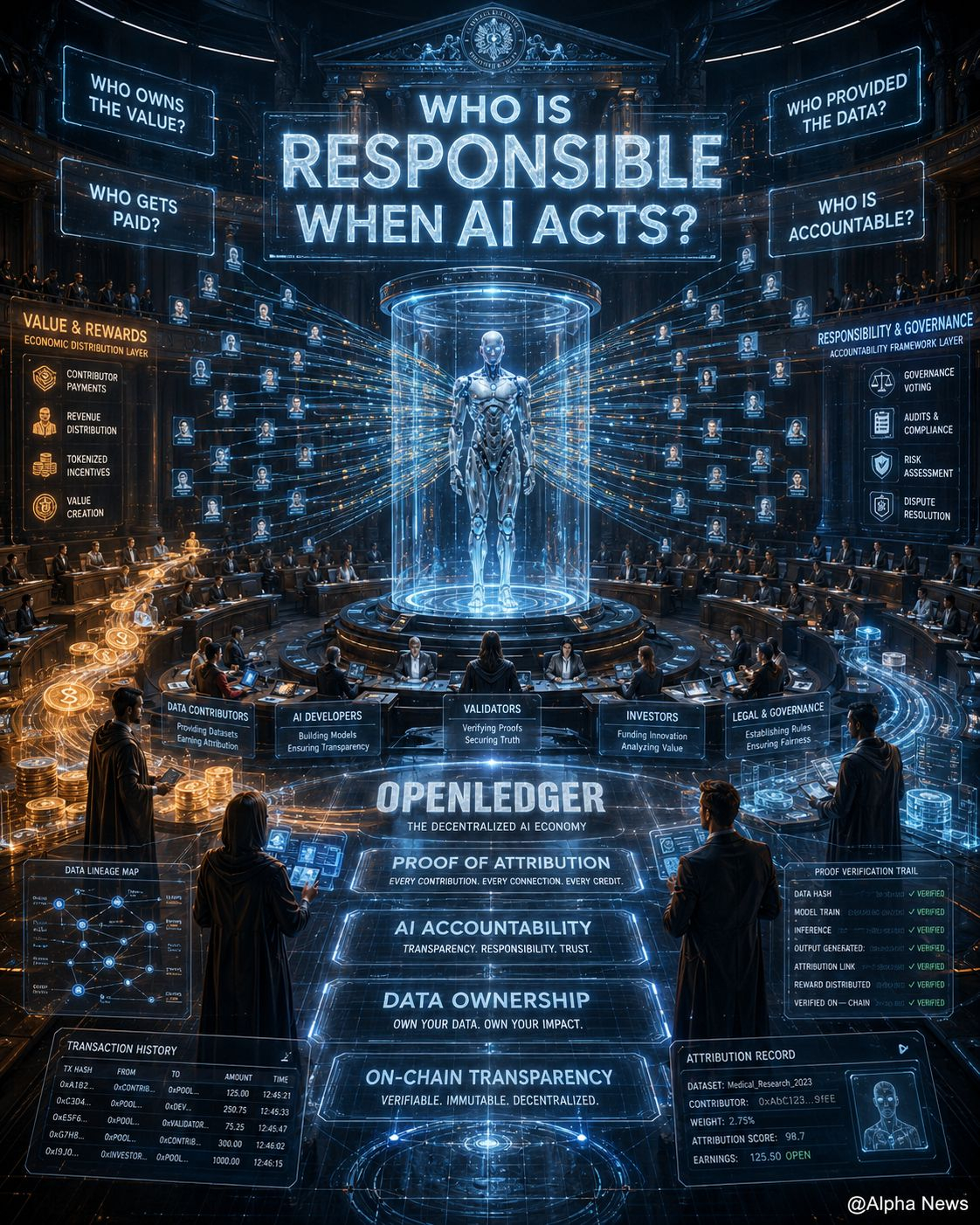
OpenLedger’s PoA: Sounds Different, But Is It Feasible? OpenLedger takes a different approach: Proof of Attribution. The core idea is that every single data contribution whether it’s just a single label, an answer, or a meticulously gathered dataset is immutably recorded on chain and automatically earns rewards whenever that data is utilized.
Sounds fair. Very fair.
But I have to wonder: How do you automatically determine the "value" of a data contribution? Not all data is created equal. Some data points are worthless, or even introduce noise. Other data is incredibly rare and precious. Can a fully automated pricing mechanism genuinely differentiate between them, or will it just be exploited by data spammers?
I don’t have the answer yet. Perhaps they will use stake/slash mechanisms, or rely on community judgment through a DAO. But if so, it falls right back into the governance trap and I’ve seen plenty of DAOs fail due to stagnation or manipulation.
Personal Experience: I Once Tried "Contributing Data" on Another Platform Two years ago, I participated in a "data marketplace" project that was highly hyped at the time. They also promised the tokenization of data contributions. I spent a few weeks labeling images and answering surveys, hoping to earn some tokens.
The result: I received exactly 12 dollars after two months. And when I wanted to check what my data was being used for, they told me "this is internal information." Zero transparency. Zero traceability.
That is why I appreciate OpenLedger’s point of differentiation: mandatory transparency. Every contribution is recorded on chain. Every instance of data usage is a transaction. You can track exactly how many times your data has been "mined," by whom, and how much you’ve earned.
But I am also realistic enough to know that transparency does not equal fairness. A transparent system with a flawed pricing mechanism can still leave contributors exploited the only difference is that they’ll see it happening in real-time.
Why I Think PoA Could Be a Real Step Forward (Despite the Heavy Risks) I won’t call this a "revolution" or a "game-changer" those words have been overused to the point of losing all meaning. But I do see PoA tackling a real world problem: the massive disconnect between the data creators and the data beneficiaries.
In traditional economics, when you sell an apple, you get paid and have nothing left to do with that apple. But with data especially AI training data the value doesn't lie in a one time sale; it lies in its usage lifecycle. A single dataset can be used to train hundreds of models, generating revenue every single time.
PoA, if executed correctly, allows contributors to benefit over time acting as a form of "data copyright." Economically, that makes total sense.
However, the challenge lies in the technicalities and governance. How do you prevent someone from downloading a public dataset, tweaking it slightly, and uploading it as fresh data? It's a question of copyright and uniqueness. And in the decentralized world, no perfect solution exists yet.
The Ultimate Question: Can AI Truly Become an "Accountable Asset"? I like how that insight phrased it: "AI is no longer an untamed horse, but becomes an accountable asset." Beautiful wording. But what about reality?
In a decentralized system, "accountability" doesn't come from a court or a legal authority. It comes from code and incentive mechanisms. And crypto history has proven time and again: code has bugs, and incentives can be exploited.
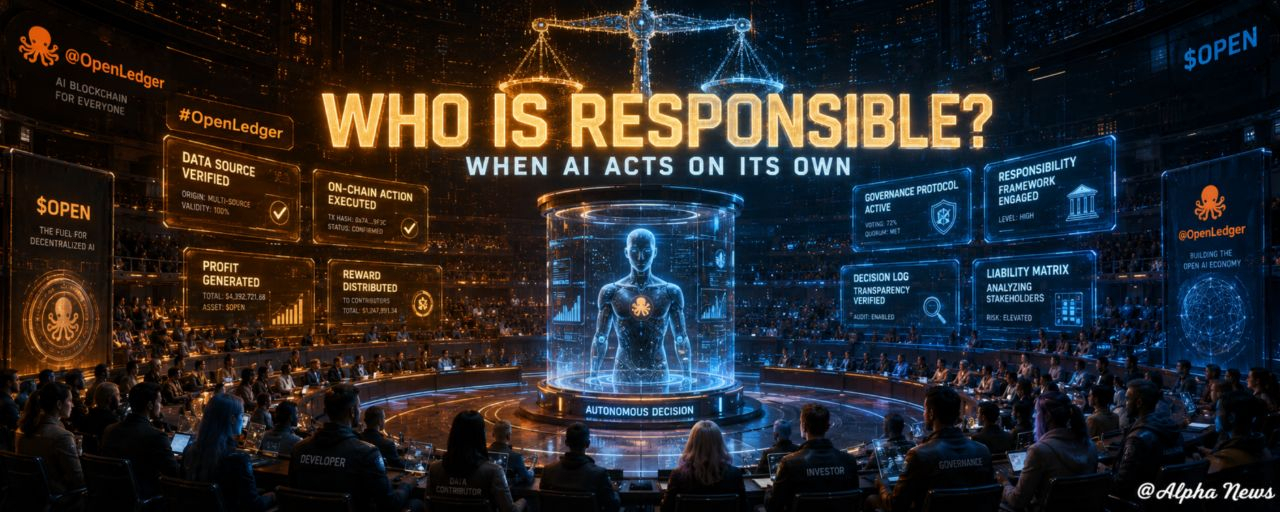
I ask myself: When an AI agent trained on OpenLedger data makes a harmful decision (e.g., giving flawed financial advice that causes real-world financial loss), who is held responsible? The data creator? The model trainer? The agent operator? Or nobody at all?
This isn’t just a hypothetical question. If OpenLedger wants to become the economic backbone for AI, they will eventually face lawsuits, disputes, and situations where "nobody is at fault, but someone still got hurt."
And I have yet to see a solid answer to this from any AI + blockchain project.
Conclusion (Without Jumping to Conclusions) I’m not here to conclude whether OpenLedger is good or bad. Nor am I advising you to buy or sell anything.
What I see is this: they are trying to solve a genuine problem the inherent unfairness in the AI data economy. PoA is an interesting concept, though it will undoubtedly face a mountain of challenges during real world implementation.
And I will keep watching. Not as an investor, but as someone who is simply exhausted by empty promises.
📌 CTA – For those who made it this far:
Have you ever participated in any "data marketplace"? What was your experience like?
Do you think a mechanism like Proof of Attribution is actually viable in practice, or is it just a beautiful theory?
If you have hands on experience building on or using OpenLedger, please share I’d love to hear a raw, unfiltered perspective.
Drop a comment below. Serious debates are always worth more than a hundred PR posts.
And if you found this analysis somewhat valuable, a like or follow would give me the motivation to write more pieces like this no shill, just thoughts.
