
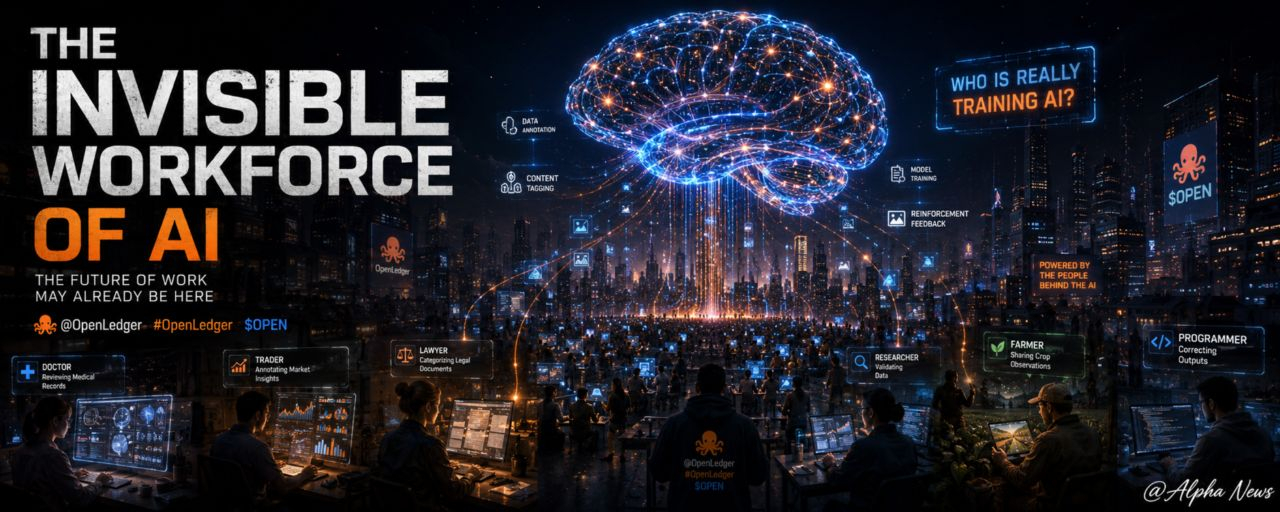
The conversation around AI has always felt strangely incomplete to me.
Everywhere I look, people are asking the same question:
How many jobs will AI destroy?
But after spending years in crypto and watching projects like @OpenLedger evolve, I think we may be looking at the wrong side of the story.
Because AI is not only replacing labor.
It may also be creating an entirely new labor market that most people haven't noticed yet.
And the strange part is that these jobs don't look like jobs at all.
Nobody wakes up in the morning and says:
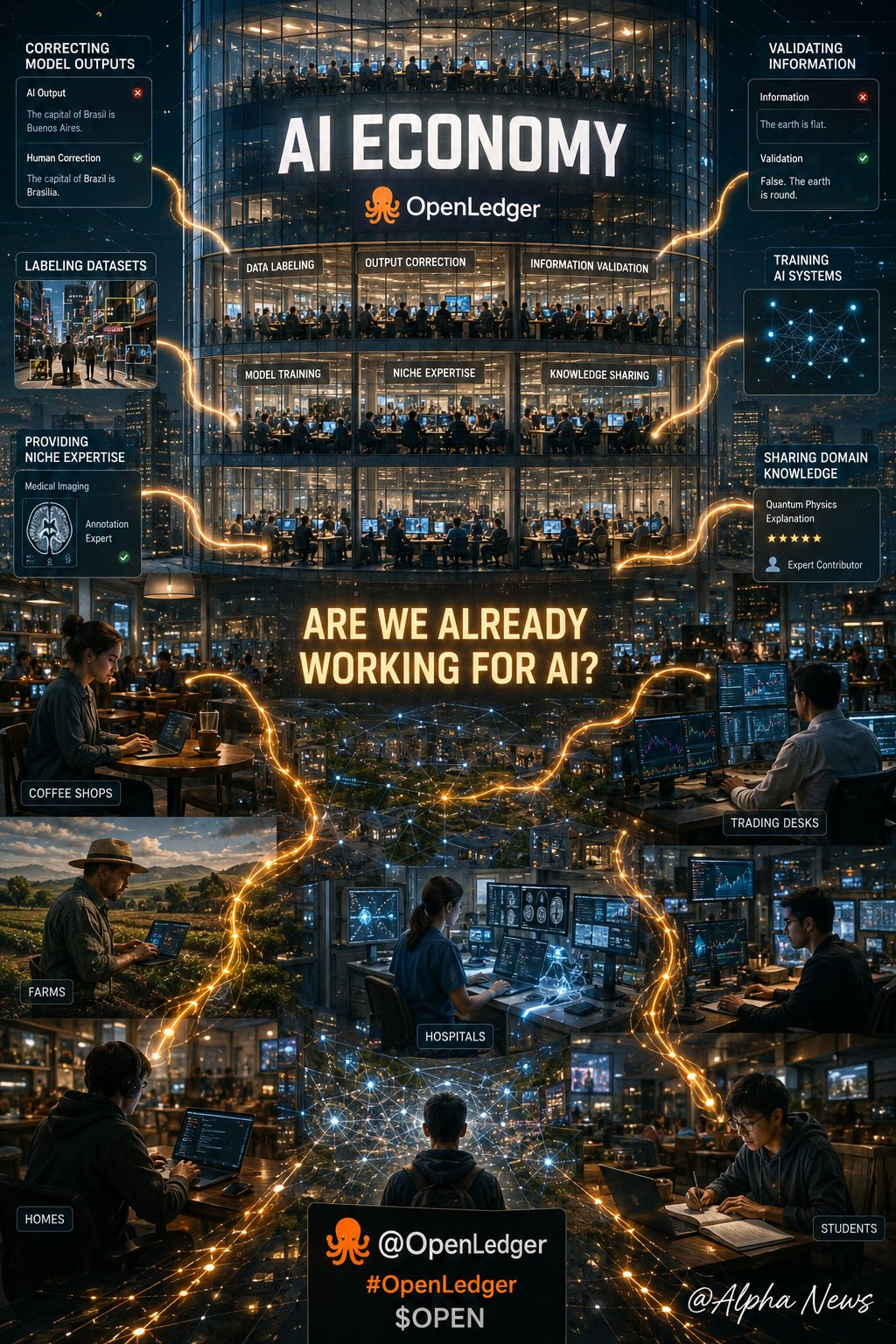
"I'm going to work as an AI behavior trainer."
"I'm going to curate datasets."
"I'm going to correct model outputs."
"I'm going to contribute niche expertise for machine learning systems."
Yet millions of people are already doing exactly that.
The difference is that most of them are doing it for free.
Every correction.
Every expert opinion.
Every specialized dataset.
Every piece of feedback.
Every domain-specific insight.
All of it helps AI become more useful.
But very little of that value flows back to the people creating it.
This is where OpenLedger starts becoming interesting to me.
Not because of the AI narrative.
Not because of the token.
But because Proof of Attribution quietly asks a different question:
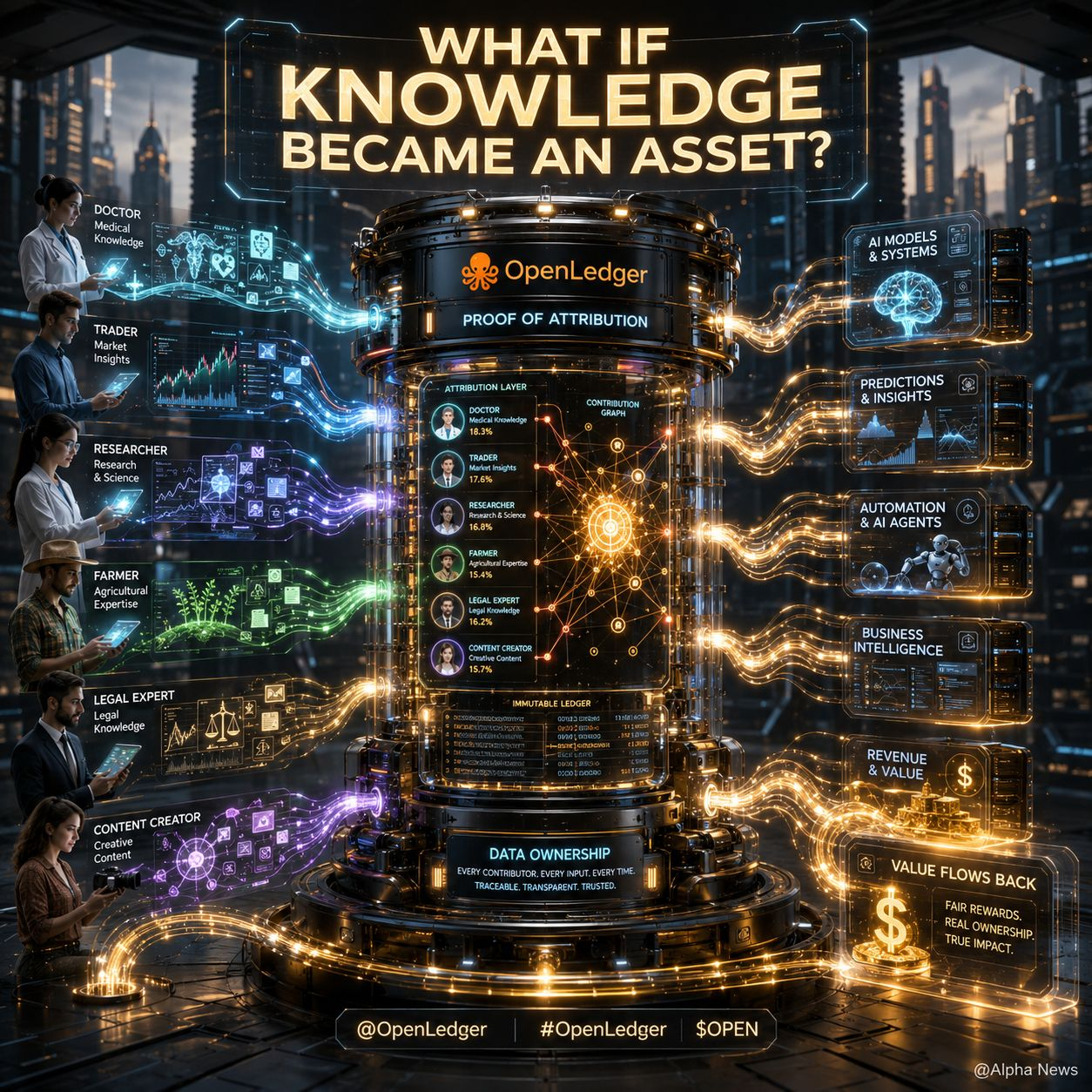
What if the people making AI smarter could actually own part of the value they create?
For years, we've treated data like exhaust.
Something users produce while platforms capture the value.
But AI changes the equation.
A niche medical dataset.
A collection of legal case studies.
A trader's market observations.
A farmer's crop knowledge.
These things are no longer just information.
They are inputs into an economic system.
And inputs tend to get priced.
That's why I think OpenLedger may be accidentally building something larger than an AI infrastructure network.
It may be helping create a labor market for the AI era.
A place where people don't sell hours.
They sell expertise.
Context.
Judgment.
Specialized knowledge.
The things AI still struggles to generate on its own.
Of course, none of this guarantees success.
Every market eventually attracts spam.
Low-quality data.
Reward farming.
People optimizing for incentives instead of value.
I've seen it happen in crypto.
I've seen it happen in content.
And I have no reason to believe AI data markets will be immune.
But even with those risks, I can't ignore the direction of travel.
The more capable AI becomes, the more valuable human expertise may become at the edges.
Not generic knowledge.
Not things everyone knows.
The niche stuff.
The weird stuff.
The hard-earned experience that never makes it into textbooks.
That's why I think the future discussion around AI shouldn't only be:
"Which jobs will disappear?"
It should also be:
"Which forms of human knowledge become economically valuable?"
Maybe the biggest surprise of the AI era is that humans won't disappear from the system.
They'll simply become harder to see.
And perhaps the real challenge isn't whether AI replaces workers.
It's whether the people helping AI improve will finally be rewarded for it.
What do you think?
Will AI create more opportunity than it destroys?
Or are we simply building a new class of invisible workers?
$OPEN #OpenLedger @OpenLedger
