
@Vanar r Blockchain is a Layer 1 blockchain built with a clear focus on practical adoption rather than speculative experimentation. Its design reflects experience from gaming, entertainment, and brand integration, aiming to make blockchain infrastructure usable for mainstream consumers and developers. Instead of positioning itself as a purely financial network, Vanar emphasizes digital experiences, content, and consumer applications as the primary drivers of on chain activity.
At its core, Vanar attempts to answer a fundamental question in Web3 how can blockchains move beyond niche crypto communities and become reliable infrastructure for everyday digital products?
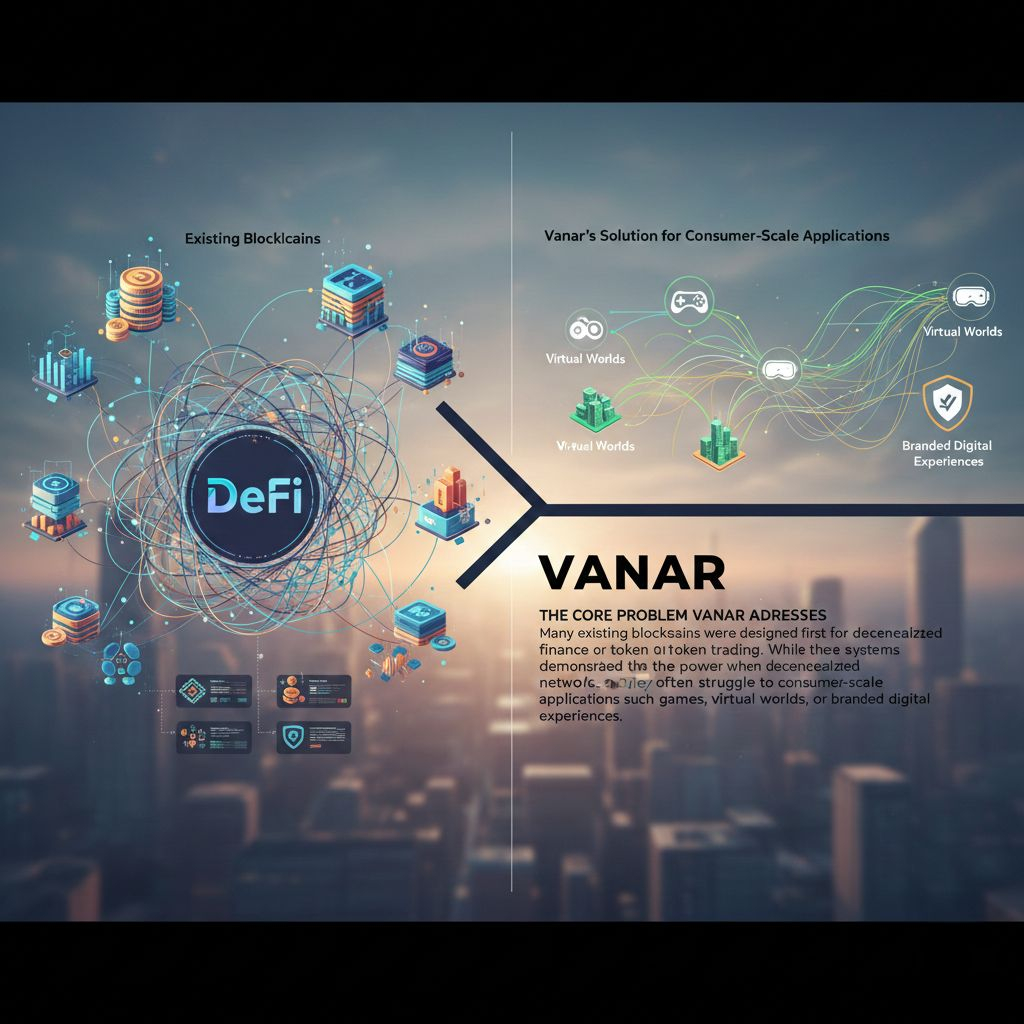
The Core Problem Vanar Addresses
#vanar Many existing blockchains were designed first for decentralized finance or token trading. While these systems demonstrated the power of decentralized networks, they often struggle when applied to consumer scale applications such as games, virtual worlds, or branded digital experiences.
Common challenges include
High or unpredictable transaction fees
Limited throughput during periods of demand
Complex user onboarding (wallets, gas, network switching
Developer friction when building real time or media rich applications
Fragmented tooling across chains and ecosystems
For consumer facing products, these issues directly affect user retention and product quality. A game that stalls during peak activity or a digital experience that requires users to understand gas fees is unlikely to reach a mass audience.
Vanar is designed to reduce these barriers by treating blockchain as invisible infrastructure, similar to how users interact with cloud services today without needing to understand server architecture.
Why This Matters in Web3
If Web3 is to support billions of users, blockchains must evolve from experimental platforms into dependable application layers. Gaming, virtual environments, AI powered experiences, and brand engagement all require fast confirmation times, predictable costs, and stable performance.
Without these fundamentals, developers are forced to compromise on design, and users encounter friction that makes Web3 feel inaccessible. Vanar’s approach reflects a broader shift in the ecosystem: blockchains are increasingly viewed as settlement and coordination layers for digital products, not just financial rails.
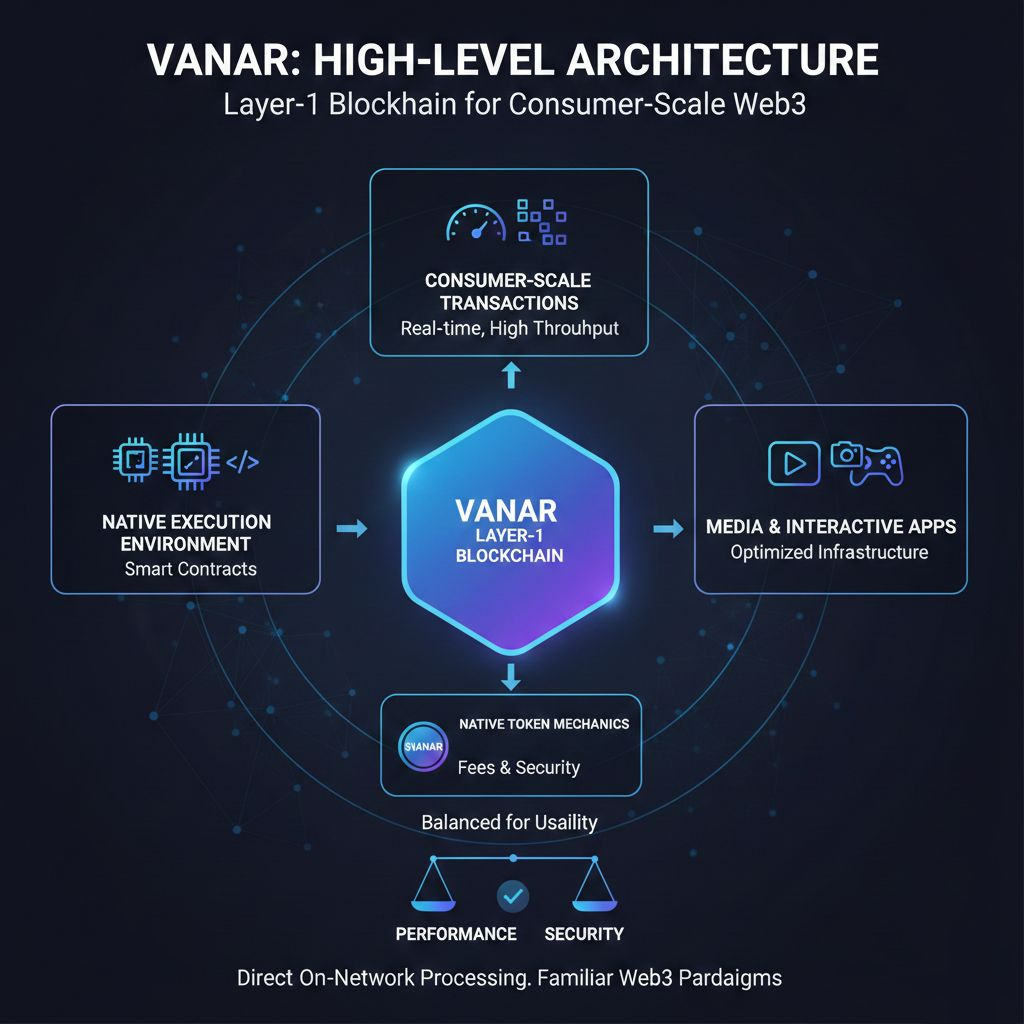
How Vanar Works at a High Level
#Vanar operates as a Layer1 blockchain, meaning applications interact directly with its base network rather than relying on external rollups or sidechains.
At a high level, the system provides
A native execution environment for smart contracts
Built in support for consumer scale transaction volumes
Infrastructure optimized for media heavy and interactive applications
Native token mechanics for paying network fees and securing operations
Rather than prioritizing maximum decentralization at the cost of usability, Vanar balances performance and security to support real time applications. Transactions are processed directly on the network, and developers build on Vanar using familiar Web3 paradigms while benefiting from infrastructure tuned for consumer use cases.
Key Features and Functional Mechanisms
Vanar’s feature set is centered on application reliability rather than speculative innovation.
Consumer Oriented Performance
The network is optimized for consistent throughput and low atency confirmations, which are essential for games, metaverse environments, and interactive platforms.
Integrated Product Stack
Vanar supports multiple verticals from a shared infrastructure layer, including gaming, virtual worlds, AI-driven applications, and brand solutions. This reduces fragmentation and allows developers to deploy across related ecosystems without re architecting their stack.
Simplified User Interaction
Wallet abstraction and streamlined transaction flows aim to reduce the visibility of blockchain mechanics for end users, making applications feel closer to traditional web platforms.
Developer Friendly Environment
Builders can deploy smart contracts and applications without managing complex cross chain dependencies, enabling faster iteration and simpler maintenance.
Architecture and System Design
Vanar follows a vertically integrated model. Instead of acting solely as a settlement chain, it provides a foundation for full stack Web3 products. This includes application layer tooling, infrastructure services, and ecosystem integrations designed to work cohesively.
Two notable ecosystem components are Virtua Metaverse and VGN Games Network, which demonstrate how the network supports immersive digital environments and game distribution directly on chain.
This architecture allows Vanar to validate its design assumptions in production environments, rather than relying only on theoretical benchmarks.
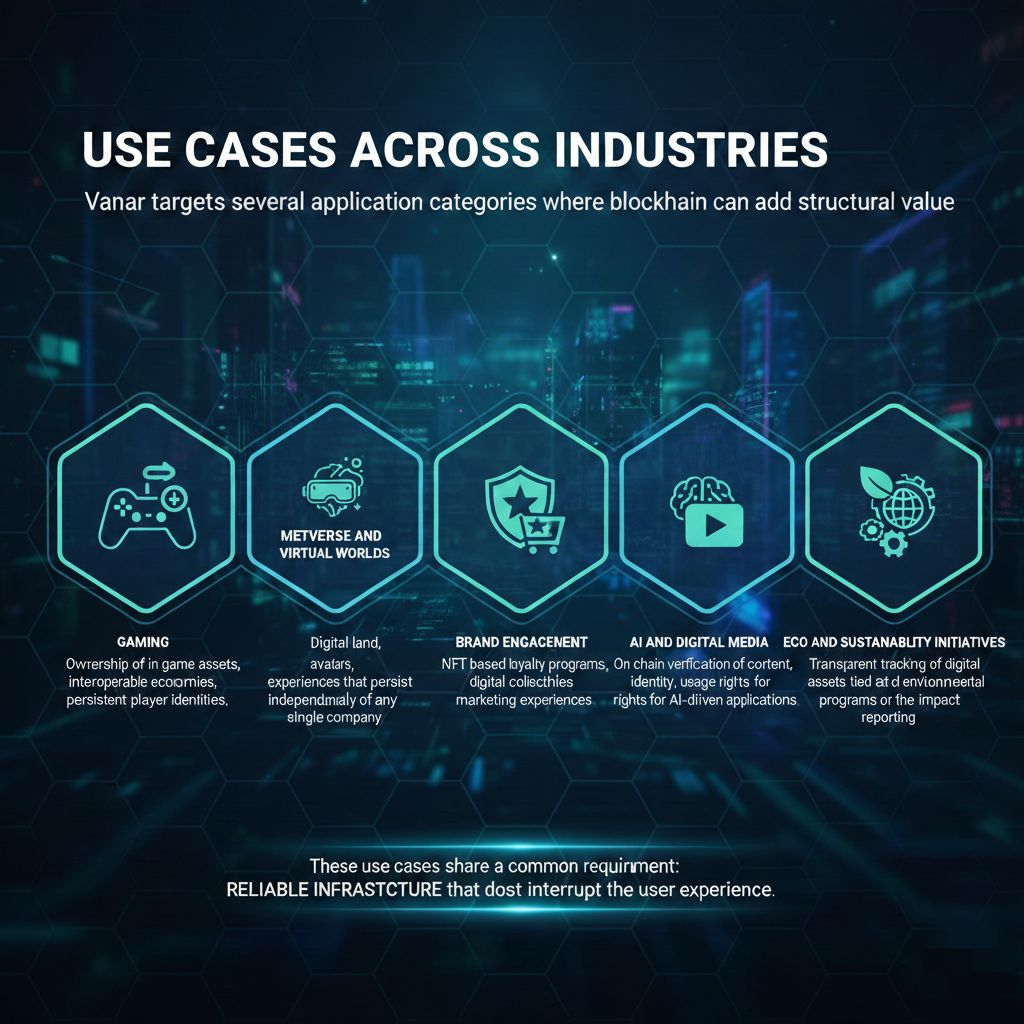
Use Cases Across Industries
Vanar targets several application categories where blockchain can add structural value
Gaming
Ownership of in game assets, interoperable economies, and persistent player identities.
Metaverse and Virtual Worlds
Digital land, avatars, and experiences that persist independently of any single company.
Brand Engagement
NFT based loyalty programs, digital collectibles, and interactive marketing experiences.
AI and Digital Media
On chain verification of content, identity, and usage rights for AIbdriven applications.
Eco and Sustainability Initiatives
Transparent tracking of digital assets tied to environmental programs or impact reporting.
These use cases share a common requirement: reliable infrastructure that does not interrupt the user experience.
Developer and User Perspective
From a developer standpoint, Vanar reduces operational complexity. Teams can focus on building products rather than optimizing around network limitations. Predictable fees and performance make it easier to design business models and scale applications.
For users, the blockchain layer is largely invisible. Assets settle on-chain, identities are verifiable, and transactions occur in the background. This abstraction is intentional. Vanar treats blockchain as backend infrastructure, similar to databases or cloud platforms in Web2.
Security, Reliability, and Trust
As a Layer 1 network, Vanar maintains its own consensus and validation processes. Security is enforced at the protocol level, while application developers can rely on standard smart contract practices for asset custody and logic execution.
Reliability is addressed through network-level design choices focused on uptime and consistent throughput, which are critical for consumer platforms operating around the clock.
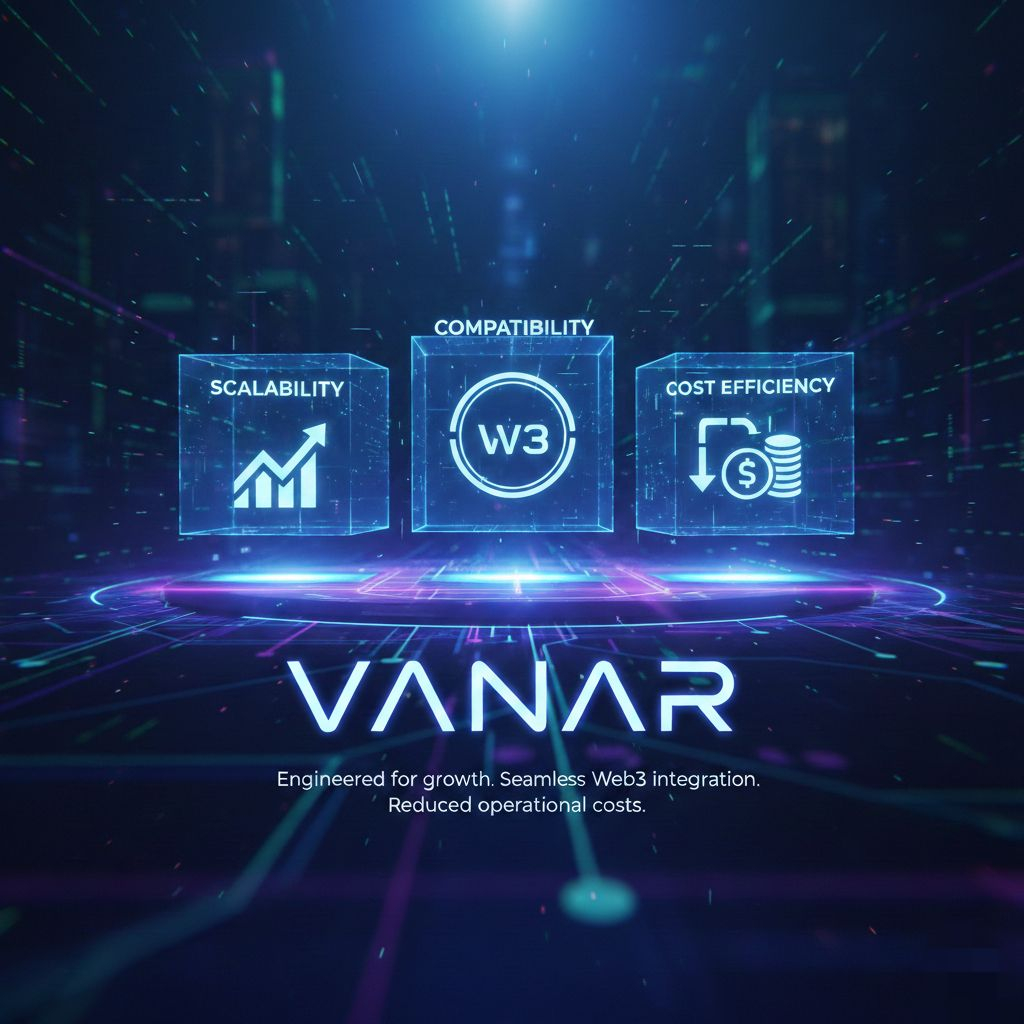
Scalability, Compatibility, and Cost Efficiency
Vanar is engineered to handle growing application demand without requiring frequent architectural changes. By supporting higher transaction volumes and maintaining low operational costs, it enables applications to scale without transferring expenses directly to users.
Compatibility with standard Web3 development models allows teams familiar with blockchain tooling to transition without steep learning curves, while still benefiting from Vanar’s performance-oriented infrastructure.
Long Term Relevance and Market Challenges
Vanar enters a highly competitive Layer 1 landscape, where many networks promise speed and scalability. Its differentiation lies in application first design and real world product integration rather than purely technical benchmarks.
Long term success will depend on continued developer adoption, sustained consumer engagement, and the network’s ability to evolve alongside emerging technologies such as AI driven applications and immersive digital environments.
Challenges include competing with established ecosystems, maintaining decentralization while optimizing performance, and proving that consumer Web3 applications can achieve durable market traction.
Conclusion
Vanar represents a pragmatic approach to blockchain design. By focusing on gaming, virtual experiences, and brand driven applications, it positions itself as infrastructure for digital products rather than speculative finance.
Its emphasis on usability, integrated tooling, and consumer scale performance reflects a broader shift in Web3 toward real world utility. Whether this model becomes a standard for future blockchains will depend on execution, ecosystem growth, and the ability to make decentralized technology feel natural to everyday users.
In that sense, Vanar is less about redefining blockchain and more about making it quietly useful.
