

When I first heard about Fogo I did what I always do with new infrastructure projects. I did not rush to form an opinion. I searched for how the system actually works because real value in blockchain is never in the slogans it is in the mechanics. Fogo is designed as a Layer 1 that runs on the Solana Virtual Machine which allows transactions to be executed in parallel. That means activity does not wait in a line. Independent actions can move at the same time which changes how the network handles scale from the very beginning.
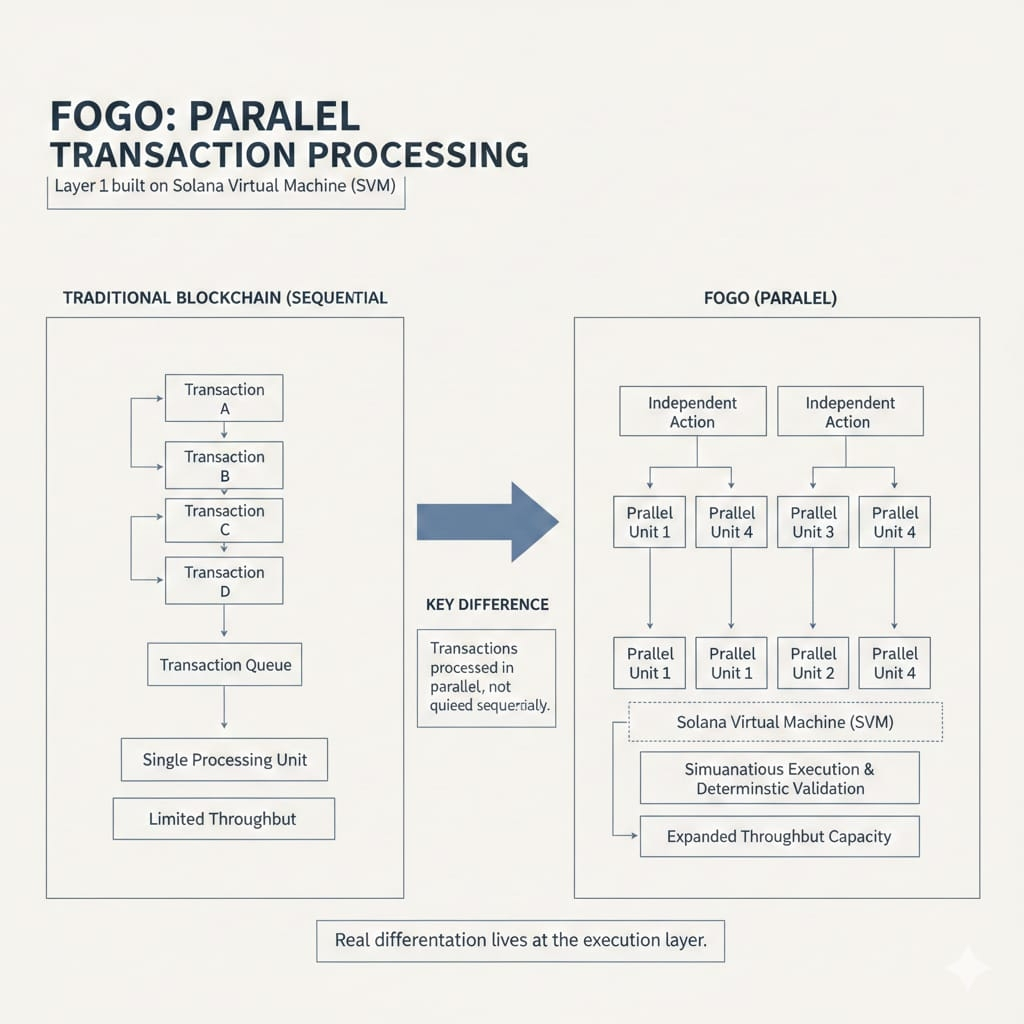
I checked this structure carefully because many networks talk about speed but few are built to sustain it. What I found is that parallel execution is not just about being fast once. It is about maintaining stable behavior when usage grows. From my personal experience analyzing systems I say to this that reliability is the real benchmark. A network that performs the same way under pressure as it does during quiet periods is the one developers trust to build on.
They are also not trying to reinvent everything for the sake of novelty. Instead they are building around an execution environment that already has proven performance characteristics. This creates familiarity for developers and reduces the time needed to adapt tools or workflows. We gain continuity while they focus on refining how coordination validation and scalability operate together. That kind of measured development often leads to stronger ecosystems because builders can concentrate on creating applications rather than relearning infrastructure.
During my research I searched for signals that show whether a system can mature. The important signs are not marketing metrics. They are patterns like developers returning to deploy again consistent transaction outcomes and applications that remain predictable even when activity increases. These are the indicators that a network can support real usage over time. When those signals appear ecosystems tend to grow naturally rather than forcing adoption.
I also looked at the challenges because high performance architecture always comes with responsibility. I checked comparable models and the lesson is always the same. Throughput must be balanced with decentralization governance and validator diversity. Ignoring that balance creates fragility no matter how advanced the technology appears. Recognizing it early gives the project room to strengthen before scale truly arrives.
Access through platforms like Binance can introduce the network to a wider audience but long term relevance will depend on whether builders continue to find it dependable. Infrastructure only proves itself through repeated use not initial exposure.
After taking the time to understand Fogo my view is that it represents a performance oriented design grounded in execution clarity rather than narrative energy. The factors worth monitoring are sustained network stability builder engagement and how efficiently the system handles growing demand. Historical data across blockchain ecosystems shows that platforms delivering predictable execution environments tend to retain developers and applications far longer than those driven by short lived attention.
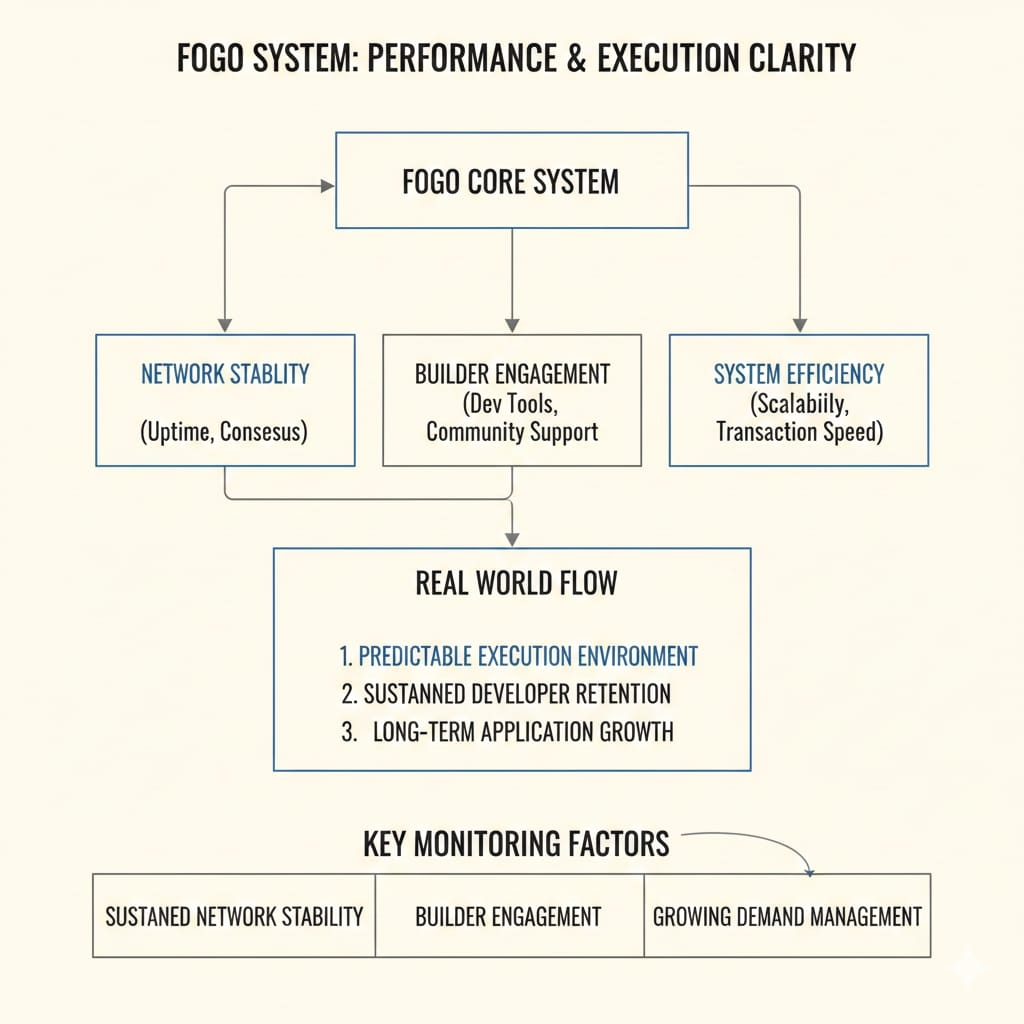
The expert takeaway is to evaluate Fogo through observable behavior and adoption patterns not hype. If the network continues to convert architectural efficiency into consistent usage it positions itself as infrastructure meant to support long term development rather than temporary momentum.
Follow @Fogo Official to observe how $FOGO integrates into this structure as the ecosystem evolves.