
Insights from real robotics professionals on why popularity doesn’t equal real-world adoption
Watching crypto over time has taught me that just because something is popular doesn’t mean it’s actually useful. When $ROBO, recently went up 55%, I decided to ignore the hype and speak to people who actually work with robots.
I asked them, without using any crypto terms, whether their companies would adopt a system where machines have independent identities and could make payments. Both said no. Not maybe. Not eventually. Just no.
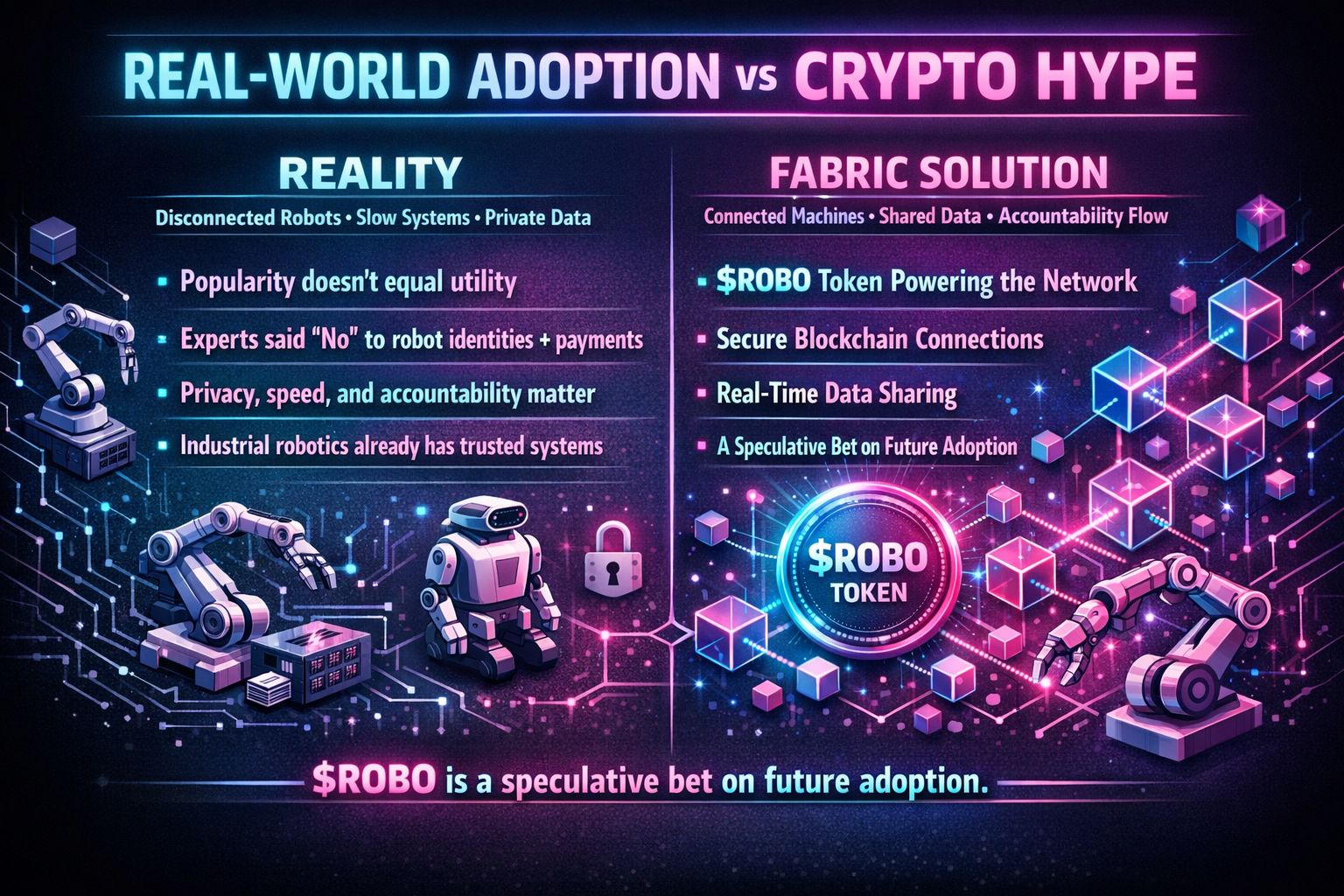
They explained why: the information about how robots behave is critical and private, machines need to react instantly, and blockchain systems are too slow for that. On top of that, if a robot harms someone, companies need to be able to clearly assign responsibility — a decentralized system where nobody is accountable would create huge problems.
Fabric Protocol’s credit system is trying to address exactly this. Stake, perform, fail — and the network keeps a permanent record. My research shows this could enforce accountability in a way humans alone cannot. But the question remains whether real companies will adopt it when they already have systems that work.
$ROBO today is essentially a bet on future adoption. Its value reflects the possibility that the machine economy will eventually need the kind of system Fabric is building. That’s very different from buying something that is useful right now. Understanding this distinction is important to avoid paying for hype instead of utility.
Waiting for clarity is not pessimistic; it’s the way I’ve avoided costly mistakes in crypto. Until adoption is proven, $ROBO remains a speculative bet rather than a fully functional tool.