

Saudi Arabia, Bahrain, and the UAE have been seriously promoting CBDC in recent years, and the timeline is becoming increasingly dense. This is not a small signal in the field of on-chain infrastructure; it is a real government procurement demand forming. @SignOfficial This is being done precisely in line with this demand.

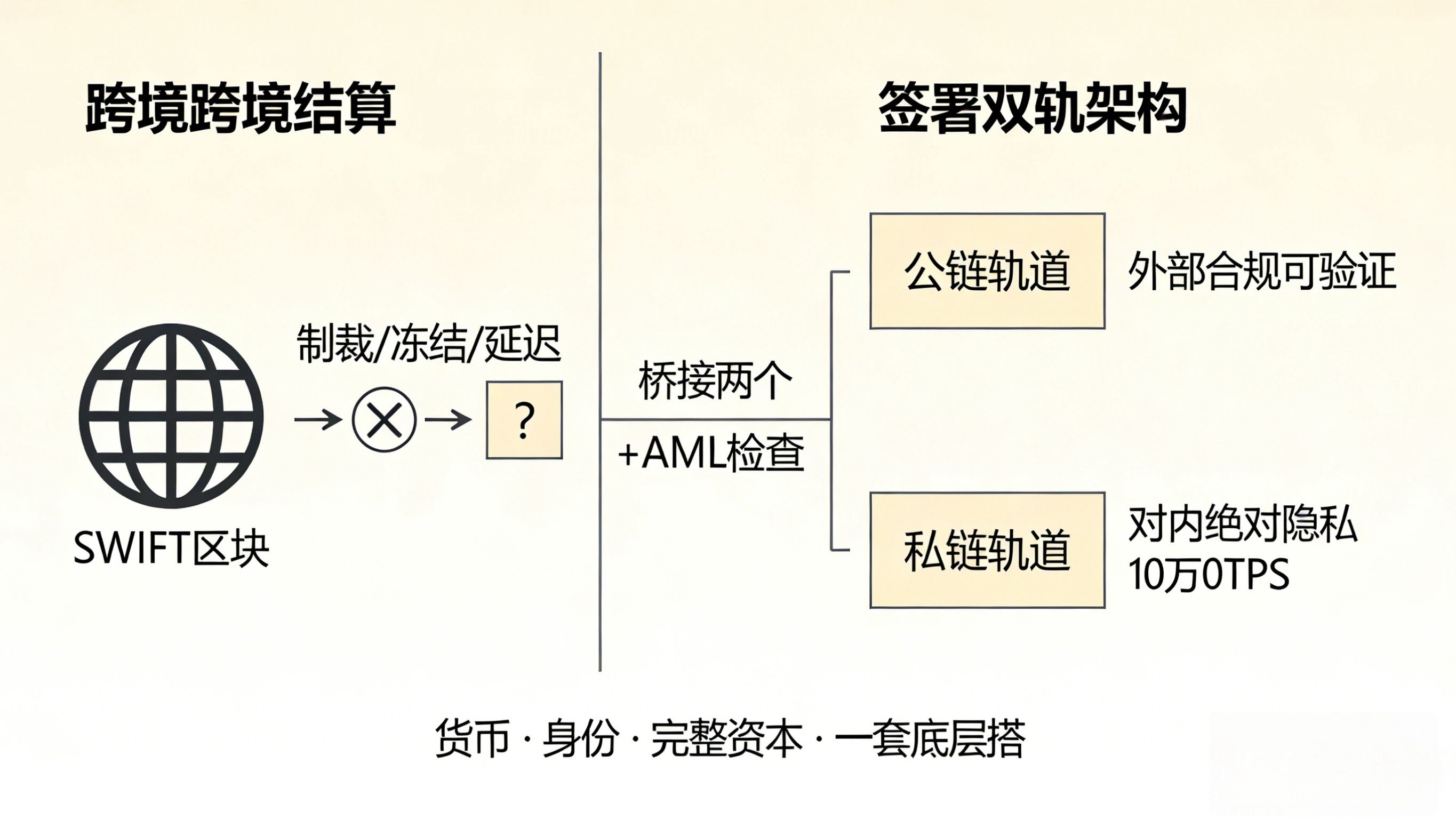
The reasoning behind this is not hard to understand. The SWIFT system has repeatedly become a weapon in geopolitical friction; those who are kicked out of the clearing network have their economies directly cut off. This dependence has led many Middle Eastern countries to seriously consider the same issue: to have a currency base that they can control, and the flow of money cannot always be held in someone else's hands. Sovereign digital currency has shifted from concept to urgent demand, not because the technology has matured, but because political pressure has forced it out.
The real bottleneck is here: many suppliers of sovereign digital currencies frequently fall silent when discussing how to simultaneously meet international compliance verification and internal data protection. The most misleading aspect is that while the proposals sound reasonable, when asked how to achieve both, the demo may work, but the business does not.
The new currency system of Sign has a design that directly addresses this contradiction: a dual-track structure. The public chain model is transparent to the outside world, allowing international institutions to verify compliance at any time; the private chain model offers high privacy internally, with the government having complete control over the data, referencing a throughput of over 100,000 TPS for instant finality. The two tracks can interchange through built-in bridging, featuring atomic swaps, AML compliance checks, and limit controls, all in one go.
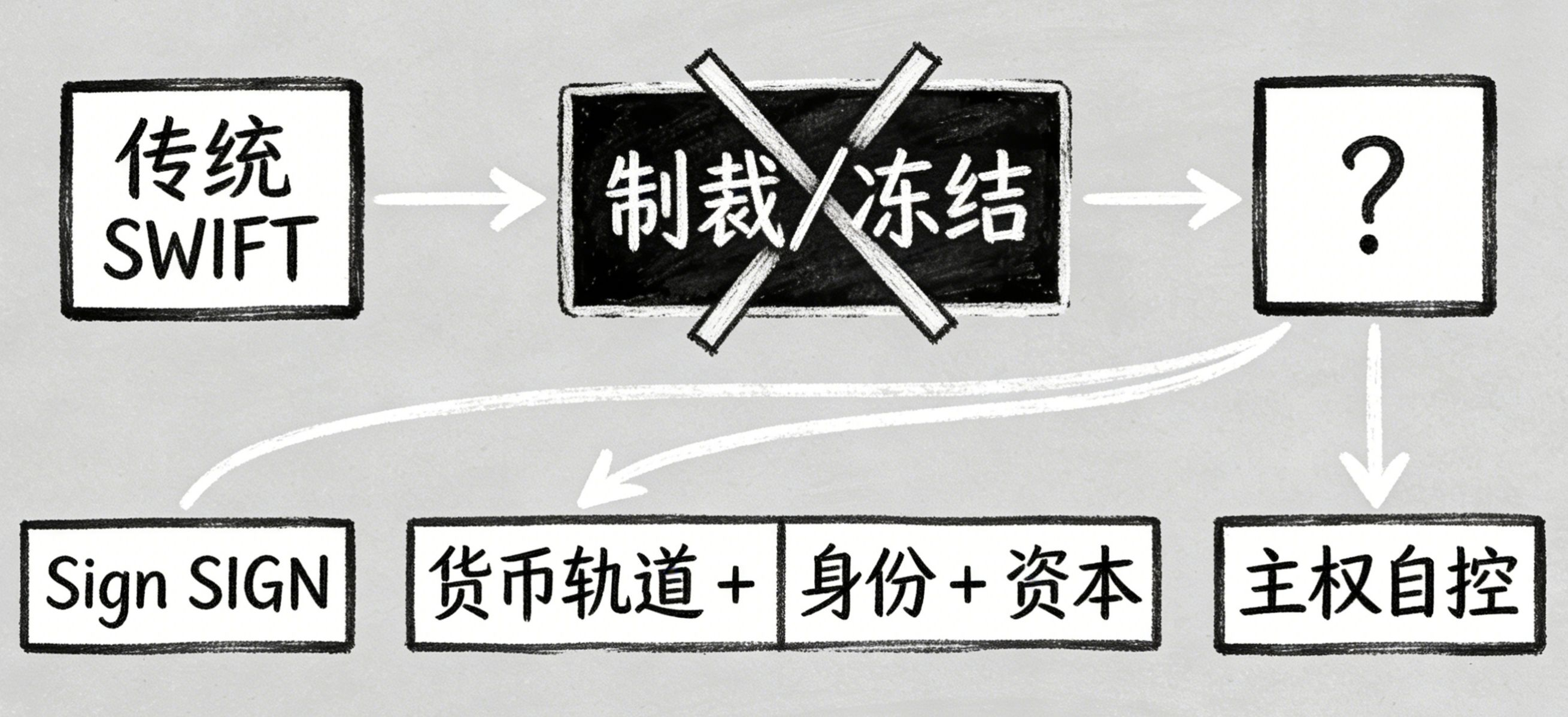
Middle Eastern countries' need to prove compliance internationally is a political necessity, while protecting sovereign data internally is a governance preference, making it difficult to meet both needs simultaneously in the past. The dual-track structure provides a solution that accounts for both ends.
The identity layer is also a real gap. The process of Middle Eastern countries establishing digital citizen systems is accelerating, but with limited authorization between institutions and which fields are visible to which parties, when pressed, very few can provide concrete solutions, and the answers often become increasingly vague. Sign's identity system supports selective disclosure, using ZK zero-knowledge proofs to protect sensitive data, which is traceable on-chain. This capability directly addresses the most challenging issues in implementing sovereign identity systems. Government audits can see necessary records, privacy fields are protected, and both sides are accounted for.
In terms of capital allocation, TokenTable's capabilities are also worth serious consideration. The scale of Middle Eastern sovereign funds is enormous, and interest in allocating digital assets is increasing, but the infrastructure for programmatic allocation, on-chain transparent settlement, and auditable fund flow records has previously been lacking. TokenTable is precisely addressing this issue, with ZetaChain having airdropped 17.4 million ZETA using this system, complete with process records, serving as a real operational case. Sovereign funds require tools that facilitate the allocation of digital assets.
Sign Protocol plays the role of the evidence layer in the entire architecture. Currency transfer records, identity verification results, and capital allocation processes turn every key declaration into verifiable on-chain evidence, with schema defining structures, attestations binding issuers, ZK zero-knowledge proofs handling sensitive fields, and SignScan aggregating cross-chain indexes to support queries. This layer addresses the core issues that all three systems depend on: for every operation, who proves it actually happened, and who follows up in case of problems. EthSign and TokenTable both reuse this set of primitives, with a unified protocol rather than three parallel products fighting on their own.
$SIGN takes on the role of protocol operations and ecosystem participation. The more countries and institutions actually call upon the three systems of S.I.G.N., the more solid the demand becomes. The current wave of CBDC construction in the Middle East is driven by clear political motivations, with sustained external pressure. This demand, forced out of political pressure, is more stable than any market education. There is real demand, practical utility, and real cases, making it easier to be remembered later.