

I have a lawyer friend who complained about a very specific issue last month. After talking to him, the first thing that came to my mind was@MidnightNetwork .
They were negotiating a contract with a foreign-funded enterprise, and after several rounds, the other party wanted to keep the contract terms and records on the blockchain, reasoning that it is immutable, allowing both sides to verify at any time, reducing disputes. It sounds quite reasonable, but the problem arises: some terms in the contract involve supply chain pricing and trade secrets, and once such information is on the blockchain, it becomes completely transparent; anyone who takes a glance can see it, which is absolutely not acceptable to the other party. The negotiation got stuck here, the proposal was abandoned, and they reverted back to the traditional paper and notarization method.
After listening that day, my first reaction was: this is obviously a problem that blockchain can solve, but the current architecture can't do it.
This matter has made me pay serious attention to @MidnightNetwork . It introduces a concept called rational privacy. Midnight's solution aims to unlock the long-standing challenges in deploying blockchain in enterprises.

The real sticking point lies here: the transparency of blockchain is a design strength, but in real commercial scenarios, this strength often becomes the greatest divergence. Contract confidentiality, business collaboration, identity verification, compliance verification—all participants in these scenarios have inherent boundaries, and no one is willing to lay all data bare. When it comes to establishing boundaries on-chain, many projects fall silent. The most misleading aspect lies here, filled with complexities about how to implement a complicated scenario; demonstrations may run, but business operations may not, leading to deeper inquiries.
Midnight has named this concept rational privacy. Recognizing that there are many inherently boundary-driven businesses in the real world, if on-chain systems are entirely public, it becomes difficult to accommodate these scenarios. This starting point diverges from many privacy projects that only discuss anonymity.
On the technical level, Midnight has two layers for on-chain state interchange: the public state layer and the protected state layer. Both layers can coexist in the same transaction. The public part continues to be open for verification, accessible to anyone; the protected part is only visible to authorized parties, while others can only see a zero-knowledge proof verification result, confirming the conditions are met but not being able to view the specific contents.
Returning to the contract system designed for Midnight, the contract terms themselves are protected, visible only to the signing parties; the logic for triggering payments or determining breaches is public, allowing anyone to verify whether the logical conditions have been executed. Confidentiality and verifiability coexist, accomplishing both tasks in a single transaction, thus resolving the negotiation deadlock.
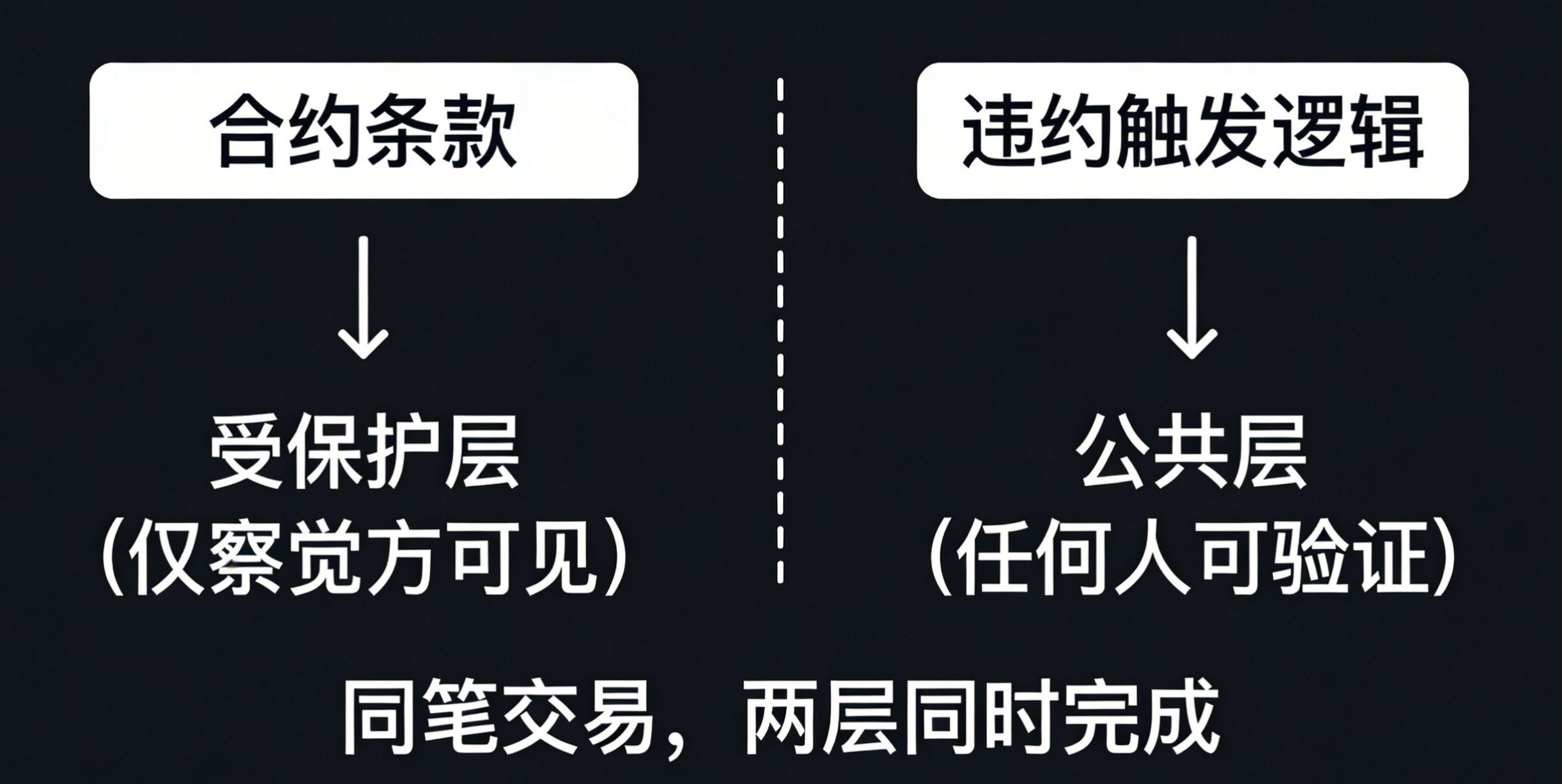
Speaking of which, what really matters to me is how many real business scenarios the six mechanisms can actually accommodate.
Looking closely, these types of demands are actually ubiquitous. Businesses need to protect commercial data during collaboration but also want to verify whether contract conditions are fulfilled; cross-agency compliance verification needs to prove results to regulators without exposing all internal data; personal identity verification needs to meet certain conditions without revealing entire documents. These three scenarios are recurring pain points in the real world and have always lacked good answers in traditional public chain architectures.
Midnight is built on the Cardano ecosystem, providing a foundational infrastructure layer for external privacy capabilities that developers can directly call upon. The underlying capabilities are interconnected, allowing developers to use them, but each application needs to resolve privacy issues from scratch and can build directly on the suite's capabilities.
Regarding $NIGHT , there is a note in the white paper: the computational and consensus costs required to maintain the protected state are settled through $NIGHT , not relying on off-chain support. This means that the demand for $NIGHT is tied to the actual usage depth of the network; as capabilities are pushed forward, the more real calls made, the sustained demand for the token continues.
The pace of implementing such infrastructure projects is typically slow; temporary privacy moving from PDF to extensive developer engagement has a long way to go. The advancement of Midnight's mainnet continues, and the developer base in the Cardano ecosystem is expanding, but it requires time.
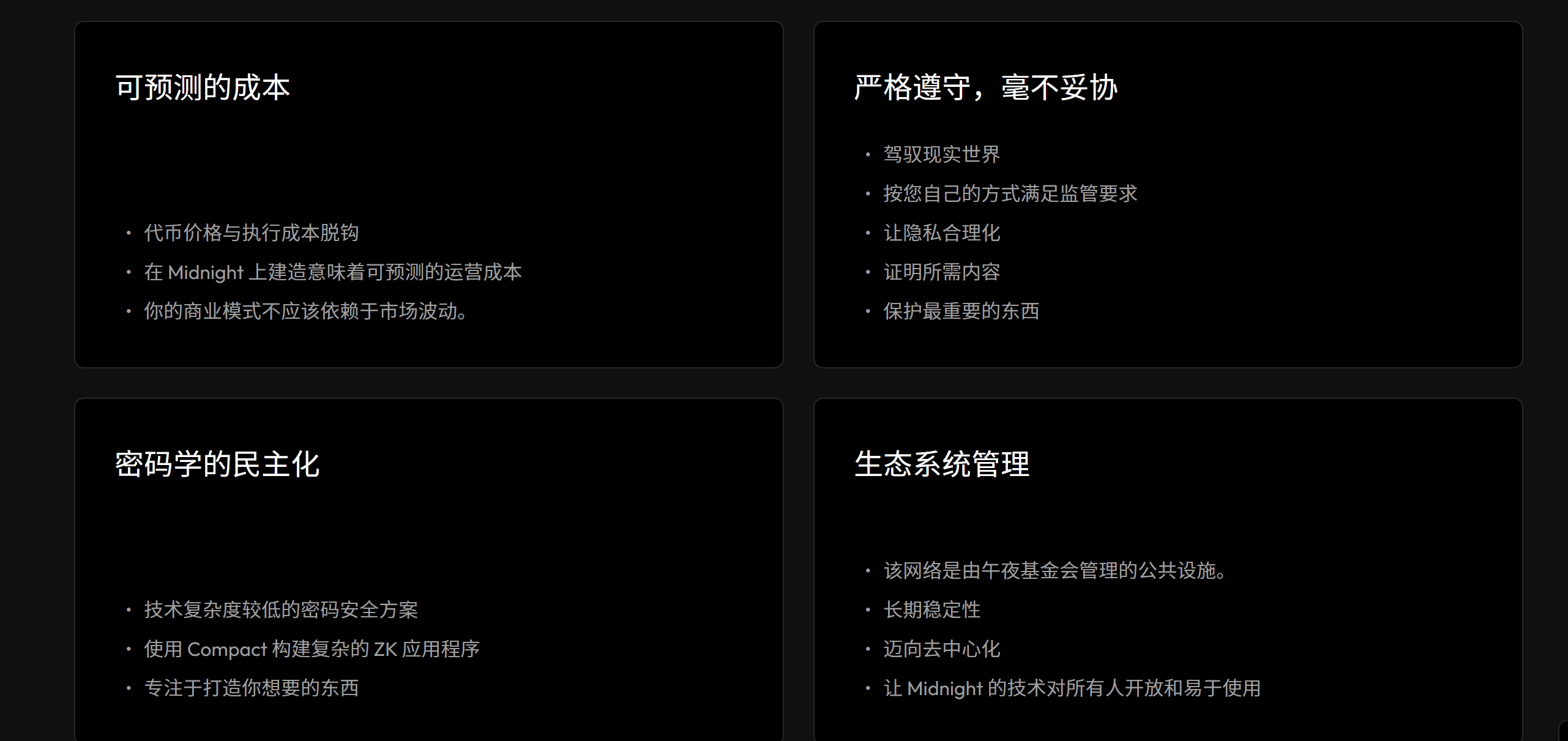
My friend's law firm ultimately still used traditional methods. But the problem remains; it hasn't disappeared. Every time someone seriously considers doing business collaboration on the blockchain, it circles back to the same pit. Eventually, someone needs to smooth out the boundaries on-chain, making it practically useful and meeting real needs—such projects are more likely to be remembered. Midnight fills this gap.