

U.S. regulators classified Solana as a digital commodity, removing rules regarding staking protocols and increasing institutional adoption.
- Alchemy introduced $20 million in non-dilutive credits for developers, while Canary Capital and Grayscale submitted spot Solana ETFs despite lower prices.
- Solana is trading at $79.11 within a consolidation channel of $76.66–$96.04, with key technical levels at $86 (bullish) and $75 (bearish) according to analysis.
- Token holders are not receiving passive income from network fees, which go to validators, creating structural risks despite high transaction speeds and low costs.
- Strategies #SOL - featured 768,022 staked SOL and 1,176 holders in March, with CEO Michael Hubbard highlighting institutional validation through the integration of Balance validators.
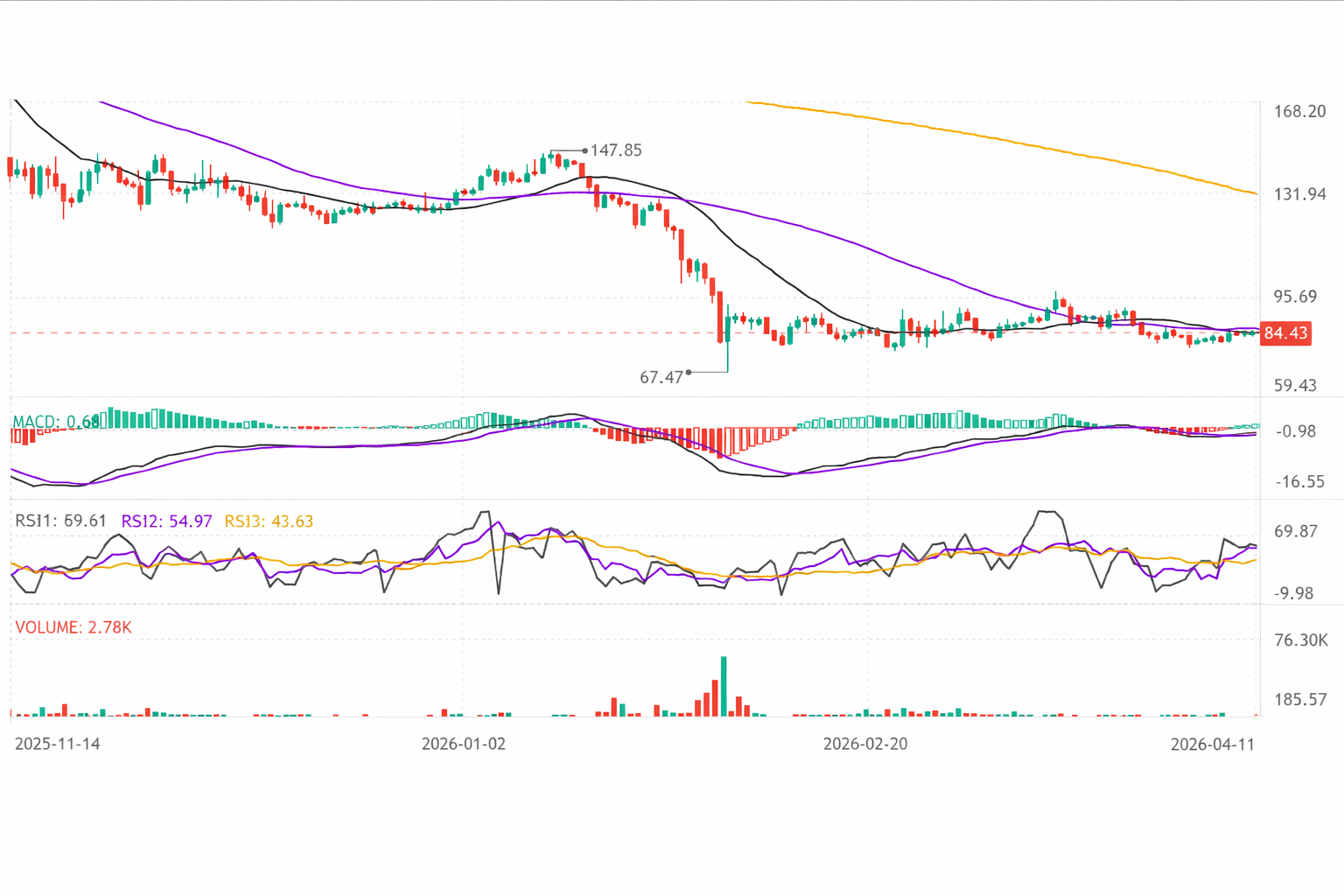
U.S. regulators have officially classified Solana as a digital commodity, which excludes staking protocols from securities regulation and supports increased institutional participation in line with regulatory clarity. This legal clarity coincides with Alchemy's announcement of a $20 million non-dilutive infrastructure credit injection aimed at helping developers overcome cost barriers at early stages, as reported. Major asset managers are increasing their exposure, and Canary Capital and Grayscale are applying for Solana spot ETFs, despite token listings being significantly below historical highs according to market analysis.
Despite regulatory challenges, investors are facing structural economic challenges related to value capture. Although the network generates significant revenue from fees, these flows are recorded by validators, not by token holders, as data indicates. Consequently, holding SOL or Solana ETF generates zero passive income, and returns depend entirely on spot price increases according to market reports.
Institutional trust has increased due to partnerships with entities such as Balance and Mastercard, as well as regulatory clarity in 2026, as reported. Balance, a major custodian of digital assets, has integrated Solana Strategies validators, signaling strong confidence in the network's stability and compliance according to industry reports.
Why do token holders not have passive income from network fees?
There is a critical discrepancy between network revenues and the economics of token holders, creating a risk factor for long-term value capture. Although the network generates significant revenue from fees, these flows are recorded by validators, not token holders, as shown by market analysis.
As a result, holding $SOL or #ETFvsBTC Solana generates zero passive income, and returns depend entirely on spot price increases according to industry reports. Analysts note that while regulatory advancements and infrastructure investments are strong, this discrepancy remains a key risk factor for long-term value capture, as data shows.
How do macroeconomic factors affect Solana's price trajectory?
The recent technical revival of Solana was supported by a significant shift in macroeconomic sentiment. The cryptocurrency market experienced strong inflows following a conditional two-week ceasefire between the U.S., Iran, and Israel, as reported.
The agreement, which included a temporary reopening of the Strait of Hormuz, alleviated concerns over global energy disruptions and caused oil prices to fall below $95–100 per barrel according to market data. This reduction in geopolitical risk increased risk appetite, prompting investors to rotate capital from safe-haven assets to growth-oriented cryptocurrencies like Solana, as market analysis shows.
The market is practically waiting for a decisive move above $86 to invalidate the bearish structure, or a breakdown below $75 to confirm further declines according to trading signals. Until a clear direction emerges, Solana remains in a consolidation phase characterized by high liquidity but low volatility, as technical analysis indicates.