
After work today, our department had a company dinner. I was at the hot pot table with a few old colleagues, and the broth was bubbling with spicy oil. The beef and tripe were cooking up nicely, and everyone was gasping from the heat. Suddenly, someone in the WeChat group dropped a screenshot of the Pixels Chapter 2 update. I almost dropped my meat into the soup when I saw it, thinking, "Is that familiar pixel farm buddy back on-chain making big moves again?" When I first got into this game last month, I was logging in daily to grow veggies and raise chickens, grinding until my fingers were sore, feeling like a real-life farmer. Looking back now, this game has evolved from a pixelated little farm into an open world. It's pulling everyone into a small society that's fully on-chain with the most relatable gameplay. As an old-school gamer, I couldn't help but revisit the whitepaper and the latest patch, all while enjoying hot pot, mumbling about what these developers really plan to do with this chain game.
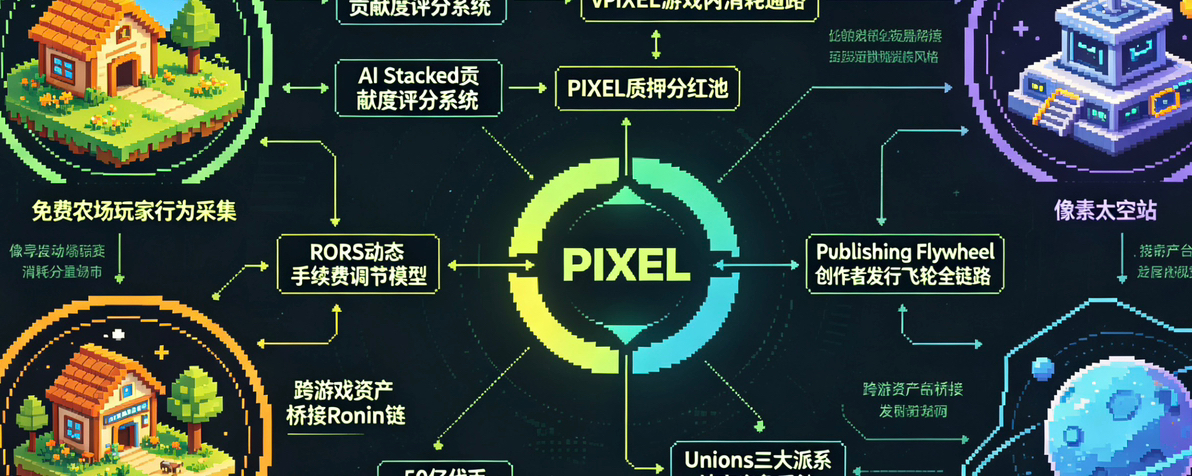
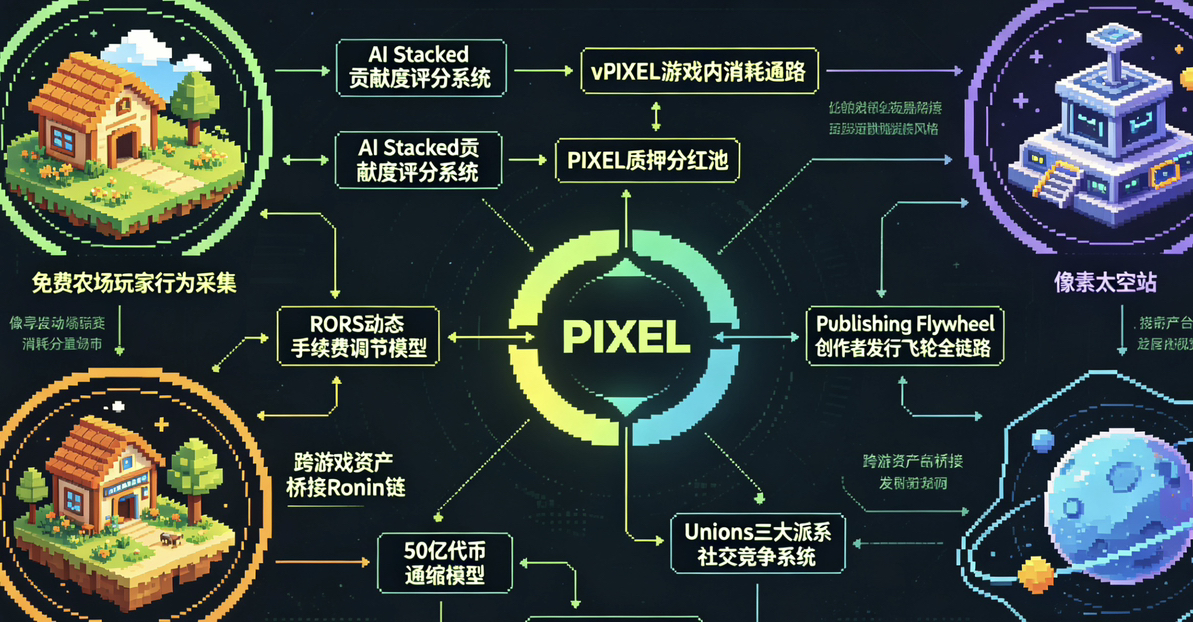
At its core, Pixels remains that free-to-play pixelated open-world life simulation. You can farm, raise animals, mine, smelt iron, bake, brew, upgrade skills, complete quests, and even team up with friends, build guilds, and decorate houses. It sounds a lot like those casual games from childhood, but @Pixels it’s all on-chain. Land is an NFT that can be rented out for income, and pets are also NFTs that help you out. Previously, we relied on BERRY-type soft currency for daily cycles, but now in Chapter 2, they’ve cut out inflationary soft coins, switching to a PIXEL-centric single currency model that emphasizes fun first. The Stacked system precisely matches rewards based on how you play, who you play with, and how long you grind, rather than just spreading rewards like confetti. The core is that RORS system, where the money spent on rewards has to be earned back from real player spending, creating a positive loop—just like running a hot pot restaurant in real life, you can’t just treat customers without making money. They’ve also introduced tiered crafting, with farms, cooking stations, workbenches, and smelting stations all having levels to upgrade. Speck, which refers to individual plots, can be strengthened step by step, and the skill system has been revamped, adding new industries, new cave explorations, and new guild gameplay. The white paper mentions a publishing flywheel—good games attract players, resulting in more accurate data, smarter rewards, and lower costs, which in turn brings in new games, making the whole thing snowball bigger. They’ve also added multi-game staking, allowing players not just to play but to vote on new projects entering through PIXEL as a 'publisher'. After years in GameFi, this setup sounds pretty smart, but honestly, I still don’t fully get that Stacked algorithm and RORS. I just know they’re trying hard to prevent players from bailing after a couple of days, aiming to transform blockchain gaming from mere profit extraction into a genuinely sticky lifestyle.
PIXEL is now a premium token, not just some basic currency for buying seeds; it’s like a VIP diamond card within the ecosystem. The total supply is capped at 5 billion, tightly controlled, used primarily for buying membership energy, accessing exclusive areas, minting pet NFTs, building guilds, purchasing skins, and participating in governance voting, with staking being the most crucial. Staking PIXEL $PIXEL in specific game projects allows you to share in the ecosystem reward pool, but you need to maintain your activity, or it’s pointless. BERRY used to inflate erratically, but now with the single currency model, PIXEL feels more like a ticket plus a ballot, with part of the spent amount going into the treasury or being burned to create scarcity. The white paper repeatedly stresses not to let it turn into a pure speculative tool, but to genuinely enhance the gaming experience. As an old gamer, I can’t help but chuckle at this; isn’t it just moving those real-life membership clubs and profit-sharing models onto the blockchain? But can it really get everyone to willingly keep spending, rather than just eyeing the exit to cash out? #pixel
Pixels has evolved from a simple farm game into a multi-platform giant. Its DAU once soared to the forefront of Web3, and the community's stickiness is undeniable. The Ronin chain is about to migrate to Ethereum L2, ensuring faster and more secure transactions. Players can even act as publishers now, staking PIXEL to influence the entrance of new games. The whole ecosystem feels like a living social factory. If they can truly get Stacked and RORS into a positive feedback loop, where rewards and income support each other, this project might just carve out a path from the pile of blockchain games, becoming a fun entry point for the average Joe in Web3. The thrill of grinding with friends in a guild and exploring new maps is way more exciting than just trading coins. ...
GameFi has dug a deep pit; many projects start with grand promises, but eventually players get burnt out, fatigued, and rewards fail to keep pace, leading to community disintegration. While Pixels is making changes, the essence of on-chain gaming hasn’t shifted—you have to keep grinding, keep socializing, and keep spending PIXEL. If one day players find it boring, or if a new hot trend pops up, the traffic will vanish in an instant. The tiered system and Speck upgrades sound impressive, but I can’t guarantee they’ll remain perfectly aligned forever. The ecosystem is expanding too rapidly; what if new games fail to attract players, and the staking pool becomes empty? There are quite a few aspects I don’t fully understand, like how smart that Stacked really is. In reality, player motivations are ever-changing; can it truly handle all scenarios? At the end of the day, this is still a hybrid beast of gaming and economics. Fun first is great, but wallets come second, and any slip-up could bring a harsh reality check. Pixels isn’t that one-night-wealth kind of fast-food blockchain game; it's attempting to address the old issues of P2E with a critical realist approach, treating the pixelated world as a testbed to genuinely let players own something. As an old-school player, I’m still half-convinced, yet I can’t help but log back in for a few rounds. Listen up, if you’re thinking about diving in, don’t expect to flip the script right away; think of it as a weekend pastime to see where it goes. Life is already competitive enough, at least on-chain games can still bring some fun.