


Spent some time looking deeper into @OpenLedger again and one thing kept sitting in my head after seeing the Formula 1 comparison. People usually think racing gets won because drivers react faster than everyone else. I used to think autonomous systems worked the same way. Better model. Faster inference. Better decisions. More intelligence. The deeper I looked into OpenLedger, the less that idea made sense.
Formula 1 teams are not really optimizing for one perfect decision. They are optimizing for continuous adaptation after conditions stop matching assumptions.
A car leaves the pit lane with one strategy. Five laps later things change. Tire wear changes. Weather shifts. Competitors behave differently than expected. Telemetry keeps feeding information back into the system because race conditions refuse to stay stable.
That pressure point kept pulling me back toward OpenLedger.
Most conversations around AI infrastructure still stay trapped around capability. Bigger models. Better outputs. Better reasoning. Faster execution. Those things matter. But OpenLedger keeps pushing attention somewhere slightly deeper.
What happens after intelligence already makes a decision.
That sounds small initially.
It is not.
Because autonomous systems entering financial systems, onchain execution environments and machine coordination layers do not operate inside static conditions. State changes continuously underneath them.
Liquidity changes.
Routing conditions change.
Latency changes.
Cost changes.
Execution quality changes.
Reality moves.
OpenLedger feels increasingly architected around that operational layer instead of treating execution like a downstream process that happens after intelligence.
That distinction matters more than people realize.
The Formula 1 comparison actually becomes useful here because telemetry is not passive information. Teams use telemetry because systems drift away from assumptions continuously. Race engineers keep recomputing strategy because staying locked into old assumptions becomes dangerous.
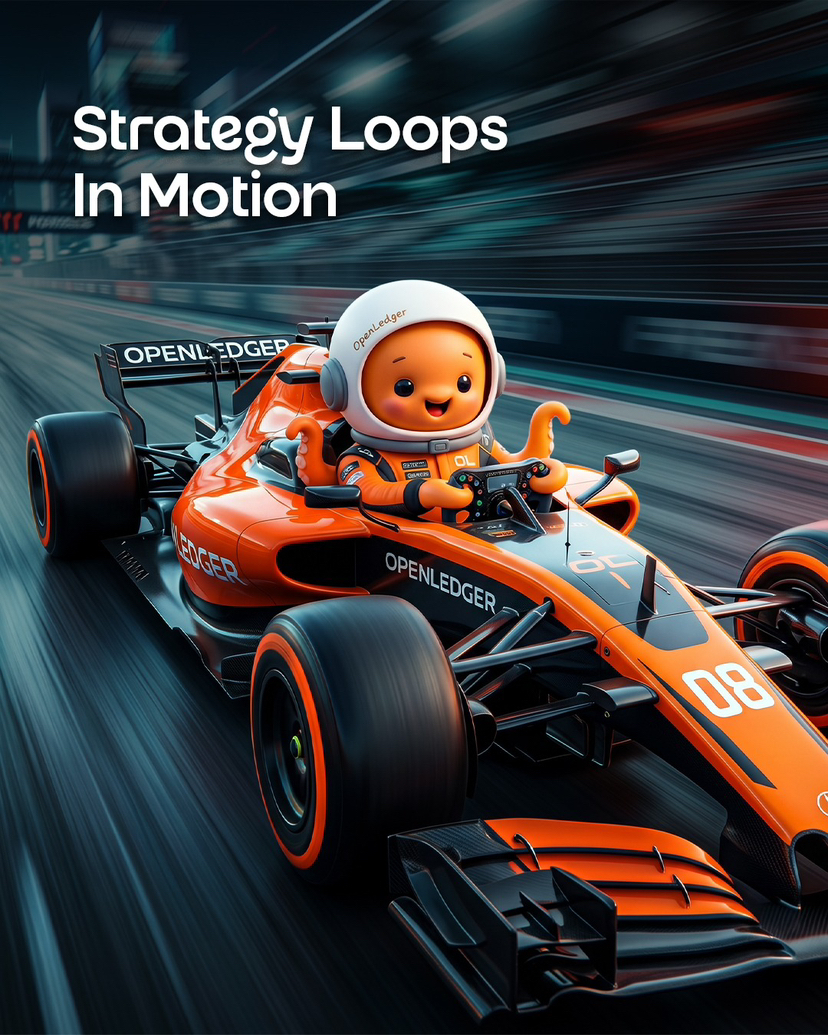 OpenLedger feels increasingly built around similar thinking.
Agents observe changing state.
Systems adjust.
Execution conditions get validated.
Behavior updates after reality shifts.
Not because intelligence failed.
Because environments moved.
That changes how autonomous systems need infrastructure underneath them.
One thing I keep noticing across AI discussions is people naturally assume intelligence itself becomes the bottleneck.
I am starting to think coordination becomes the bottleneck.
OpenLedger keeps pulling attention toward coordination pressure inside autonomous systems.
An agent interacting with execution environments cannot simply make a decision and assume reality stays stable long enough for execution quality to survive untouched.
A model can technically generate the correct output.
Execution can still degrade.
That operational gap feels increasingly important.
The Formula 1 comparison keeps working because teams engineer systems assuming instability exists by default. Conditions changing is not considered failure.
Conditions changing is expected.
Infrastructure exists to adapt.
That same thinking starts making more sense inside AI systems.
Looking deeper into OpenLedger, it feels less like building isolated intelligence systems and more like building operational infrastructure for environments where assumptions continuously break.
That architectural difference feels important.
Because AI systems moving into economic coordination layers create different requirements than traditional software.
Traditional software usually waits for inputs.
Autonomous systems increasingly operate continuously.
Traditional systems often process requests.
Autonomous systems increasingly maintain state awareness.
Traditional systems usually separate decision making from execution.
OpenLedger increasingly feels focused on keeping both connected.
That changes design priorities.
The interesting thing is OpenLedger does not feel optimized around making agents look smarter on the surface.
It feels increasingly optimized around preserving operational consistency underneath changing conditions.
That feels harder.
And honestly probably matters more.
Because markets punish delayed adaptation aggressively.
Execution environments punish stale assumptions aggressively.
Machine coordination systems punish rigidity aggressively.
The deeper I looked into the architecture direction behind OpenLedger, the more Formula 1 stopped feeling like marketing language and started feeling like an actual systems design mental model.
Continuous telemetry.
Strategy recomputation.
Precision execution.
Adaptation loops.
Not because instability is unusual.
Because instability becomes normal.
That also changes how OpenLedger fits into the broader ecosystem.
A lot of infrastructure still assumes intelligence sits at the center.
OpenLedger increasingly feels designed around the idea that intelligence alone is insufficient.
Systems need operational layers capable of handling reality changing underneath autonomous behavior.
As AI systems become more embedded inside markets, capital systems, execution environments and machine coordination layers, infrastructure quality probably becomes increasingly important.
Smarter agents matter.
More adaptive infrastructure probably matters more.
That difference kept sitting with me.
The more autonomous systems move toward economic environments, the less this starts looking like an AI problem.
It starts looking like an operational systems problem.
OpenLedger keeps feeling increasingly built around that reality.
And honestly after thinking through the Formula 1 comparison longer, I think that is why it kept sticking in my head.
Not because race cars move fast.
Because winning systems learn how to survive conditions refusing to stay stable.
That pressure probably becomes one of the hardest infrastructure problems autonomous systems face over the next cycle.
OpenLedger feels increasingly designed with that assumption already built in.
