


The faster the AI sector evolves, the more one issue stands out: creating an AI product is still way too tricky for most small teams and indie devs.
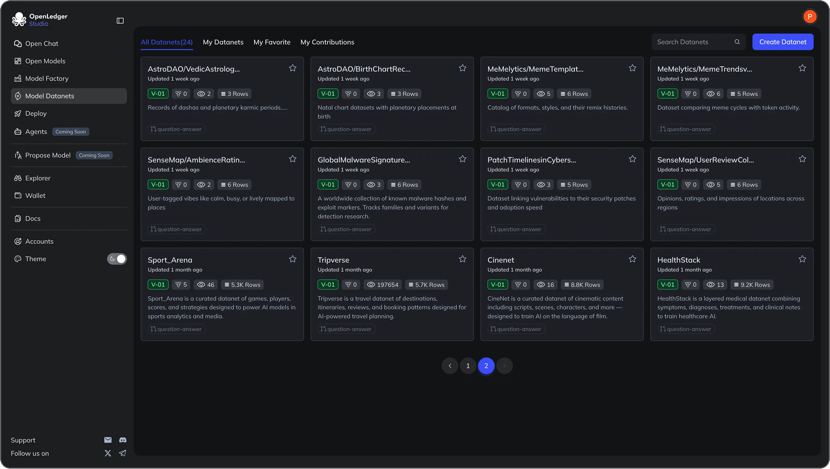
High infrastructure demands, complex setups, working with models, APIs, and cloud services turn AI development into a pretty costly and technically heavy process. That’s why I got interested in the vibecoding direction, which is advancing @OpenLedger . Judging by the latest updates from the project, OpenLedger is trying to make AI development more accessible and simplify interaction with the infrastructure. Compared to most AI projects, this seems like a pretty pragmatic approach.
Right now, many are talking about the future of artificial intelligence, but far fewer discuss the issue of accessibility. Who will actually be able to create AI applications in a few years? Only big companies with massive budgets, or will regular independent builders be in the game too?
I think this is where vibecoding really comes into play. If AI tools become easier to set up and use, the entry barrier starts to lower gradually. And that directly impacts the pace of development for the entire ecosystem.
When I was diving into OpenLedger, it became clear that vibecoding isn't developing in isolation, but alongside other areas. The project is also working on AI trading agents, Octoclaw, cloud config, EVM Bridge, and ERC-4626 integrations. It gives the impression that the team is building a robust infrastructure for AI within Web3.
It's especially interesting to keep an eye on this against the backdrop of the AI market's growth. Right now, the competition isn't just between models, but also between ecosystems that can provide developers with the slick tools they need to work.
The history of technology shows that mass development kicks off when tools become simpler. The internet started to grow rapidly after user-friendly browsers emerged. Building websites became mainstream after the arrival of CMS and no-code solutions. Perhaps AI is also at a similar stage.
If OpenLedger can truly simplify the use of AI tools and infrastructure, it could turn out to be much more significant than it seems right now. Because in the future, it may not be the project with the most complex AI that wins, but the one that makes AI accessible to a larger crowd.
And that raises the big question: will vibecoding be the next leap towards the mass adoption of AI development within Web3?
