
In the next three months, a crucial direction for Web3 is likely to be: Prediction Market.
With topics like the World Cup, US stocks, AI, tech companies, Trump, Musk… these global hot-button issues are continuously driving traffic, capital, and attention towards Prediction Market.
And this vibe is something I’m really familiar with.
Because it’s reminiscent of the nights before: DeFi Summer, GameFi Summer, and PerpDEX Summer.
Every time Crypto Summer rolls around, it feels the same.
Most people can make money as long as they understand, participate, and develop awareness earlier than others.
This article is quite long, please save it for later reading. The main content includes:
Current data analysis of the Prediction Market
Crypto Summer Historical Cycle
Why the Prediction Market, like PerpDEX 24 years ago?
Why is the Prediction Market suddenly erupting now?
What should ordinary people do right now?
How exactly does the Prediction Market work?
The difference between Polymarket and 42
Why do I feel that 42 is more like "time asset trading"?
Summarize
Appendix (42 Introductory Tutorial)
I. Prediction Market Data Analysis
The rumor about Prediction Summer is not unfounded.
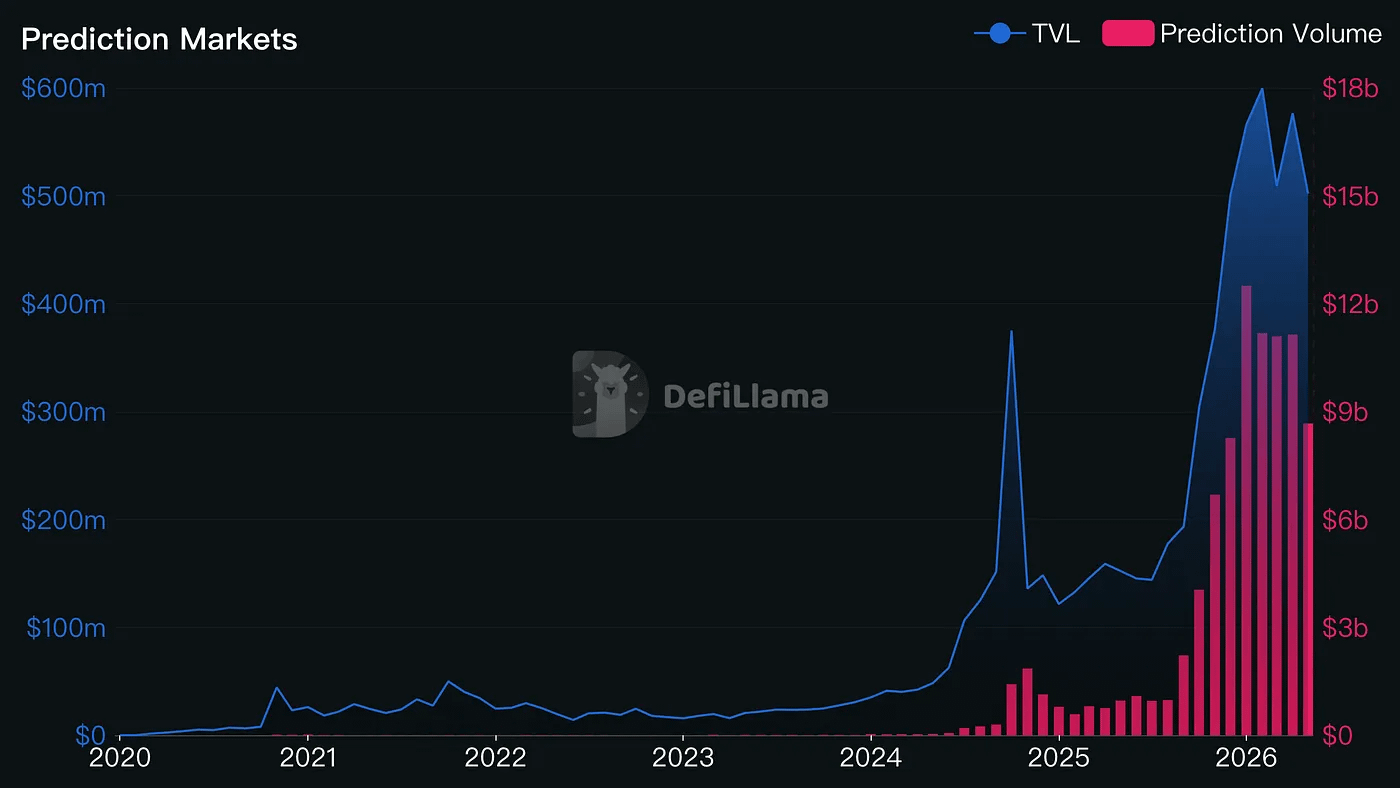
(1) Let's look at the market data first:
July 2025 forecast market: TVL of $140 million, transaction volume of $959 million;
February 2026 forecast market: TVL reaches $599 million, transaction volume reaches $11.182 billion;
In other words, in just 7 months, the market forecast showed that TVL increased by 327.9% and trading volume increased by 1066%.
(2) Next, look at the user data.
May 2026 (the month of the year):
The market is projected to have 3.36 million unique users.
Open interest reached $1,097,353,169;
Trading volume reached $1,064,018,950;
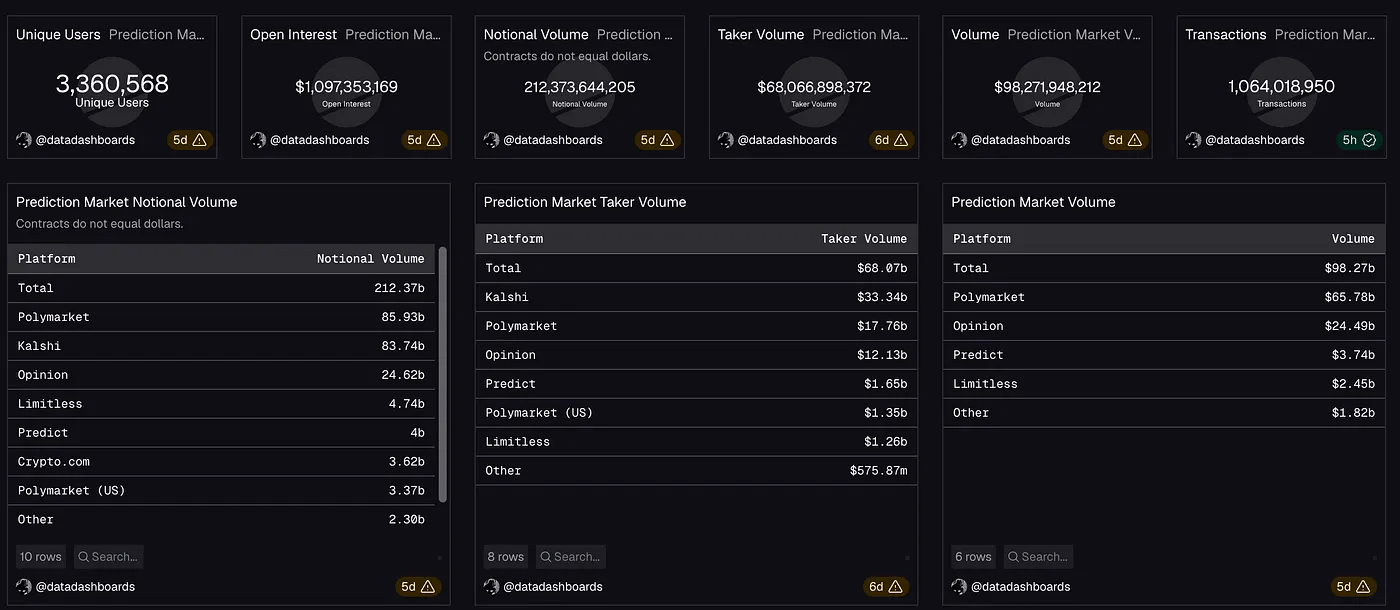
(3) Next, look at the on-chain data.
Third week of May 2026:
The estimated on-chain fees generated in the market reached $10.61 million.
The predicted on-chain revenue for the market is $6 million.
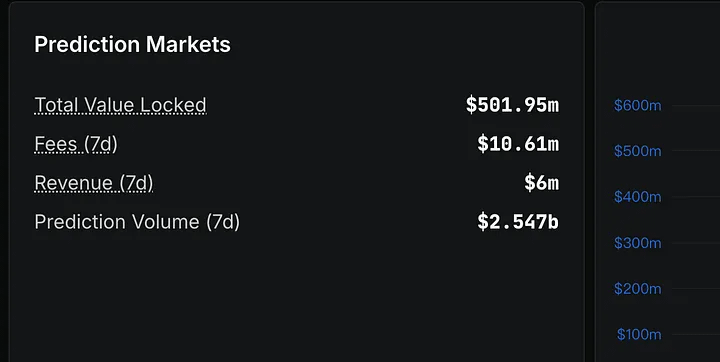
What does data mean?
Seven months: Trading volume increased by 1066%, 3.36 million users, and $6 million in protocol revenue in a single week.
This is no longer just "getting some attention".
Rather, it's a track that's starting to enter the mainstream spotlight.
Whether Prediction Marke can make it into Summer isn't really about whether anyone's discussing it, but rather:
Are there any real transactions?
Is there any real funding?
Does it generate real income?
And the Prediction Market is now starting to show these signs.
II. Crypto Summer Historical Cycle
To truly understand the trends in the Prediction Market, you can't just look at it on its own.
Instead, put it back into the context of the past few Crypto Summers.
After watching, you'll find that the taste of Summer is becoming more and more familiar.
(I) First, let's look at DeFi Summer.
In 2020, DeFi began to explode.
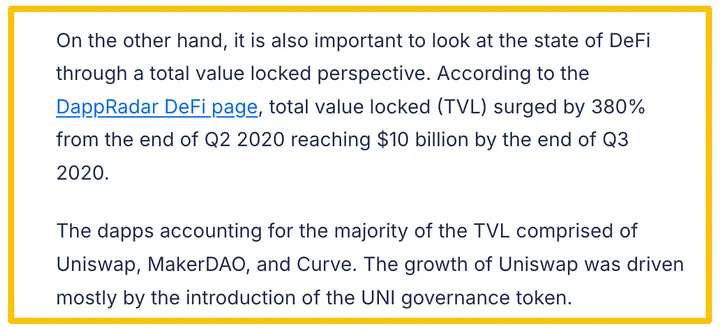
DappRadar data shows:
TVL surged by 380%
Daily active wallets grew by approximately 300%.
Trading volume increased by 1079%
At that time, many people discovered for the first time:
"It turns out that depositing, borrowing, and becoming a limited partner (LP) can actually make money."
As a result, funds began to rush into DeFi like crazy.
(II) Let's look at NFT Summer again.
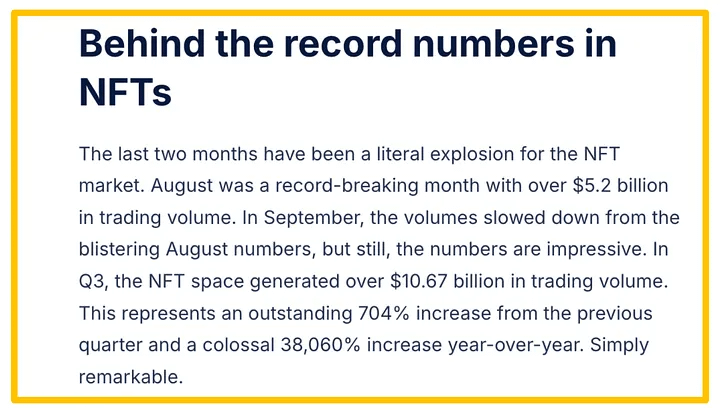
2021: NFT quarterly transaction volume reached $10.67 billion, a staggering 704% increase compared to the previous quarter.
At that time, everyone discovered for the first time:
"A single JPG file can actually sell for hundreds of thousands of dollars."
Thus, speculation, aesthetics, culture, and identity were integrated on the blockchain for the first time.
(III) GameFi Summer is even more exaggerated
This period was a turning point in my life. In 2021, I used GameFi to complete my life transformation.
At that time, thanks to Axie, CryptoMines, FarmersWorld, RACA, BNX, Mir4, etc., a lot of money came in almost every day.
But the most crucial factor is not the price of the coin, but the sudden influx of people onto the blockchain.
Because of the prolonged depression caused by the pandemic and bear market, someone suddenly tells you:
"You can make money playing games."
As a result, a large number of Web2 users rushed into Crypto for the first time.
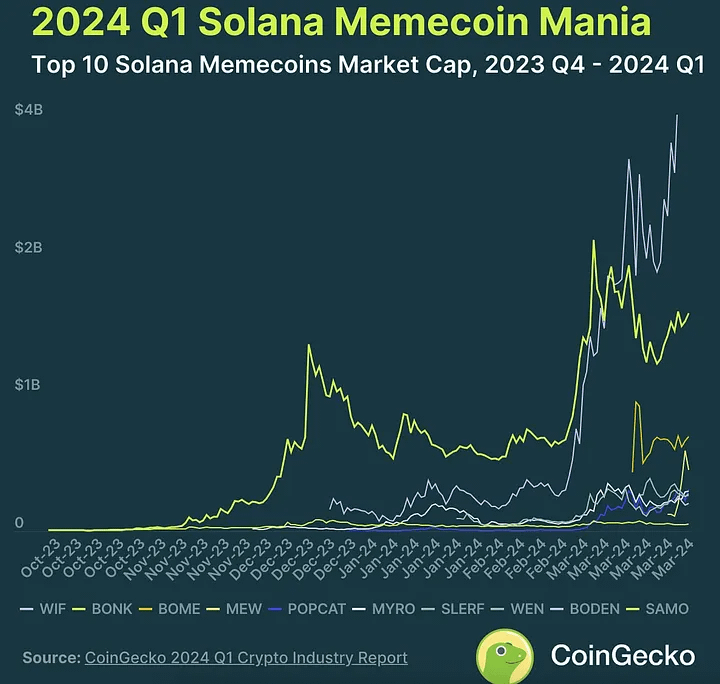
(iv) Memecoin Summer: More Direct
The essence of Memecoin Summer is very simple.
Everyone suddenly realized:
"You don't even need to look at the projects; a single meme can increase the value dozens of times."
Therefore: attention, emotion, fluidity...
They started frantically investing in assets that were the lightest, easiest to spread, and easiest to trigger FOMO (Fear of Missing Out).
(v) PerpDEX Summer, many people actually missed it
I'm not going to talk about cold, hard data here; I'll talk about real experiences.
In the early days, during the dYdX and GMX era, making money was incredibly easy. Many people would casually farm resources, and then a single airdrop would yield a car worth 200,000.
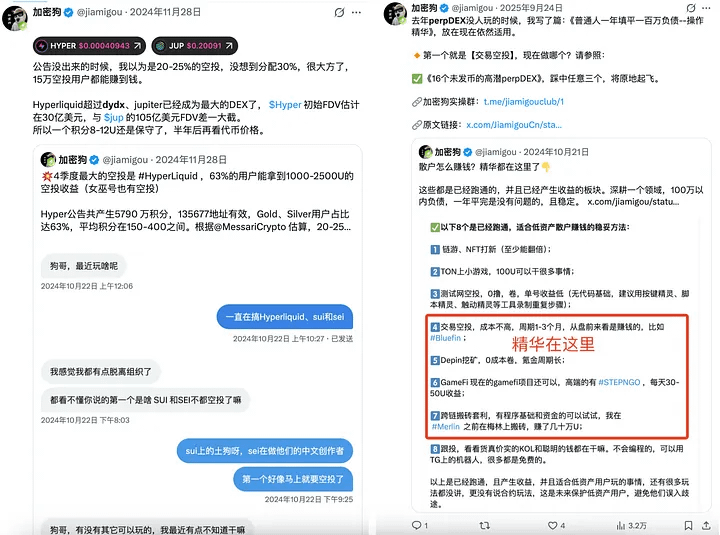
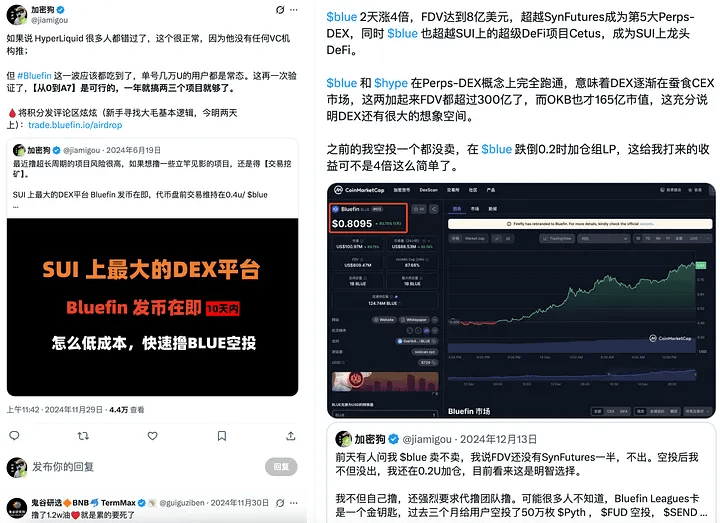
But what really impressed me the most were the later ones: Hyperliquid, Bluefin, Aster, and Lighter.
Especially Hyperliquid and Bluefin.
In the early 2000s, there was practically no one browsing in the Chinese-speaking region. Many KOLs at the time couldn't even explain it clearly:
What is an on-chain contract?
What is an on-chain perp?
Therefore, those who truly understood PerpDEX actually reaped the biggest benefits.
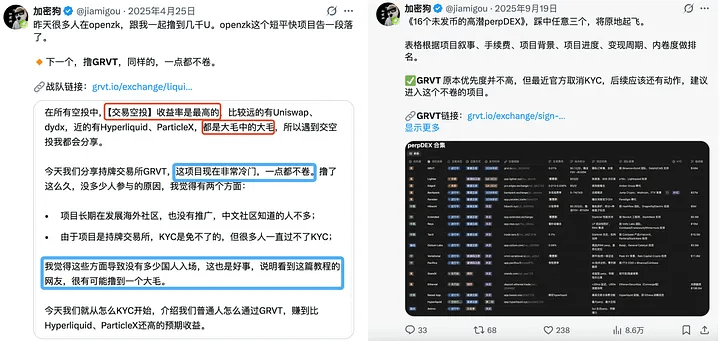
The same thing happened when GRVT came out in early 2005. Because many people did not know what Perp DEX was, there were very few GRVT users in China.
This gave me a great opportunity; in April 2025, my team's total trading volume ranked first in the Chinese region.
Perp DEX officially became popular around September 2025, but many people still missed it:
Aster Season 1
Lighter
These two are super big hairy.
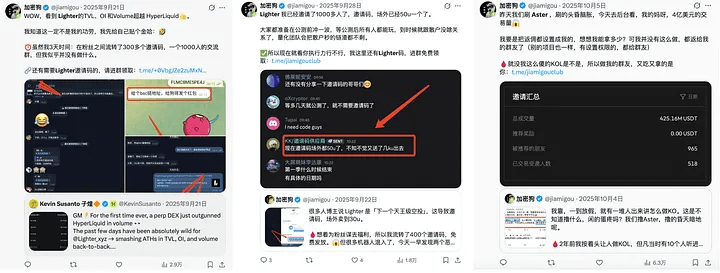
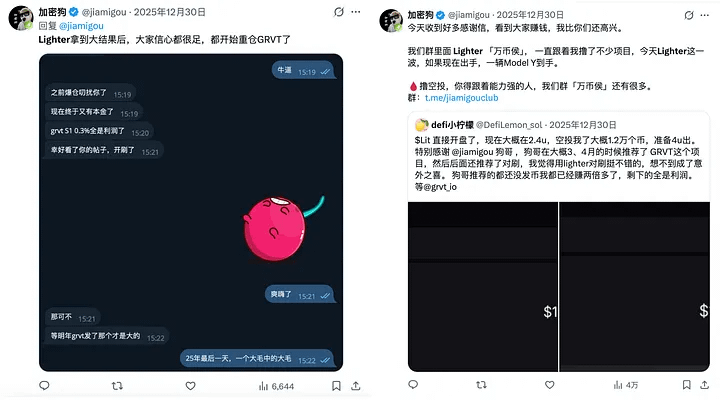
So in December 2025, users who had been working with me on Lighter for three months sent me many thank-you emails after receiving their big rewards.
Looking back at Hyperliquid now, many people might think, "Isn't this common knowledge?"
But in reality: in the early 2000s, nobody in the Chinese-speaking community was using it. Many people couldn't even explain what PerpDEX was.
And often, the greatest benefits come when nobody understands them.
By the time everyone understands it, the period of opportunity is over.
summary
Every Crypto Summer doesn't just appear out of nowhere. Rather, it's something that was previously only popular within a small circle, and then suddenly it becomes popular again.
Crazy entry
Crazy money coming in
Crazy inflow of liquidity
DeFi Summer: This refers to the sudden realization that "storing coins, borrowing coins, and becoming an LP can actually make money," which led to a surge in TVL.
NFT Summer: It was when everyone suddenly discovered that "a single JPG image can actually sell for hundreds of thousands of dollars."
GameFi Summer: Due to the prolonged pandemic and bear market, the "play and earn" model emerged, attracting a sudden influx of Web2 users into Crypto for the first time.
Memecoin Summer: This is when attention and liquidity start to rush into the lightest and easiest-to-spread assets.
PerpDEX Summer was even more interesting; many people couldn't understand it at all back then:
What is an on-chain contract?
On-chain perp
Therefore, in the early stages of projects like Hyperliquid, Aster, and Lighter, almost no one in the Chinese-speaking community participated.
But precisely because no one understood it, the first people who truly understood PerpDEX reaped the biggest benefits.
Today's Prediction Market, in my opinion, is entering a position very similar to that of PerpDEX in its early days.
III. Why is the Prediction Market similar to PerpDEX 24 years ago?
Many people have heard of Polymarket, but most people don't actually understand what a Prediction Market is.
Many people's first reaction is still:
Isn't it just gambling?
It's just buying lottery tickets, isn't it?
Isn't it just about guessing whether prices will go up or down?
But once you delve deeper, you'll find:
The core of the Prediction Market is not "gambling" at all, but rather: "monetizing emotions".
Previously: Hot topics could only be discussed.
Now: Hot topics are starting to be "traded" for the first time.
The World Cup, Trump, AI, Musk, US stocks, macroeconomic data... These things used to be only:
tweet
Post
quarrel
When Brother Dong
But now, for the first time, you can: directly bet on your judgment.
The biggest difference between the Prediction Market and traditional gambling
Many people believe that the core of the Prediction Market is "results".
Actually, no.
The real core issue is: price fluctuations during the process.
For example, with the World Cup, traditional betting means that after you place your bet, you basically have to wait until the match ends.
But the Prediction Market is different.
Before a match begins, a certain result might seem cheap. But as:
Roster announced
Injury news
Social media opinion
Fund Flow
On-site emotions
The entire market will continue to repric.
At this point, the truly skilled players are no longer playing the game of "guessing correctly".
Instead:
ambush in advance
Emotional arbitrage
Information arbitrage
Liquidity arbitrage
IV. Why is the Prediction Market suddenly erupting now?
Prediction Market is particularly reliant on global hot topics.
The next few months happen to be the period when global hot topics are most concentrated:
World Cup
Trump
Fed
AI
US stocks
Technology company financial reports
These events all carry the following:
mood
Disagreement
flow
Discussion level
And these are precisely the core fuel of the Prediction Market.
The narrative of the integration of Web3 and the US stock market is now becoming increasingly sophisticated.
The market needs a new narrative and new entry points for liquidity.
The Prediction Market happened to be right on my heels:
Hot Topics
mood
trade
Global traffic
These four things.
V. What should ordinary people do right now?
I believe the most important thing right now is not to rush in blindly, but to first build up understanding through one or two popular science articles.
Because often, the truly great opportunities arise when most people haven't even realized them yet.
Like:
In 2020, many people thought DeFi was a scam;
In 2021, many people thought NFTs were just JPGs;
In 2024, many people felt that Hyperliquid was useless.
But looking back, those who truly profited from the era's dividends were often the very people who started researching it earliest.
Instead of those who only realize what's happening after everyone else has rushed in.
(a) Who is the easiest person to make money in the Prediction Market?
Many people think that the Prediction Market is very professional and requires strong financial skills.
But in reality, the most core capability of the Prediction Market may actually be:
"Sensitivity to trending topics".
for example:
People who browse Twitter every day
People who like watching the World Cup
People who study US stocks every day
People who follow AI news
People who like to look at macroeconomics
People who like to gossip
These people are actually naturally suited for the Prediction Market.
Because: the essence of the Prediction Market is not complex finance.
Instead, it's about "turning hot topics into assets".
Previously: When you knew a piece of news, you could only:
tweet
Post
quarrel
When Brother Dong
But now, for the first time, you can: trade your own judgment directly.
for example:
Do you think a certain team will pull off an upset in the World Cup?
Do you think Trump's approval rating will change?
Do you think a certain AI company will release a new product?
Do you think a single statement from Musk can influence market sentiment?
Previously, these things could only be discussed; now, assets can be traded in the prediction market.
VI. How exactly does the Prediction Market work?
Many newcomers to the Prediction Market might think, "Is it like betting on sports?"
That's not true at all.
Prediction Market is more like: "an event-driven trading market".
For example:
Before the World Cup started, you thought Argentina was in particularly good form this year.
So you can buy: "Argentina wins the championship," this Outcome Token.
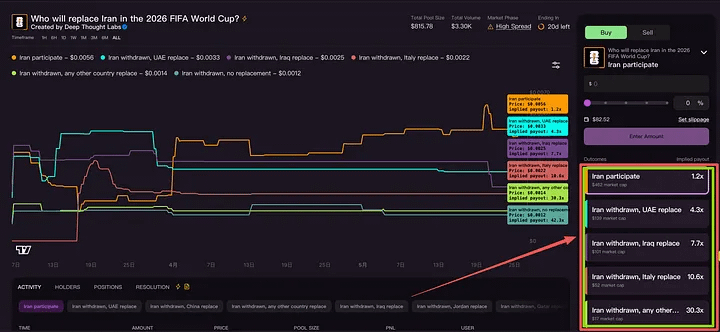
If more and more people become optimistic about Argentina, then the price of this Outcome Token will continue to rise.
At this point, you don't even need to wait for the World Cup to end; you can already sell it in advance and make a profit.
This is the biggest difference between this and traditional gambling:
Traditional gambling only allows you to wait for the result.
Prediction Market: Allows trading of "emotional shifts during the process".
Therefore, truly capable people often don't earn money by "guessing correctly in the end".
Instead, it's about making money from emotional fluctuations.
For detailed practical instructions, please refer to Section 10 — Appendix.
VII. The difference between Polymarket and 42
Currently, the most famous project in the Prediction Market is Polymarket.
It is essentially more like an "on-chain gambling exchange".
YES / NO
Odds trading
Fixed probability
Fixed odds logic.
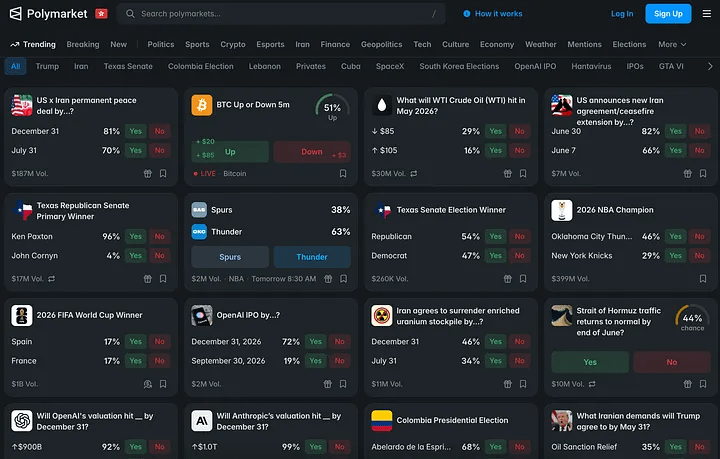
But recently, after I actually started researching this, I discovered another very interesting direction: 42space.
Because 42 is no longer the logic of the traditional Prediction Market.
It's more like a "tradable event asset market".
(a) What is Polymarket more like?
You can think of Polymarket as: "Predictive binary options".
YES 50%
NO 50%
You bet right, and you were eventually paid out $1.
If you bet wrong, you lose everything.
The core idea is: guess the result.
(ii) What does 42 resemble more?
I spent 10 days studying 42space's white paper thoroughly, and I found that the most interesting thing about 42space is that it doesn't just "guess the outcome," but rather the transaction event itself.
For example: the World Cup.
Traditional Prediction Market: Guess who wins.
But number 42 is more like: you are trading "how market sentiment changes".
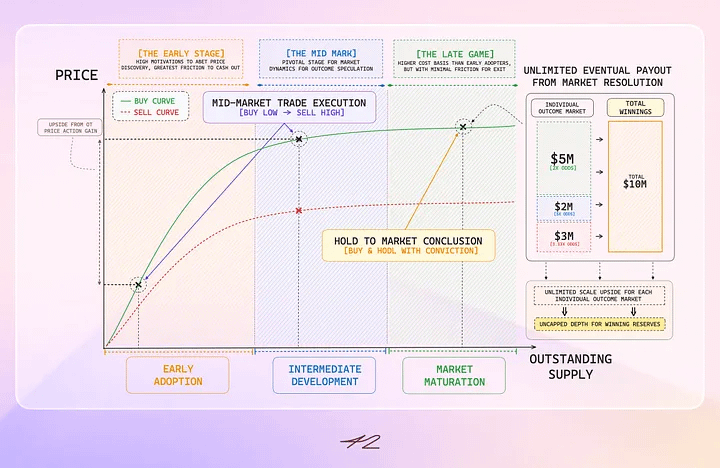
42space introduces:
Curve pricing
Dynamic odds
Continuous trading
Emotional flow
Time Value
Therefore, the core of 42 is actually starting to resemble "eventcoins trading".
8. Why do I feel that 42 is more like "time asset trading"?
This is my biggest takeaway from my recent research into the Prediction Market.
Traditional betting: The result is the most important.
But 42: Time is the most important thing.
Why?
Because: the earlier you enter the market, the lower the price. The later you enter, the higher the price.
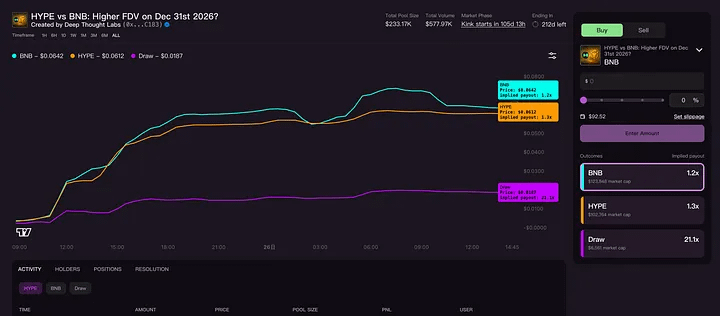
For example, yesterday Binance Wallet launched the eventcoin, "HYPE vs BNB: Higher FDV on Dec 31st 2026?". Initially, there were few traders, so I used multiple accounts to test it. During the testing process, I discovered that the coins I bought at the initial low price had increased several dozen times in value.
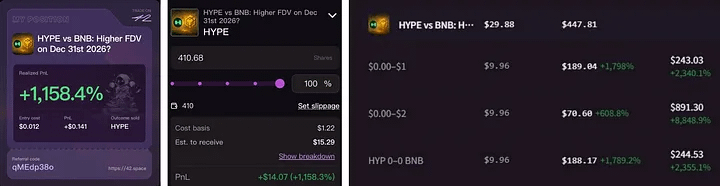
I used the successfully run test to demonstrate that the market will follow:
mood
flow
news
funds
Social media discussion
Constantly repricing.
Therefore, in the current Prediction Market, what begins trading is no longer the "outcome".
Instead, it's "time + emotional changes".
This is very similar to the early days of PerpDEX, where many people thought on-chain contracts were simply for "opening long and short positions." But later, people discovered that what actually made money was:
Liquidity
mood
cash flow
Volatility
Market Structure
I think the Prediction Market will gradually enter this stage as well.
at last
Many people who look at the Prediction Market now still think, "Is this thing useless?"
But I'm increasingly convinced that the Prediction Market is likely to become:
The next generation of "hotspot trading markets".
Because what humans love to trade most is never numbers, but rather: emotions.
The World Cup, Trump, AI, Musk, war, US stocks, macroeconomics... these things inherently carry the following:
dispute
flow
mood
Attention
What Crypto excels at is precisely turning emotions into assets; this is what memecoin does, and it's what Prediction does as well.
Therefore, I think Prediction Summer may have really begun.
And I will continue to write systematically for some time to come:
How to arbitrage in the Prediction Market
Difference between Polymarket and 42 Depth
Why does 42 resemble an "Event Asset Protocol"?
Similarities between Prediction Market and PerpDEX
The Fund Flow Logic of Prediction Markets
How to interpret odds changes
How to interpret emotional changes
Because often, those who truly make money aren't the smartest people, but rather those who are the first to develop the necessary knowledge.
Appendix (42space Introductory Tutorial)
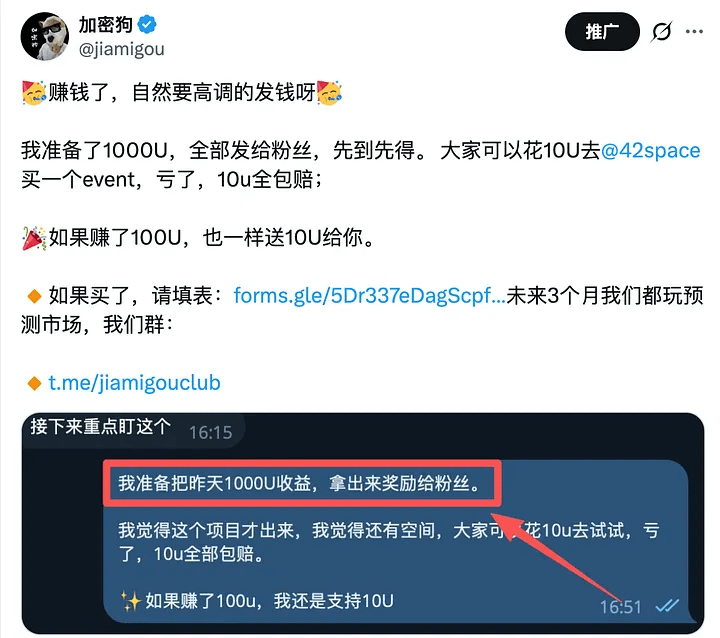
Yesterday (May 25th), Binance Wallet launched the eventcoin "HYPE vs BNB: Higher FDV on Dec 31st 2026?". After hands-on experience, I have successfully tested the basic gameplay on 42space. In order to allow more people in our community to find the answers, I plan to share the profits with our fans.
— In other words, it's a guaranteed return policy. If you trade 10u and lose, we'll refund 10u; if you make 100u, it means you're a good match for us to check answers together, and we'll give you an extra 10u.
Although it's very simple, many people have asked me for a tutorial. Since this article is too long, I'll just include a beginner's tutorial here.
42space Getting Started Tutorial
(1) Step 1: Access the official link:
(2) Step 2: Recharge
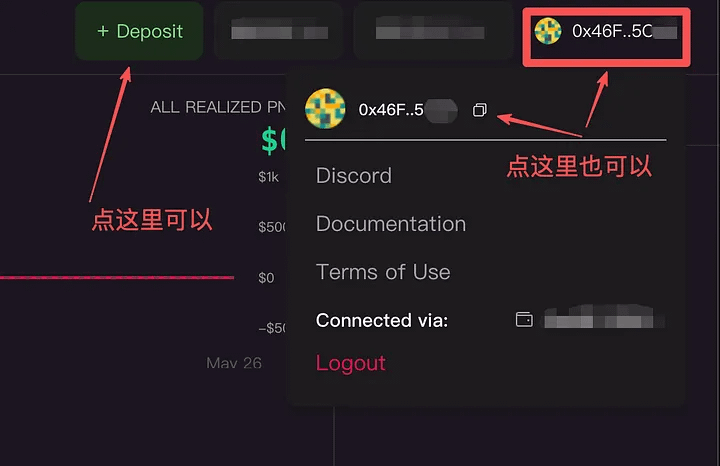
There are two ways to recharge:
The first step is to click "Deposit" and use a cross-chain tool to deposit funds (sometimes there is a lack of liquidity, which can cause the deposit to fail).
Another method is to directly click on your profile picture, copy your 42space exchange address, and then deposit funds into this address using your wallet or the exchange. (This method has the highest success rate in actual testing.)
(3) Step 3: Transaction
42space has two markets: Event Markets and Price Markets, both of which are winner-take-all markets.
The screenshot below shows Price Markets, which has a fixed 8-hour trading cycle (4 hours of trading, 4 hours of settlement), and you cannot exit the market midway after purchasing.
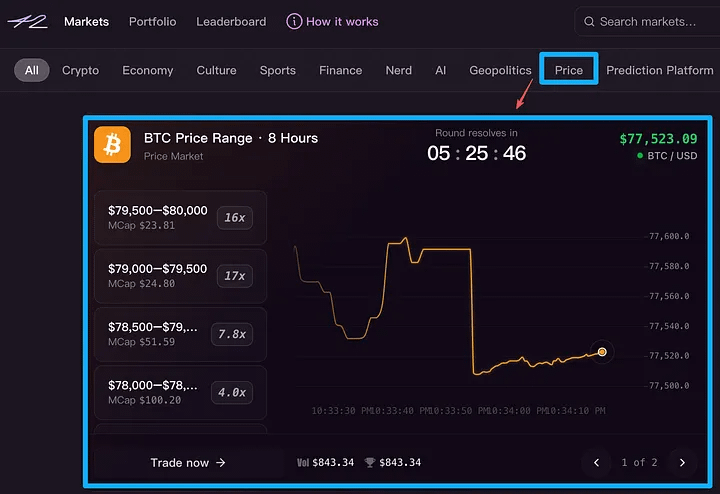
Playing with Price Markets requires some expertise, which will be covered in a dedicated tutorial later. This article focuses on learning Event Markets.
As shown in the image below, it can be assumed that, apart from Price, it is mostly Eventcoin.
Its characteristics are: price curve, the earlier you enter, the lower the price; the later you enter, the higher the price; and you can exit at any time (with exit costs).
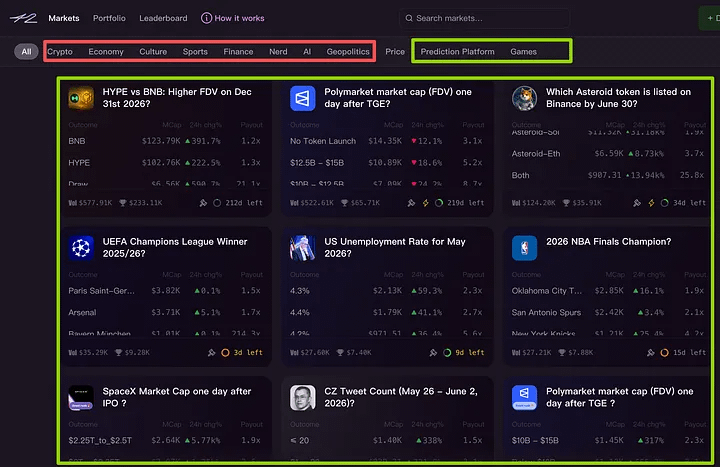
Choose any Eventcoin (HYPE vs BNB is used as an example here), as shown in the image below.
This Eventcoin question asks, "Who do you think will have a higher FDV by December 31, 2026: HYPE or BNB?"
If you think BNB is higher, enter the amount and buy the BNB outcome on the right, with dynamic odds of 1.2;
If you think the HYPE is higher, bet on the HYPE outcome on the right, with dynamic odds of 1.3;
If you think the two tokens have the same market capitalization, which is a tie, choose the right-hand Draw option with dynamic odds of 21.1.
This Eventcoin will settle on December 31st. Incorrect purchases will result in zero winnings, while correct purchases will share the entire prize pool according to the winner's share. You can sell your holdings at any time before December 31st, thus avoiding the settlement date (this is the biggest difference from other prediction markets).