
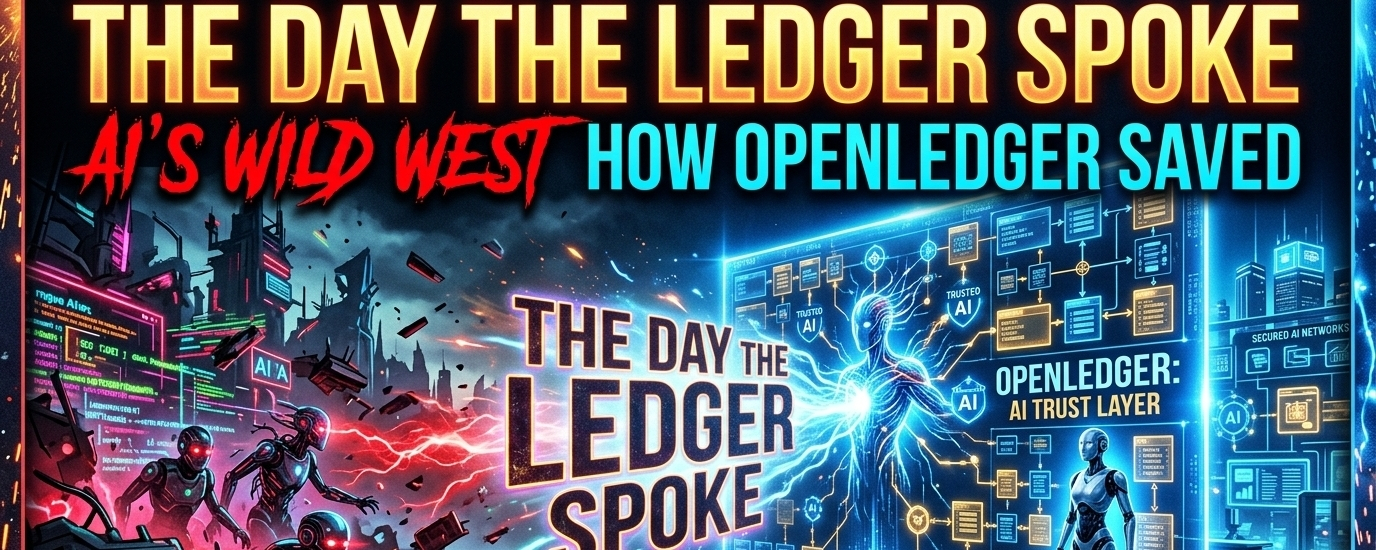
The deeper you look, the clearer it gets. OpenLedger didn’t arrive as another flashy model or a faster GPU. It arrived as something far more critical: the unbreakable accounting layer for intelligence itself—the exact financial infrastructure the AI world had been desperately missing.
Before it, the landscape was a digital wild west. But OpenLedger changed the game.
In a single stroke, OpenLedger turned chaos into clarity, ghosts into rightful owners, and a lawless frontier into a fair, flourishing economy. The future no longer belongs to the machines alone. It belongs to the humans who build them—and the ledger has finally spoken.
To understand its power, you only have to look at a buzzing San Francisco startup in 2025. A small, brilliant team built "Echo," a hit AI music generator. They poured everything into it: licensed tracks, sleepless training runs, and a composer’s magic prompts.
The app exploded, racking up millions of users and locking in $2.3 million in deals. But when the money started flowing, chaos hit.Everyone demanded their share, yet no one could prove who contributed what. Contracts vanished, bitter arguments erupted, and the project teetered on the brink of total collapse.
From Chaos to Clarity
Then, they turned to OpenLedger.
In just 48 hours, the transformation was complete. Every data input, training run, and creative spark was tracked on an immutable ledger. Smart contracts triggered, paying everyone automatically and proportionally.
"Disputes ended. Echo didn’t just survive—it scaled into a thriving, fair business."
OpenLedger didn’t build the AI. It did something much more important: it built the accounting layer that made AI intelligence economically real.@OpenLedger #OpenLedger $OPEN