
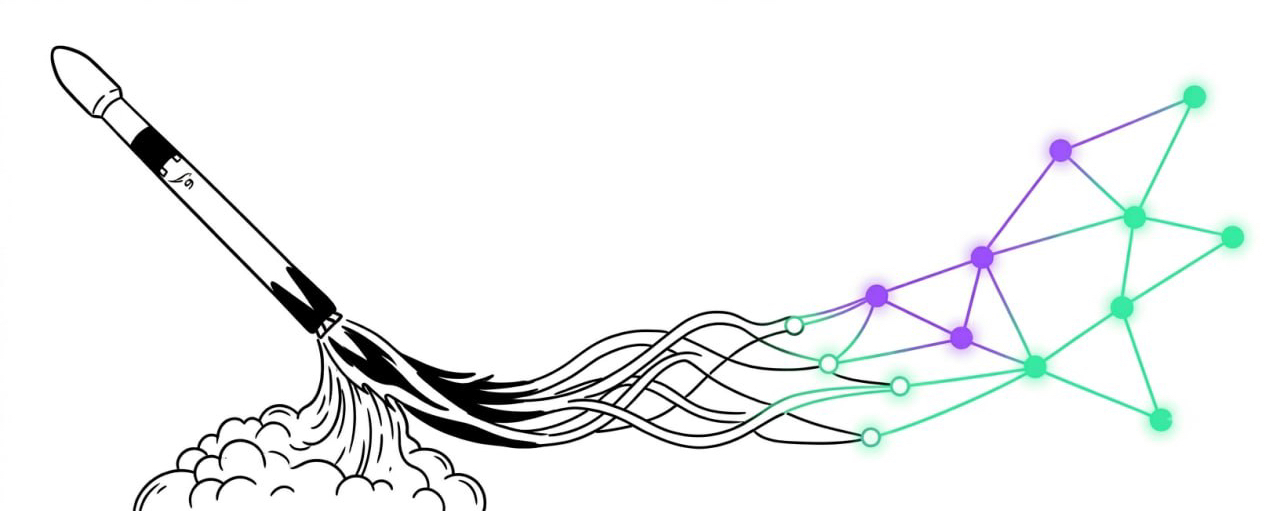
Most people are watching the stock price.
No one is asking what infrastructure just got tested at trillion-dollar scale?
Kraken's xStocks program issued SPCXx tokens, 1:1 backed by actual shares, settling on-chain, potentially in minutes rather than the T+1 confirmation you wait on at your brokerage. Retail investors in over 110 countries got access to an IPO that in any prior era would have been reserved almost entirely for institutions.
That works only if the price data feeding those tokens is accurate, live, and verifiable.
If the oracle is wrong, the token is wrong.
Where most crypto people tune out is when the topic "Oracle" is being brought up.
The protocols that got drained because a single data source was manipulated or went stale weren't using bad blockchains. They were using bad data.
Now multiply that risk by the scale of a $1.75T company trading on-chain.
Any bad feed at this scale will ruin millions of life, this is why having accurate and correct data running your feed is very important.
What oracle infrastructure actually needs to do when tradfi assets move on-chain:
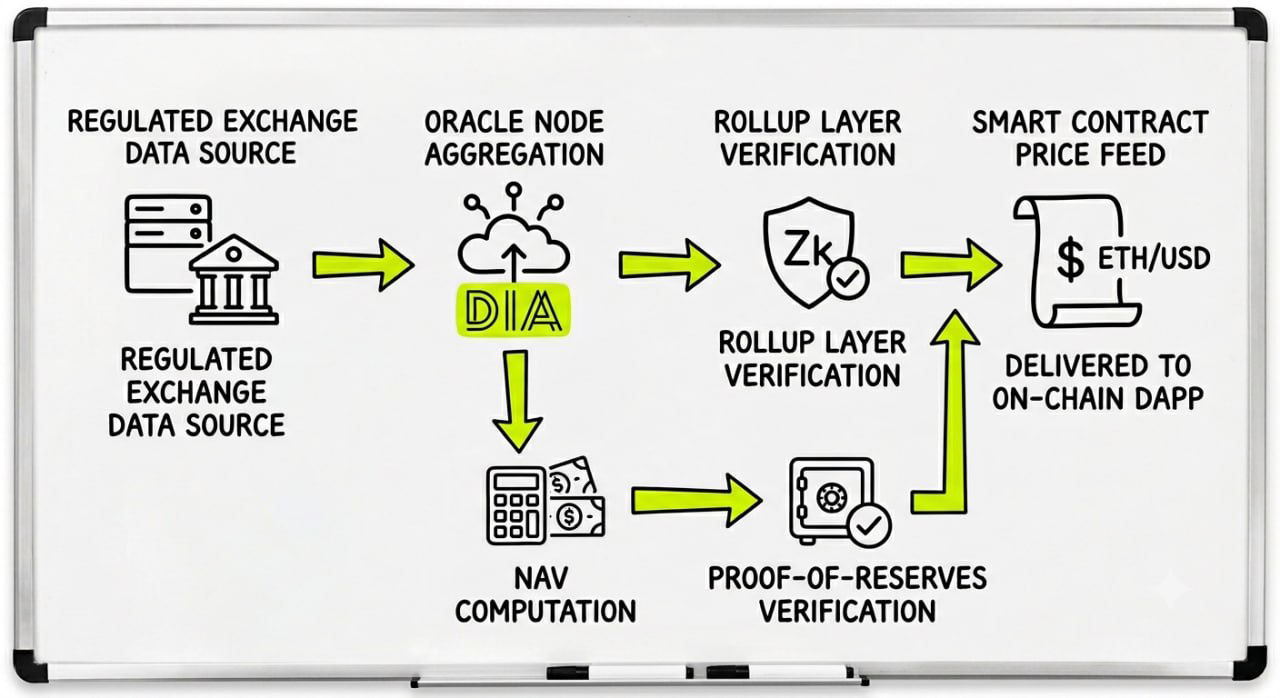
Price an asset that trades on a regulated exchange, in real time, sourced from that regulated exchange, not from a DEX with thin liquidity
Compute NAV for tokenized fund shares based on on-chain balance sheets
Verify proof-of-reserves for asset-backed tokens so collateral is confirmed.
DIA xReal gives builders access to price feeds for 10,000+ equities, ETFs, commodities, and FX pairs sourced directly from regulated market data providers.
For tokenized fund shares and structured products, DIA computes NAV from on-chain balance sheets.
For asset-backed tokens, proof-of-reserves verification confirms collateral in real time.
That's a checklist of exactly what the SPCX tokenization stack requires to function properly.
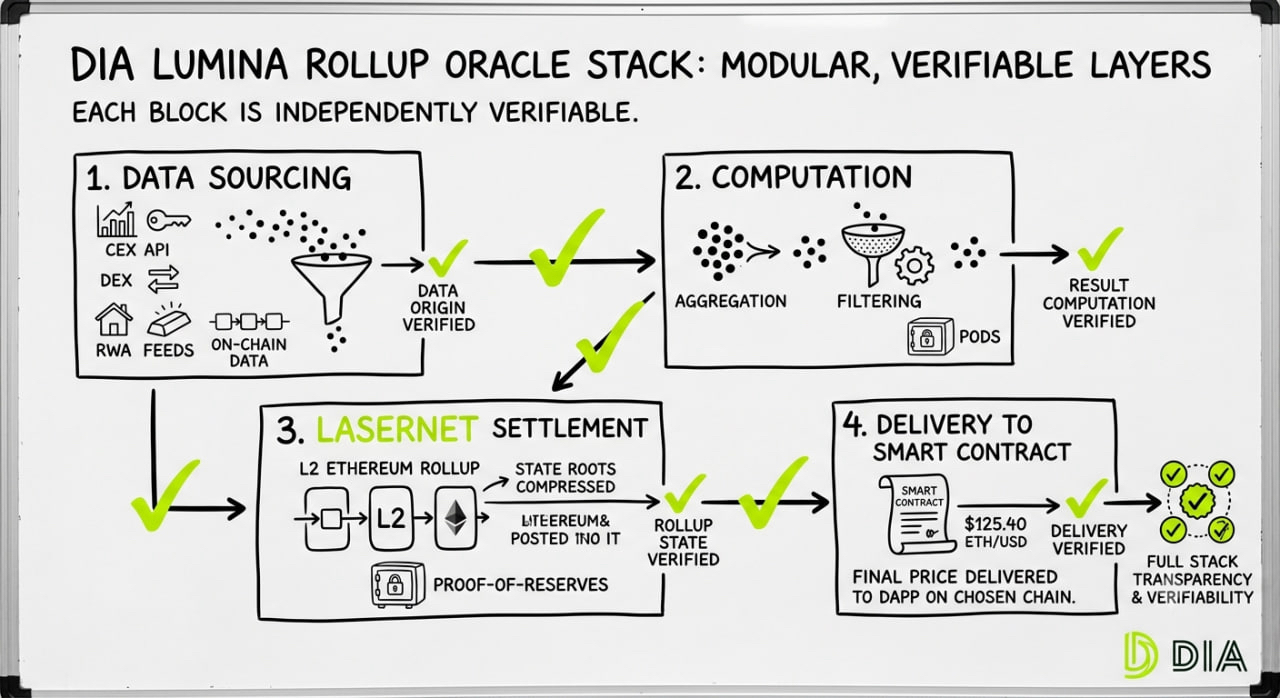
DIA Lumina became the first oracle stack to fully decentralize every component of its architecture, from data sourcing and computation to settlement and delivery. The settlement layer, Lasernet, is an Ethereum-based oracle rollup.
That matters for tradfi specifically because it means the data pipeline is auditable end to end. Everything is easily verifiable.
Every protocol building on tokenized assets faces the same critical vulnerability: unverifiable oracle data.
A compliance team integrating on-chain equities can't sign off on just any iformation, they need a proof chain. That's what a rollup-settled oracle provides. The computation that produced the price is verifiable on-chain, not just the output.
The RWA market grew from around $12 billion to $32 billion between June 2025 and May 2026.
Tokenized equities specifically hit $5.5 billion market cap.
SpaceX alone is valued at $1.75T . Even a fractional slice of that moving on-chain means the oracle layer handling it needs to be enterprise-grade, not experimental.
DIA's RWA oracle integrations span 65+ blockchain ecosystems, including both EVM and non-EVM chains.
The question now is whether protocols building tokenized equity products use infrastructure built for the job, or they find out later when the reward for their negligence hits.
You don't need to hold DIA to care about this, holding $DIA is just a plus as the saying goes "put your money where your mouth is".
You need to be building in RWA, or evaluating which protocols are ready for the volume tradfi brings, to understand why oracle architecture is the conversation happening right now, not after the next exploit.
Analysts estimate that by 2030, the total value of tokenized RWAs could range between $16 trillion and $30 trillion.
At that scale, every every overlooked infra hits like a tsunami when the dominos comes crashing down.
Reference:
KuCoin
Crypto Briefing
DIA Tokenized RWAs Use case
DIA Product Development
DIA RWAs
Spoted Crypto
The Block
DIA RWA Oracle
DIA The Gold Rush