
I didn’t really understand Vanar until I stopped thinking about it as a place where people trade and started thinking about it as a place where systems operate.
Most blockchains are implicitly designed for traders, even when they claim otherwise. You can see it in how fees behave, how transactions are ordered, and how congestion is resolved. The assumption is always that someone is watching the screen, reacting, bidding higher, or waiting for a better moment. That assumption leaks into everything.
Vanar behaves like it doesn’t make that assumption at all.
One of the first things that stands out when you look at Vanar’s on-chain activity is repetition. Hundreds of millions of transactions don’t necessarily mean mass adoption by humans, but they do suggest something important: processes keep running. That usually implies automation, background logic, or applications making constant small calls. Traders don’t generate that kind of steady load. Systems do.
That observation reframes the fee model immediately.
On most chains, fees feel like weather. Sometimes calm, sometimes chaotic, occasionally dangerous. That’s tolerable if your primary users are speculating or interacting occasionally. It’s a deal-breaker if you’re running a game economy, a marketplace, or any product where users expect the experience to feel continuous.
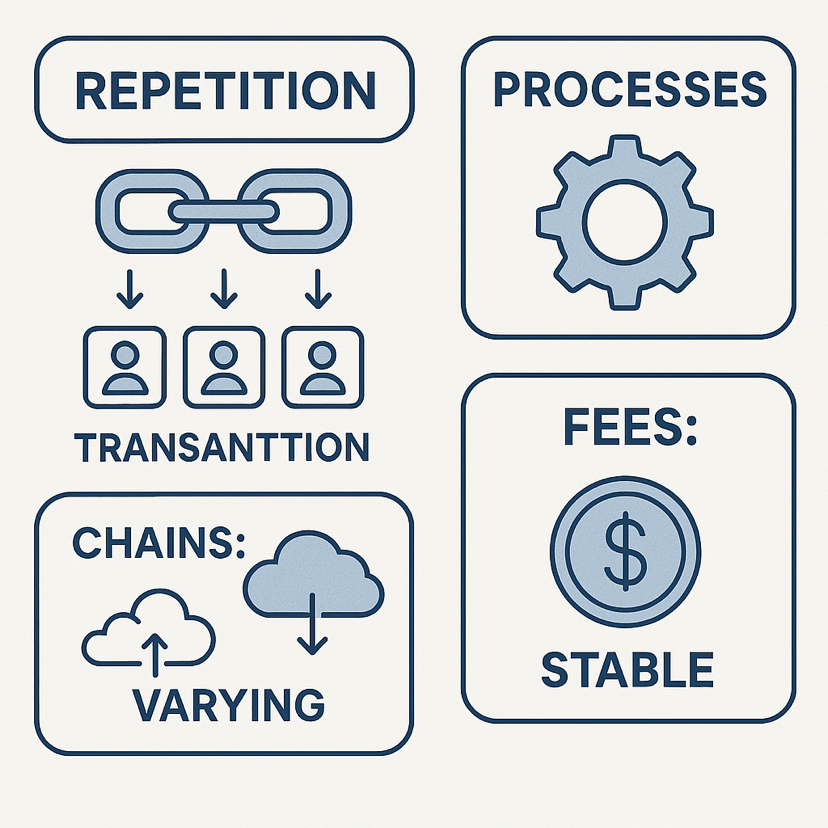
Vanar’s approach to fees is noticeably different. Costs are designed to stay low and predictable, even as the token price moves. The goal doesn’t appear to be extracting maximum willingness to pay in the moment, but keeping transaction costs within a narrow, stable range that applications can design around.
That choice is invisible to traders. It’s essential to systems.
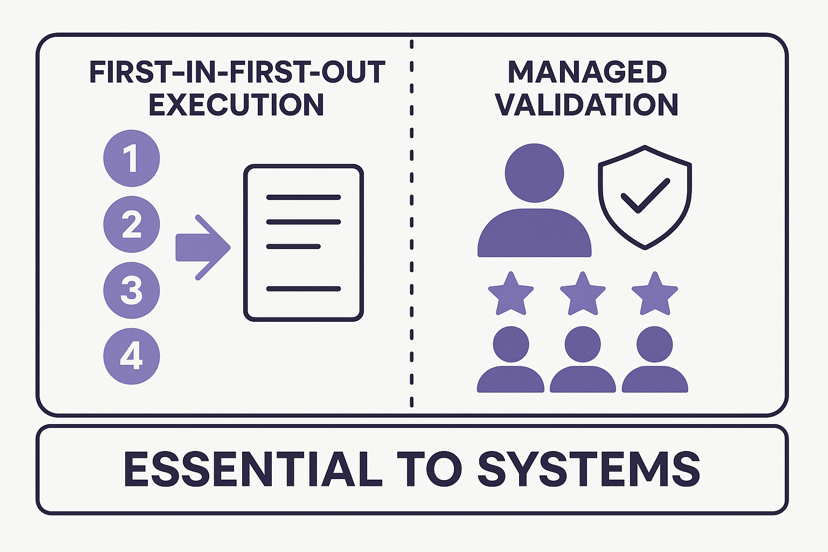
The same logic shows up in transaction ordering. First-in-first-out execution removes the need to compete for priority. There’s no incentive to time transactions or outbid others to get included faster. For a human trader, that might feel restrictive. For automated processes, it’s exactly what you want. Execution becomes something you can rely on, not something you have to game.
When you stop optimizing for traders, you also stop designing governance around spectacle. Vanar’s validator structure reflects that. Rather than full permissionless participation from the start, validation is more managed, with an emphasis on accountability and performance. Community participation still exists through staking and delegation, but the system prioritizes stability over ideological purity.
That’s a controversial choice in crypto, but it’s a familiar one in real infrastructure. Most systems that people depend on daily don’t begin as open experiments. They begin controlled, measured, and boring. Decentralization becomes valuable once the system is already trusted, not before.
Another place this trader-versus-system distinction becomes clear is data. Traders care about finality and price. Systems care about context. A transaction rarely exists on its own; it references assets, identities, permissions, and history. Vanar’s focus on compressing and verifying contextual data suggests it’s trying to support that second category of use.
This matters in environments like gaming, virtual worlds, and branded digital experiences. These aren’t occasional interactions. They’re persistent systems where users click fast, change their minds, and expect things to just work. If infrastructure fails there, it doesn’t get debated on Twitter. It gets abandoned.
That’s why the presence of live consumer environments like Virtua inside the Vanar ecosystem is meaningful. Not because they’re flashy, but because they apply constant pressure. Games expose latency, UX friction, and cost surprises immediately. Surviving that kind of usage is a stronger signal than any testnet benchmark.
The AI conversation fits into this framing more cleanly than most narratives suggest. Vanar doesn’t try to put intelligence on-chain. Instead, it treats the chain as a place where outputs of intelligent systems can be verified, referenced, and coordinated. That’s a much more realistic role for blockchain if automation is the goal.
AI agents don’t need excitement. They need consistency. They need costs that don’t spike. They need execution that doesn’t depend on bidding wars. They need data they can trust. Vanar’s design choices line up with those needs more than with speculative behavior.
$VANRY sits inside this structure as a utility rather than a story. It pays for execution, supports staking, and exists across environments rather than demanding loyalty to a single chain. That positioning limits short-term excitement, but it aligns incentives with actual usage.
When a blockchain stops optimizing for traders, it gives up a certain kind of attention. It also gains something harder to see: time. Time spent running quietly in the background. Time spent being relied on instead of discussed.
Vanar looks like it’s making that trade consciously.
Whether that strategy wins won’t be decided by market cycles or launch-day hype. It will be decided by whether systems keep choosing it when nobody is watching.