
When people talk about crypto, they often mention DeFi , short for Decentralized Finance. But what does that actually mean? Let’s break it down in a simple way.
DeFi is all about removing the middleman. In traditional finance, banks, brokers, and payment platforms control your money, charge fees, and decide who gets access. DeFi flips that. It uses blockchain technology to let anyone, anywhere, lend, borrow, or earn interest on their money without relying on a bank.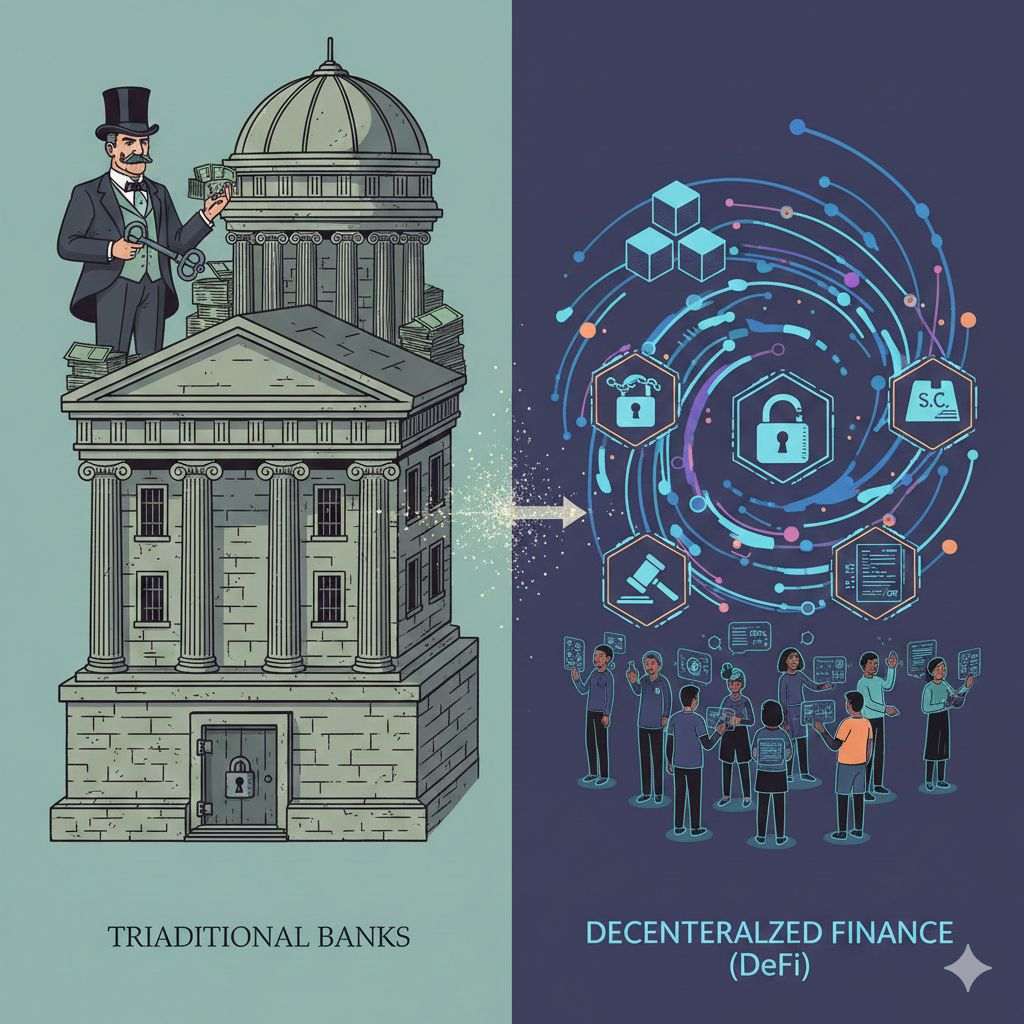
For example, in DeFi you can:
Lend your crypto and earn interest. Your money works for you, instead of sitting idle.
Borrow crypto by using your holdings as collateral , all without credit checks.
Swap tokens instantly on decentralized exchanges, no account needed.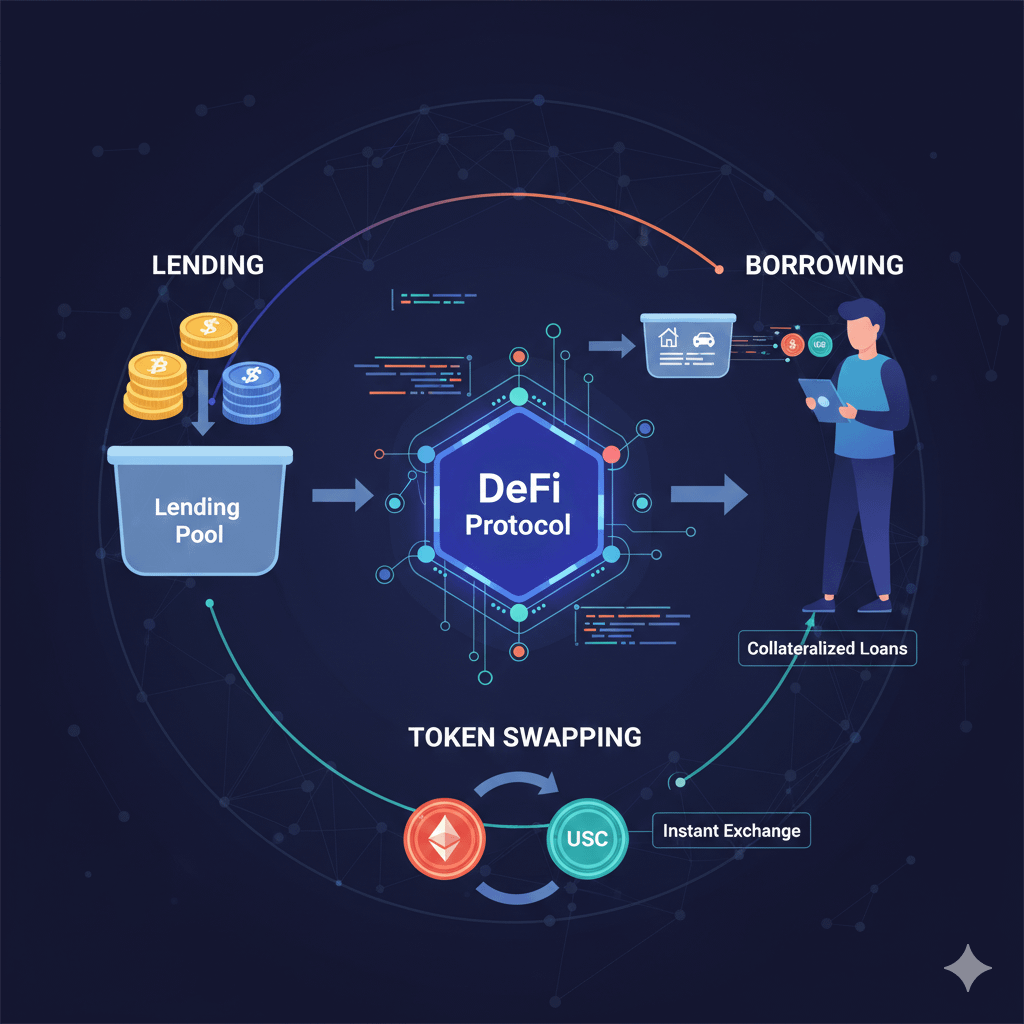
It’s powerful, but also comes with risks. There are no banks to protect your funds, so if a project fails, you could lose money. That’s why learning the basics and starting small is key.
DeFi also introduces concepts like staking, yield farming, and liquidity pools , fancy words for ways to earn more with your crypto. But at its core, DeFi is just about having control over your money and letting it grow in ways that weren’t possible in traditional finance.
Why it matters for beginners:
DeFi opens doors to financial opportunities previously reserved for banks and institutions. It’s flexible, accessible, and global. But with freedom comes responsibility , understanding the risks is just as important as learning how it works.
Takeaway:
Think of DeFi as finance without the middleman. It’s like having a bank in your pocket but you’re the one in charge. Start small, learn the ropes, and watch your crypto grow responsibly.